In depthHow to choose engineered oak
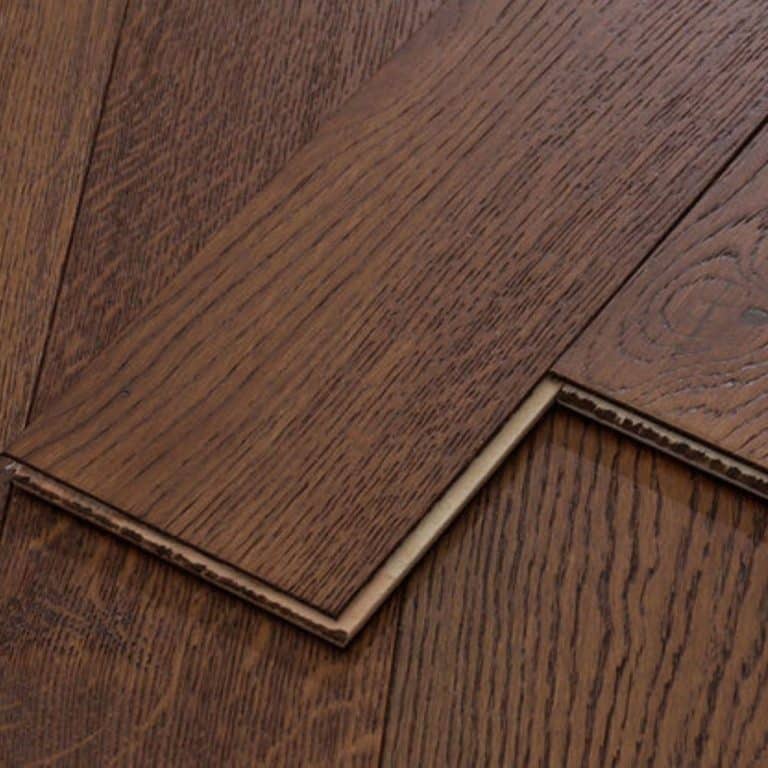
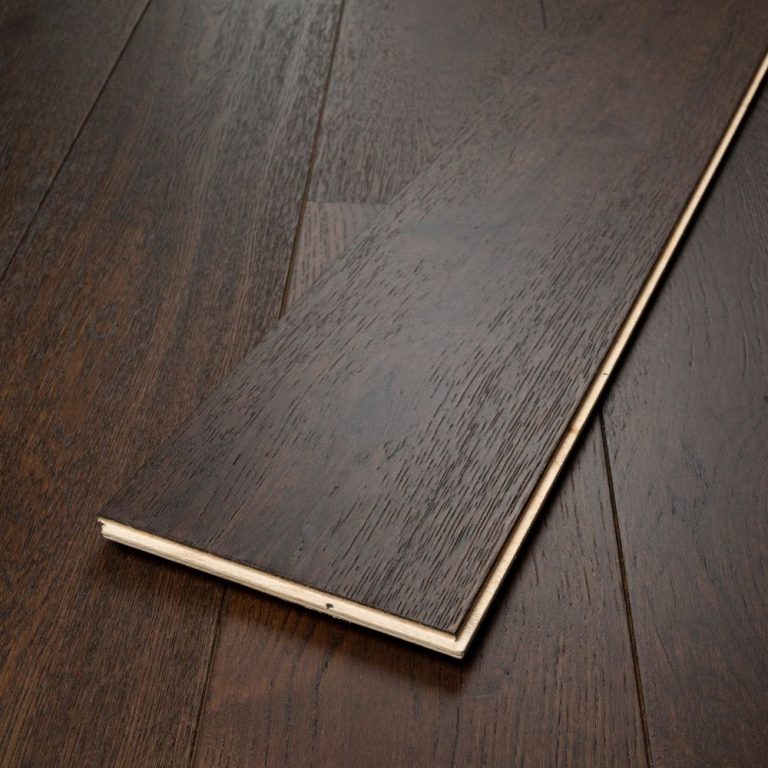
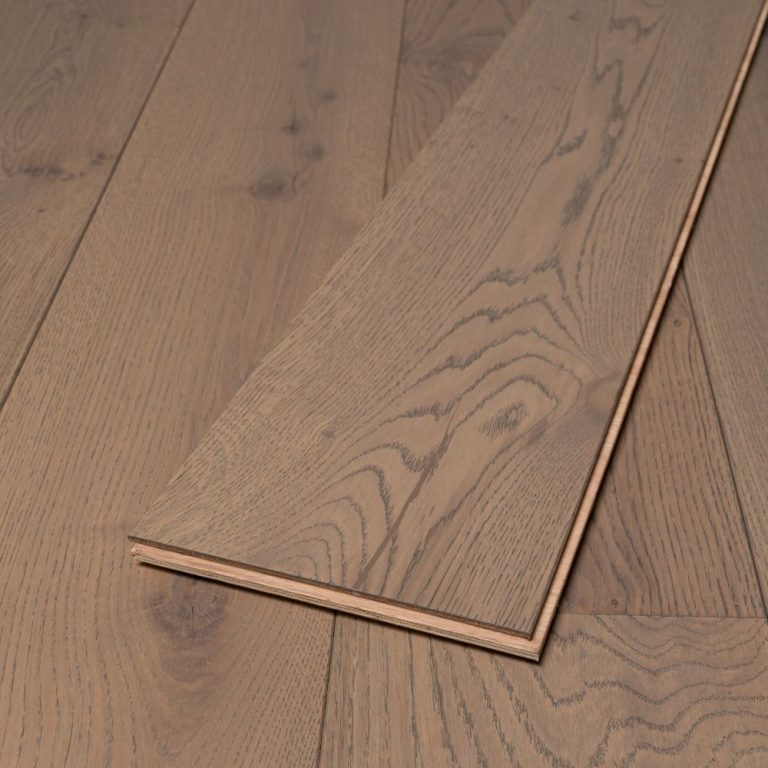
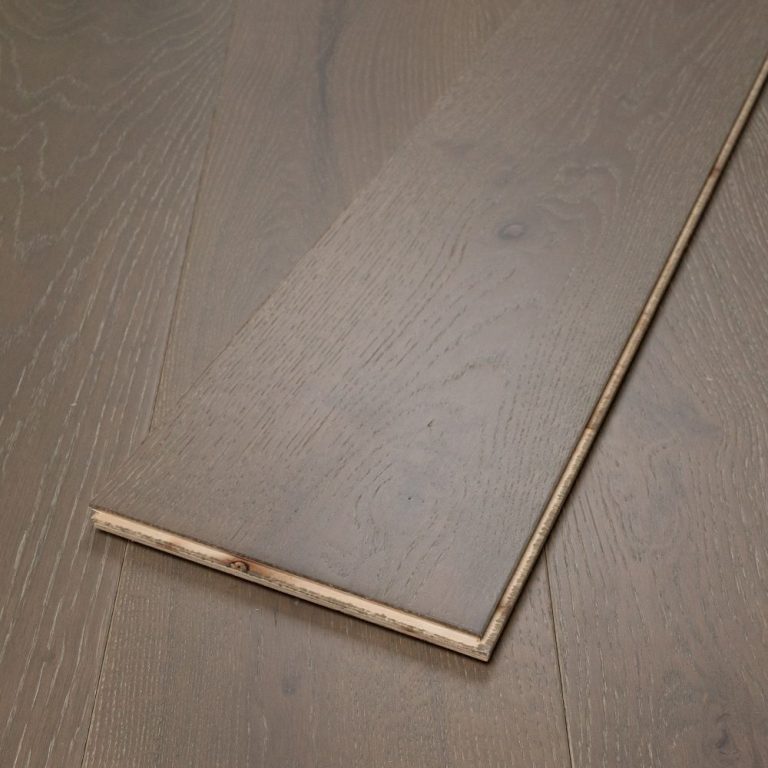
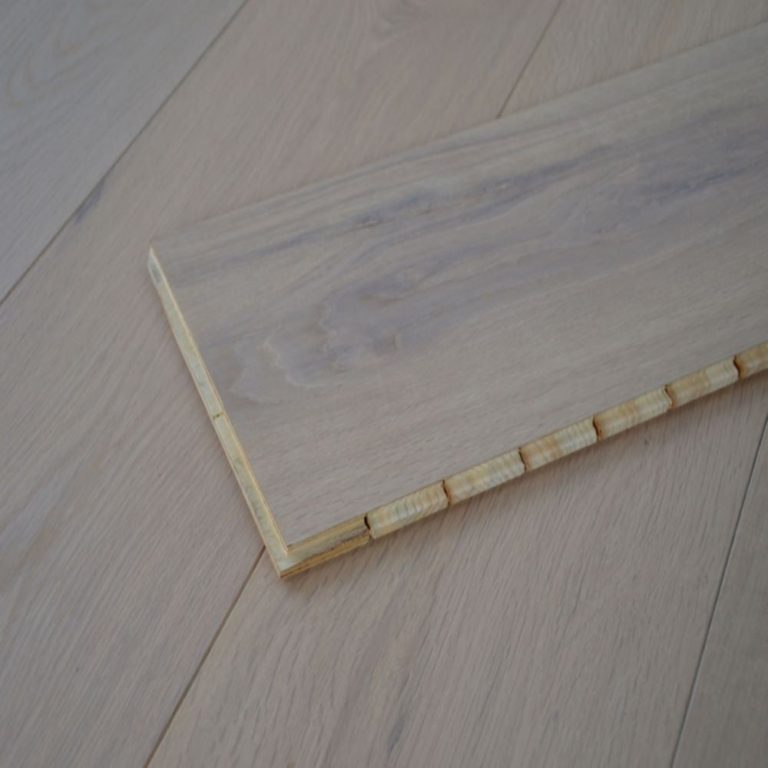
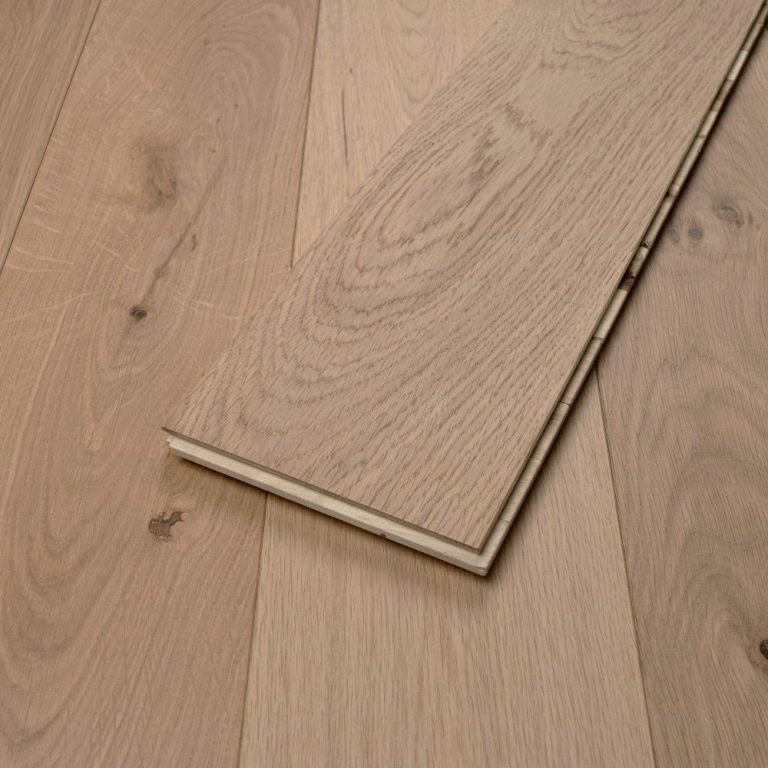
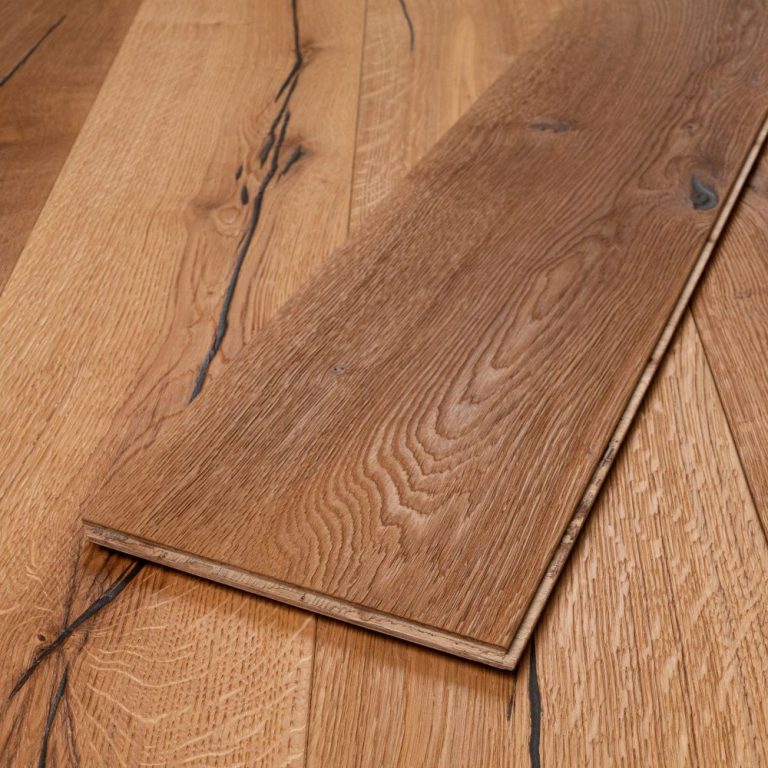
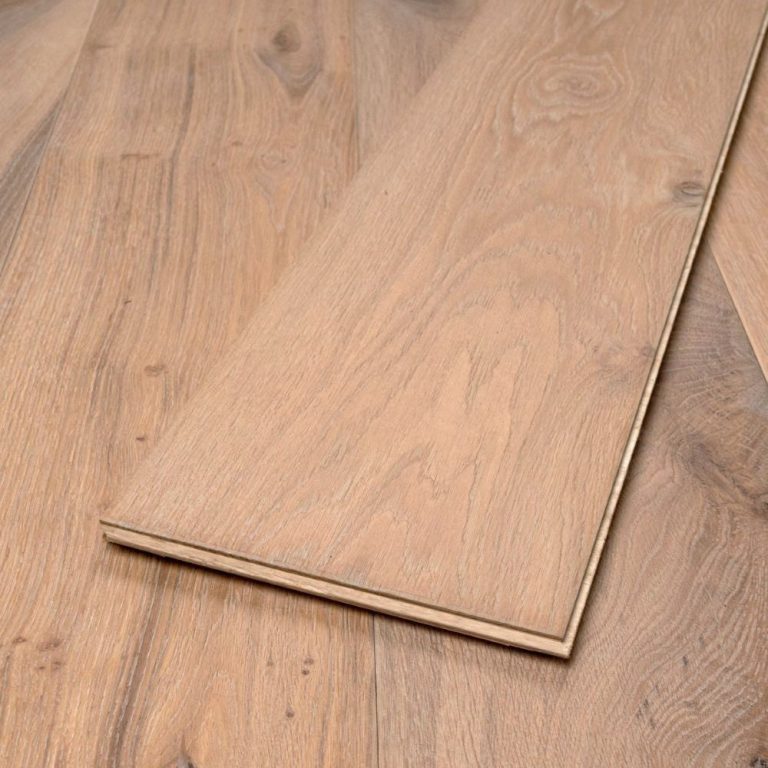
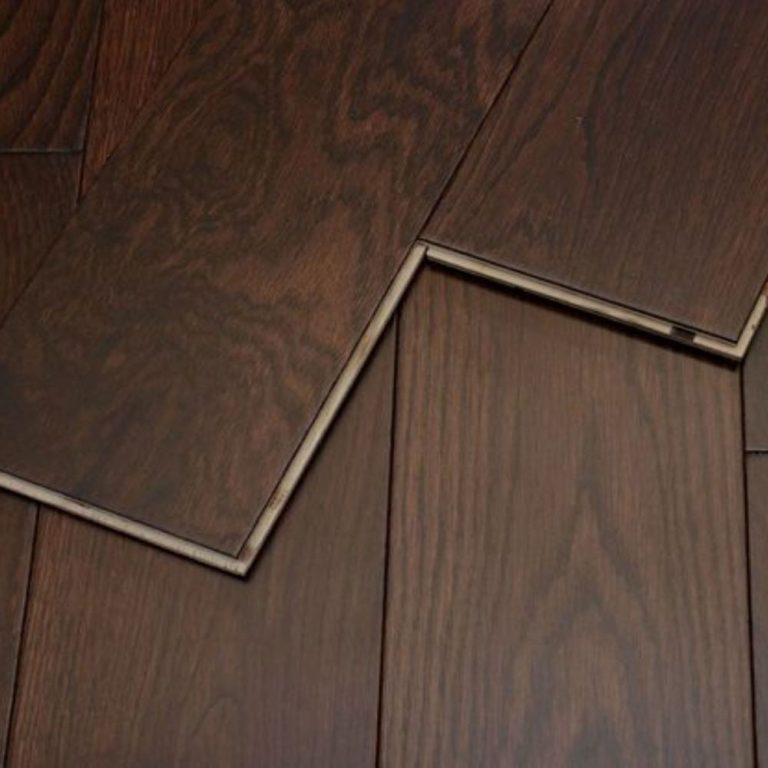
An engineered board is a layer of real oak, the wear layer, bonded to a cross-laminated core, and that construction is the reason it exists: the core holds the board flat where a solid plank would move with the seasons, which is why every one of the 33 boards in this range is listed as compatible with underfloor heating and none of the solid oak boards is. What you walk on, sand and refinish is the oak on top; what keeps it stable is the core underneath. The product standard for multi-layer parquet, quoted below, sets the moisture content the boards must hold at delivery, and it is the reason a well-made engineered floor behaves in a centrally heated house.
Four decisions cover the range, and they are best taken in this order. First, the wear layer: 3 mm on most 14 mm boards, 4 mm on the 15 mm Victorian Antique boards, 6 mm on the two 20 mm boards. It is the depth available for future sanding, and it is what separates a floor that can be refinished once from one that can be refinished several times; the one sourced figure for how many times is a manufacturer's and is quoted below. Second, the surface: smooth, brushed or deep brushed. Smooth is the cleanest look and shows fine scratches most; brushed hides small marks in the grain; deep brushed, on the antique boards, makes texture the point.
Third, the finish. UV lacquer and matt lacquer give the hardest wearing surface and are refinished as a whole floor when the time comes. UV oil, oil and hard wax oil sit in the wood rather than on it, look softer, and can be re-oiled locally where a hallway or a kitchen has worn them. Neither is better; they are two ways of looking after a floor, and the honest question is which you would rather do. Fourth, the width: 125 mm Ascot boards and 150 mm Cobham boards in random lengths for rooms of ordinary size and period houses, 190 mm Weybridge planks at 1900 mm and 220 mm Victorian Antique planks at 2200 mm for larger, open rooms.
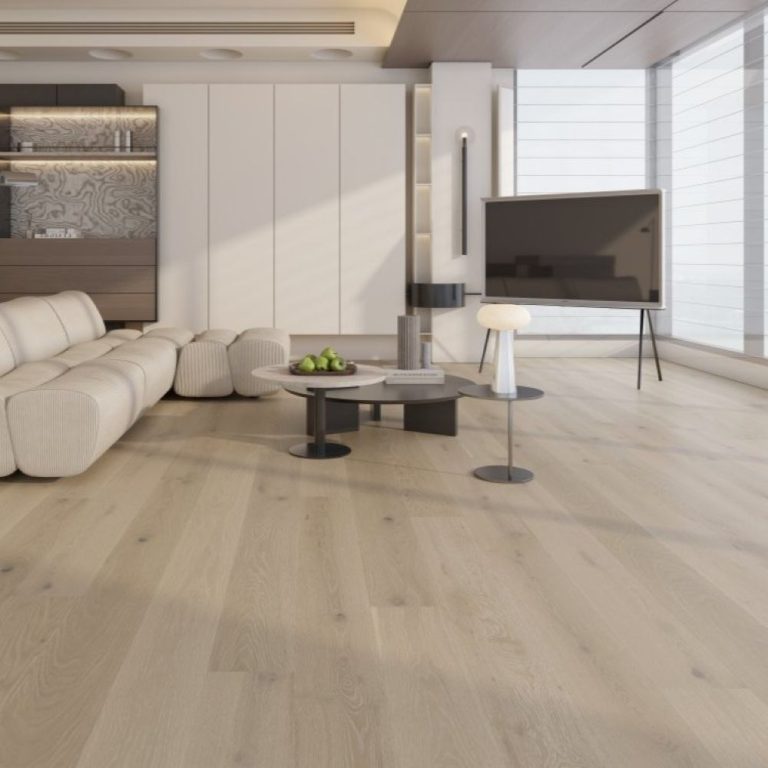
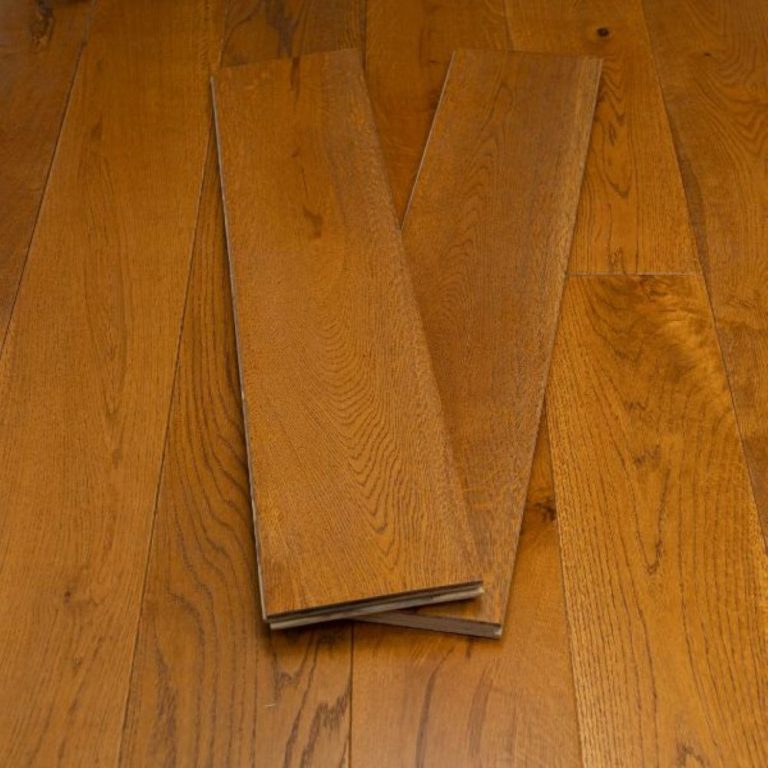
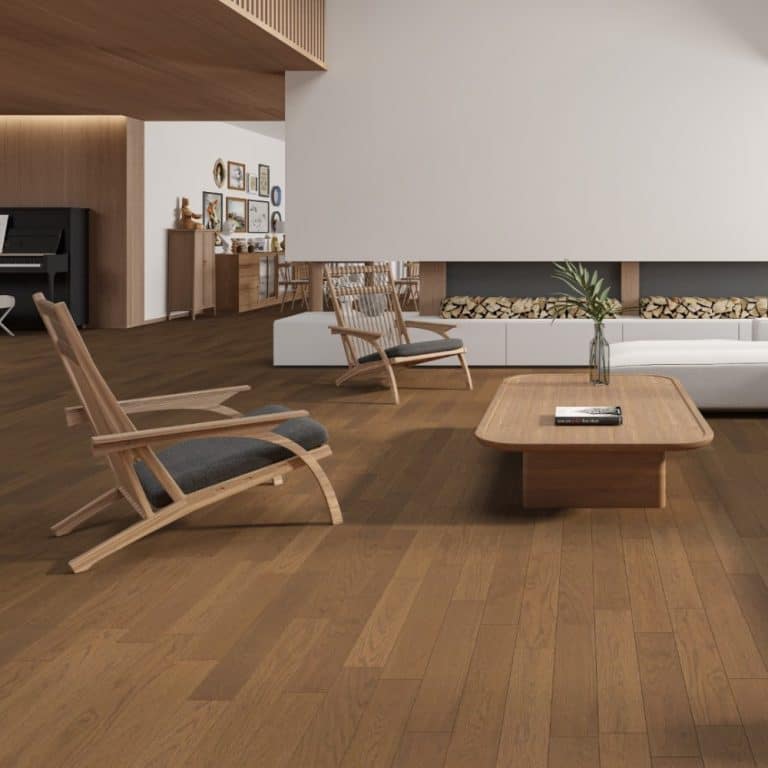
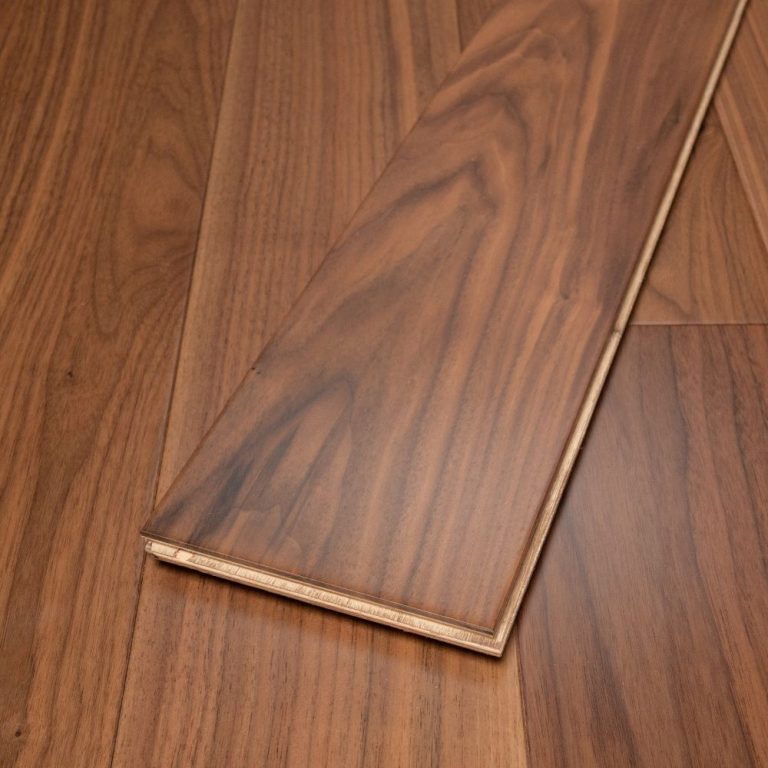
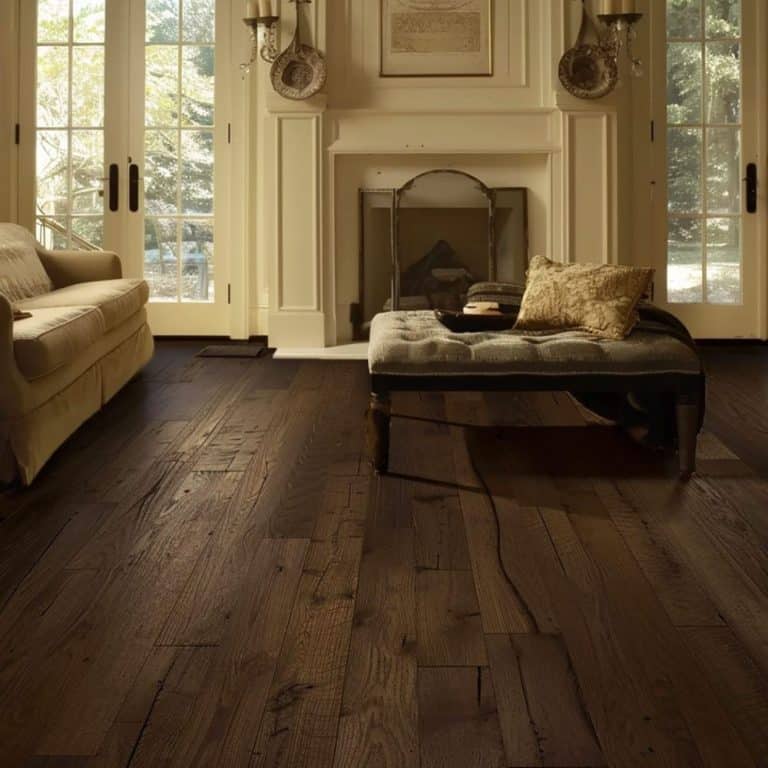
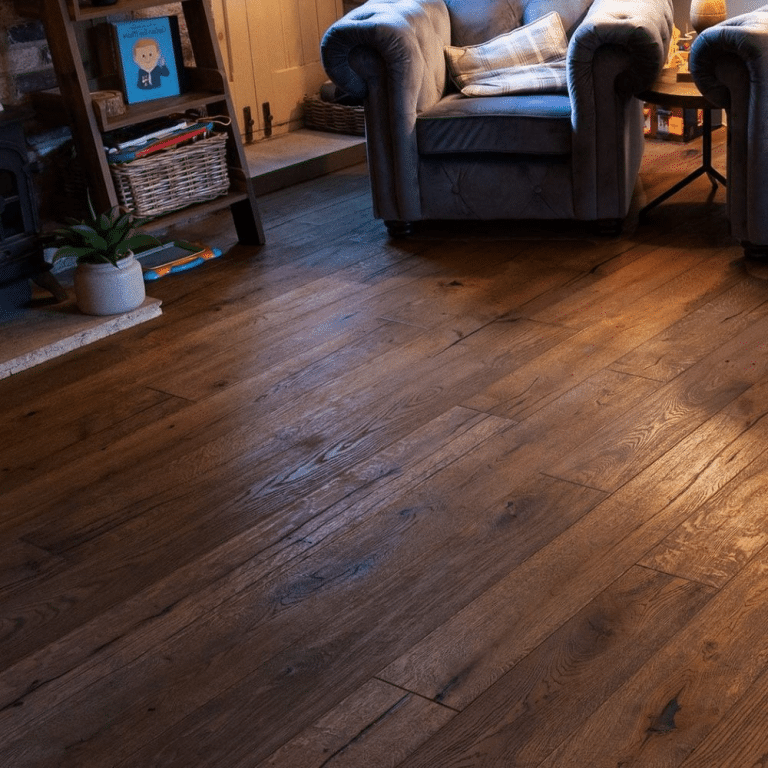
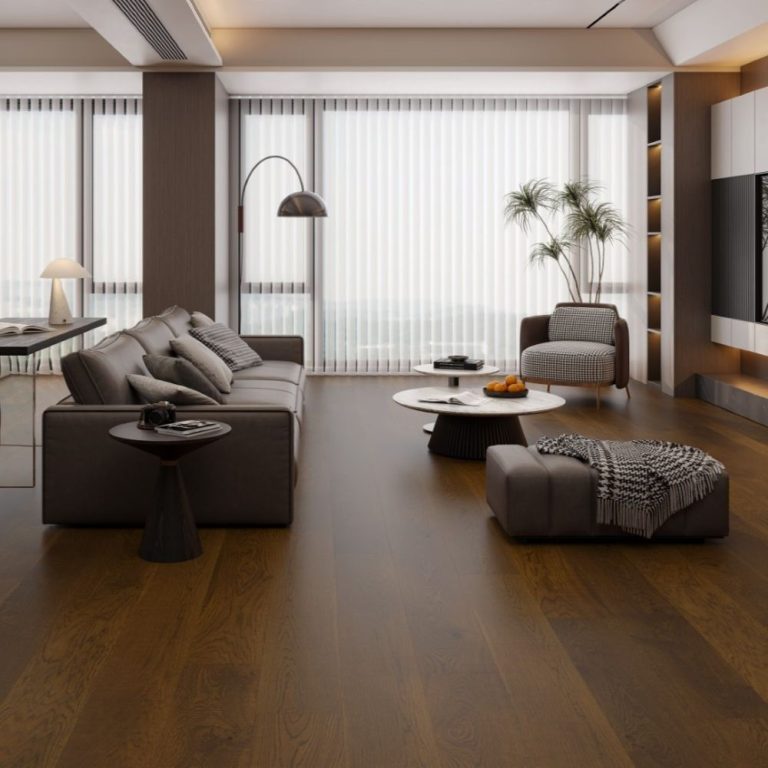
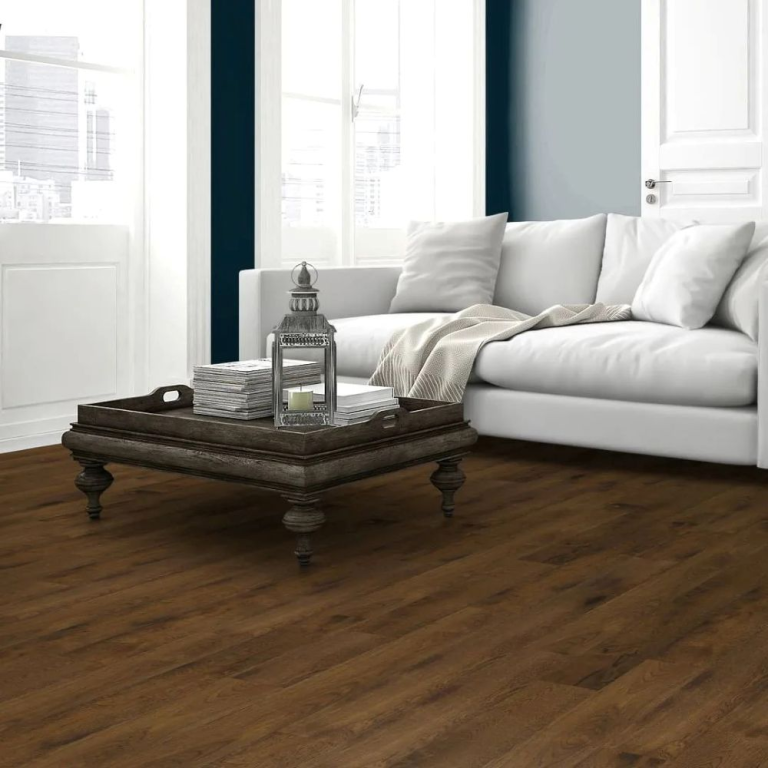
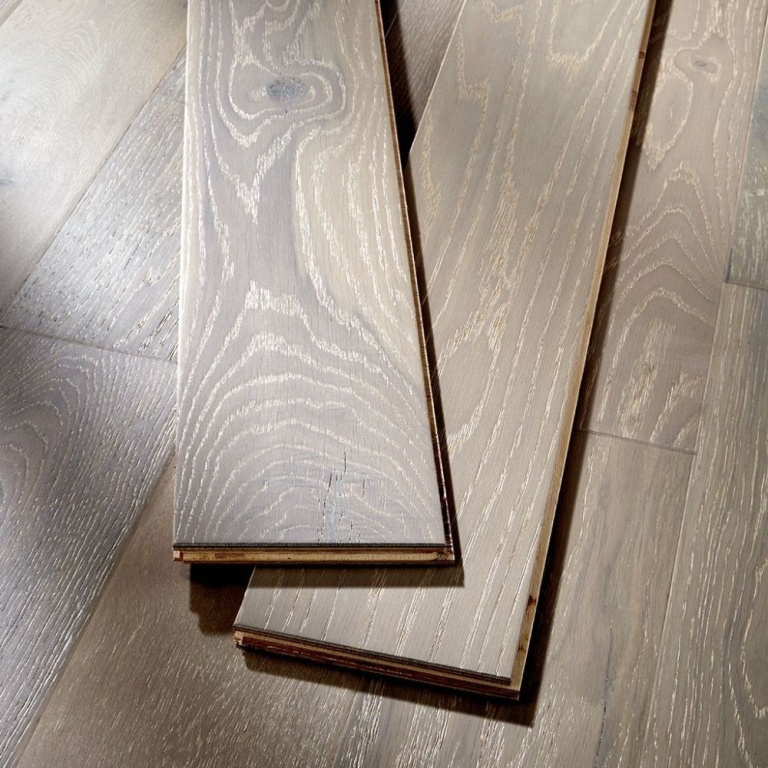
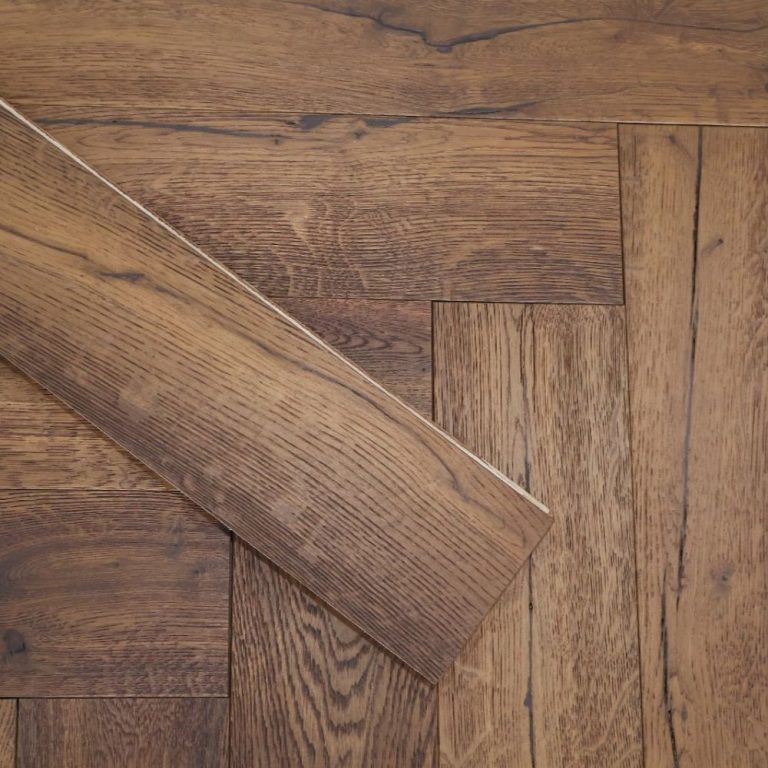
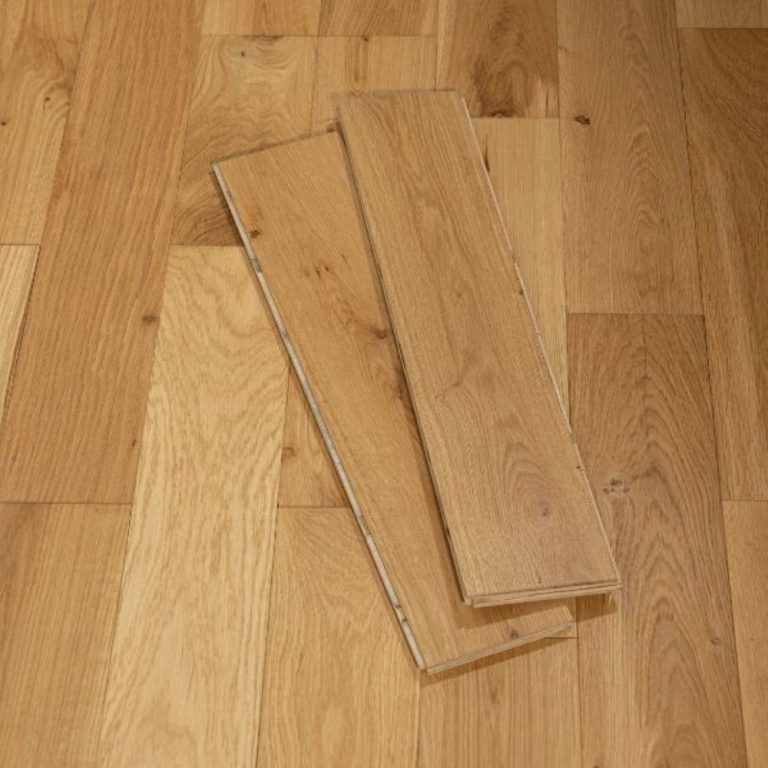
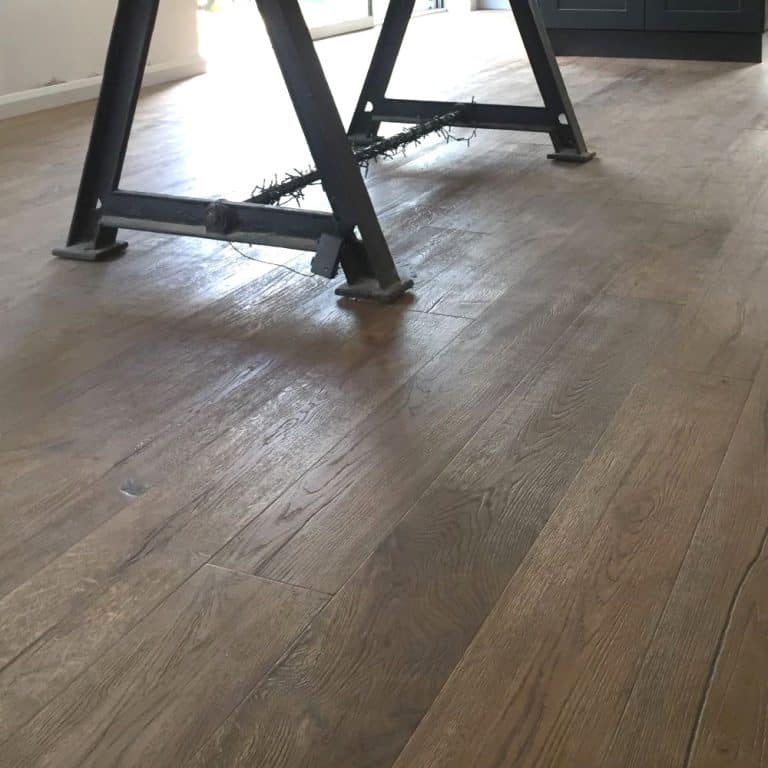
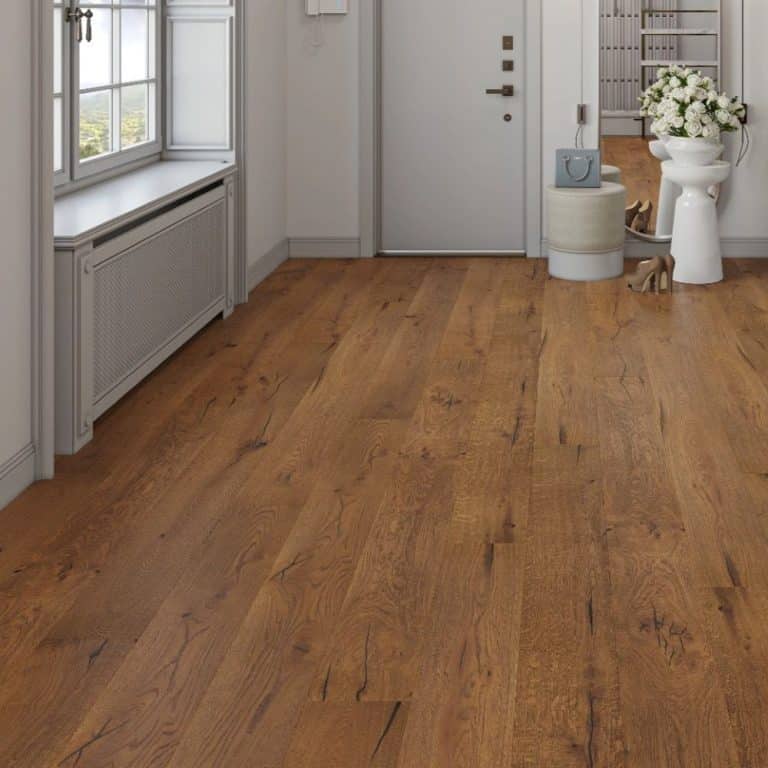
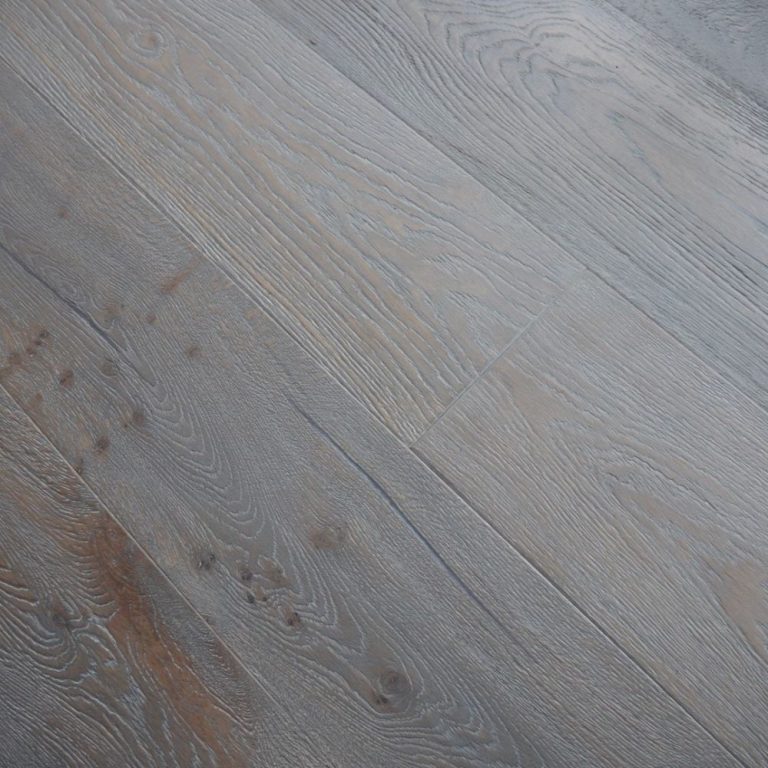
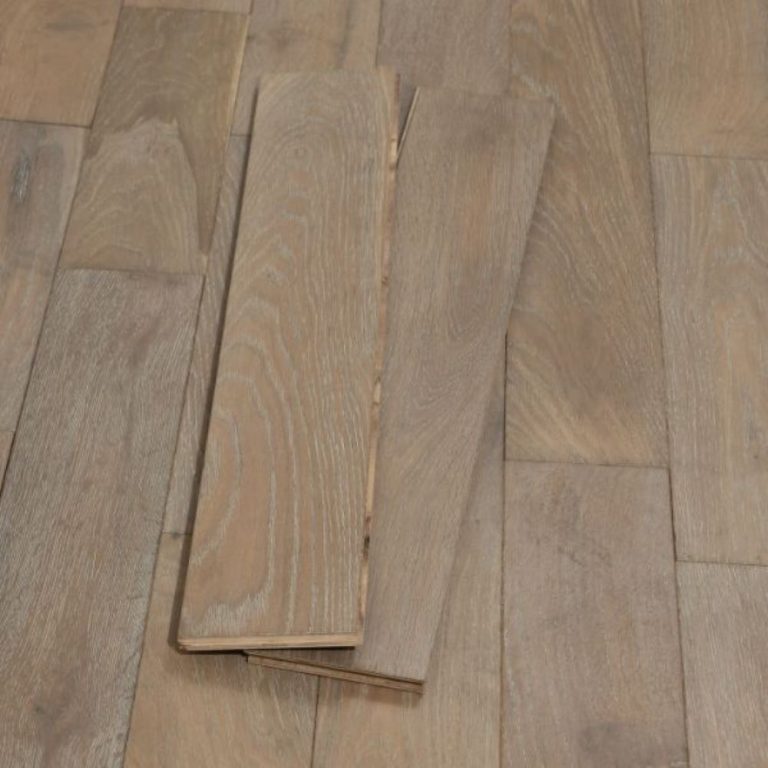
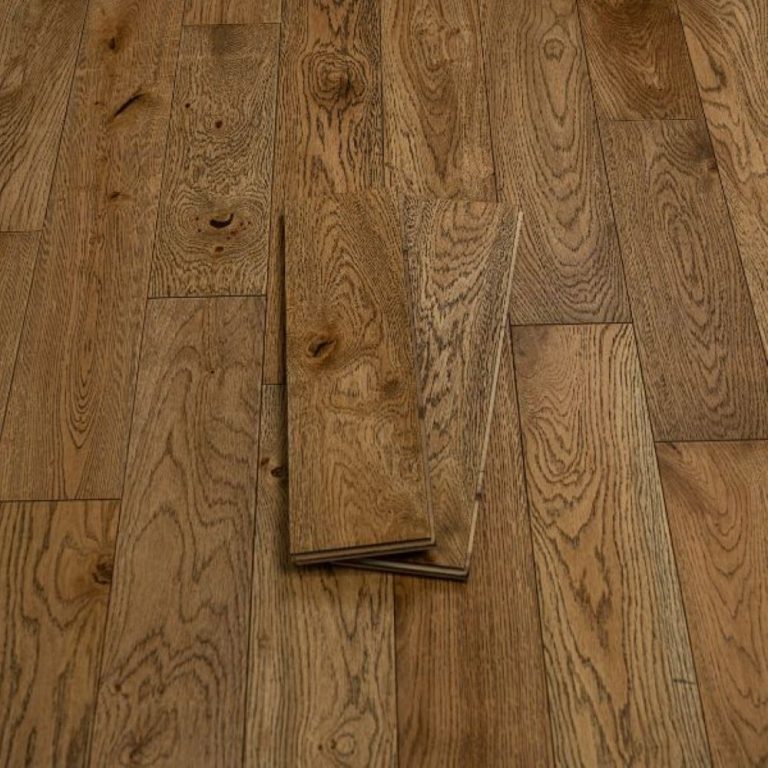
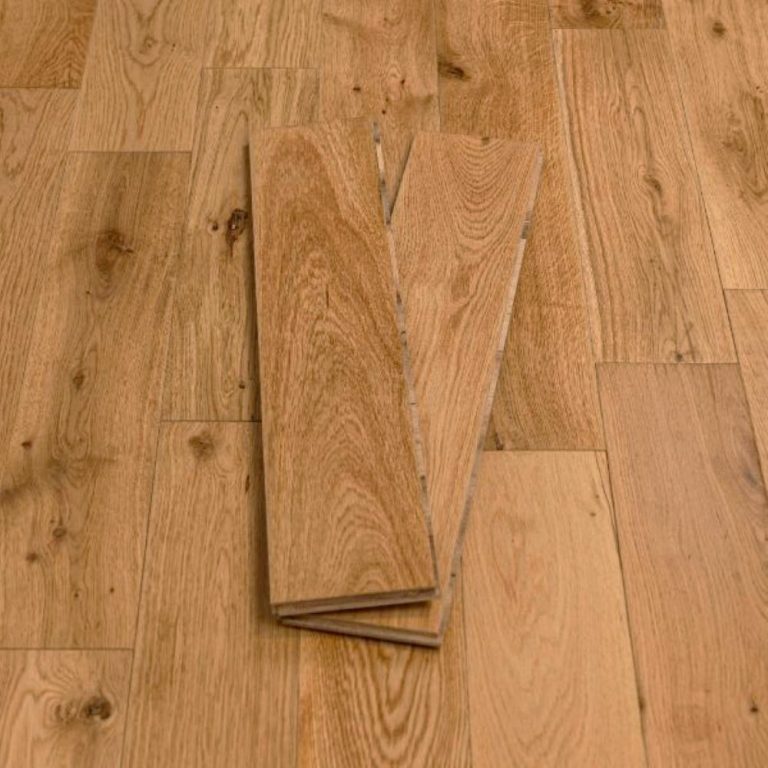
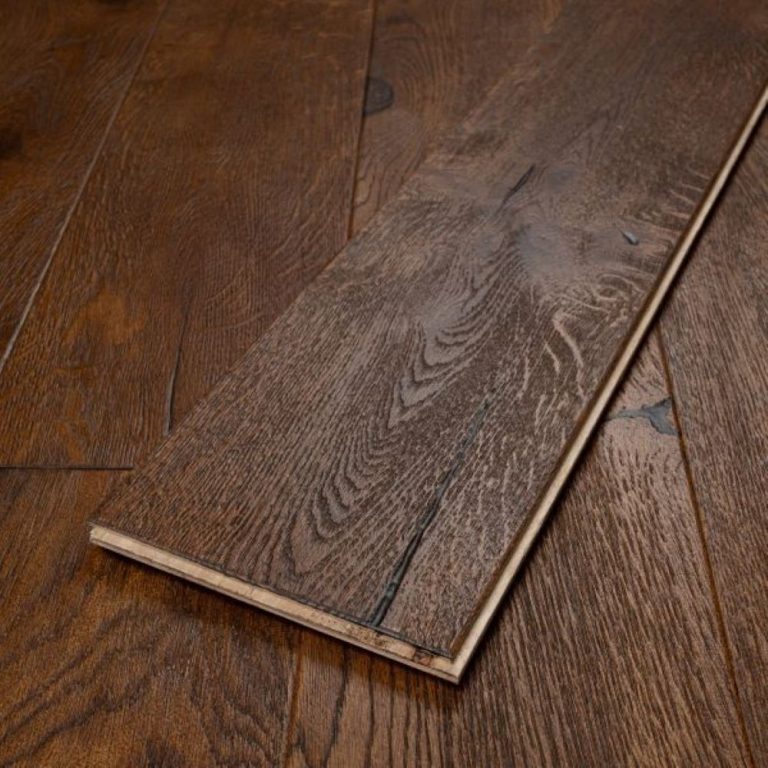
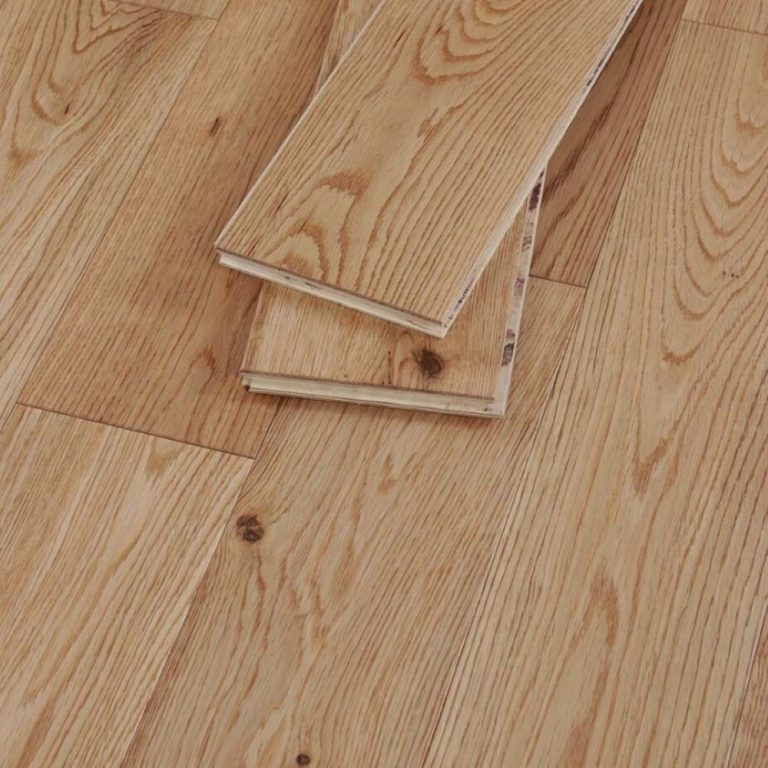
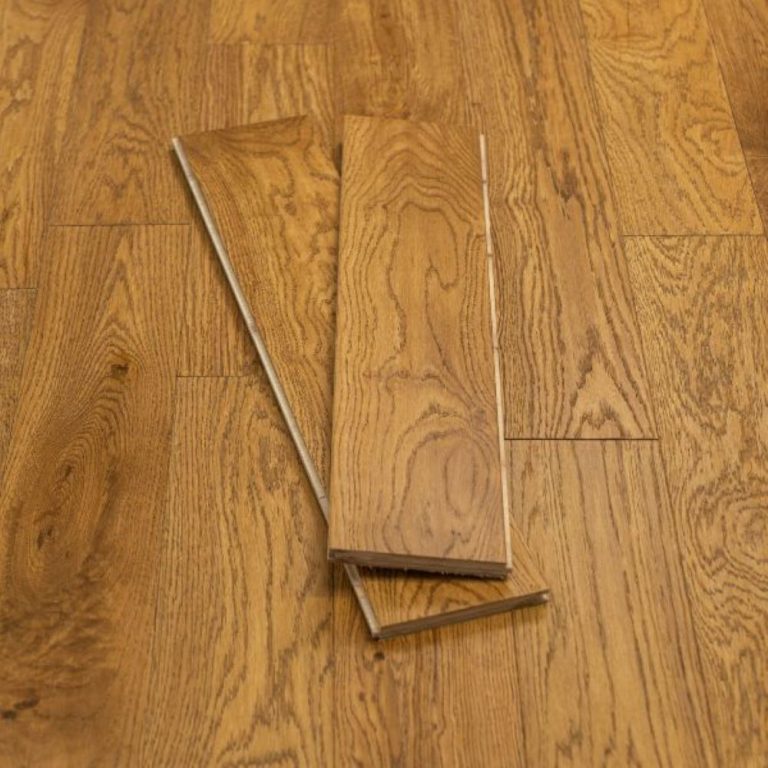
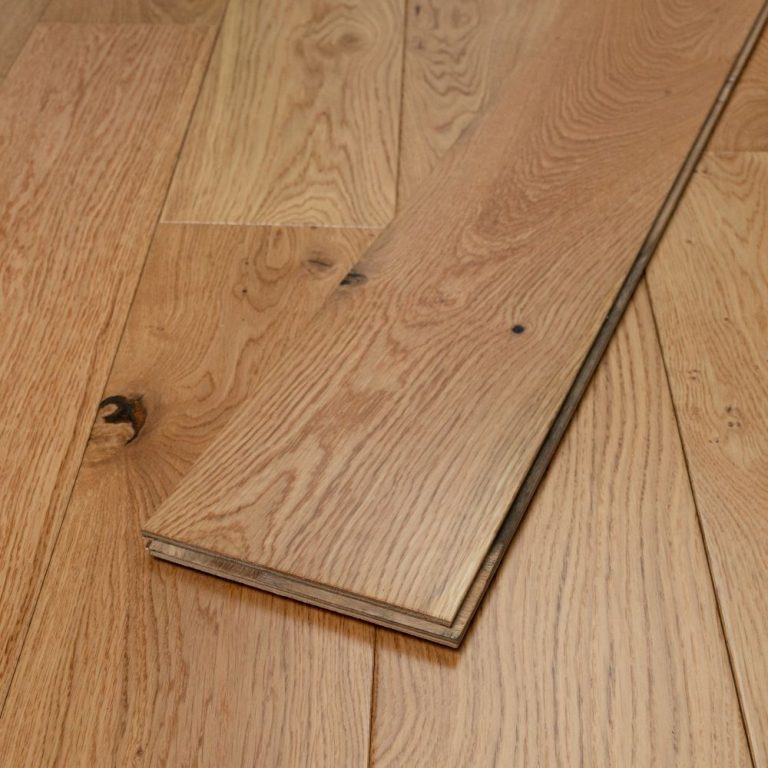
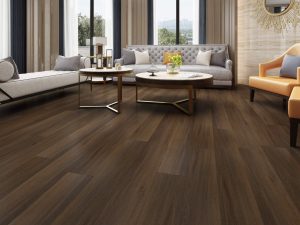
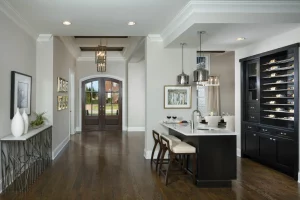
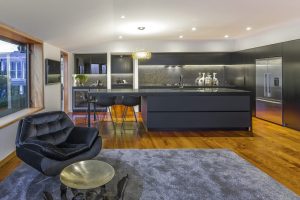
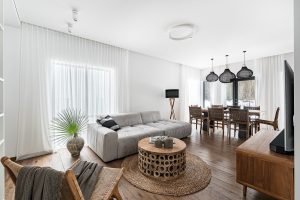
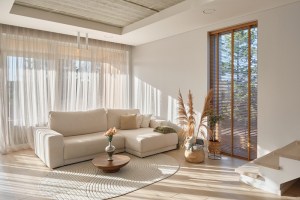
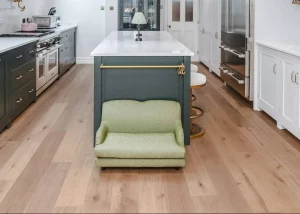
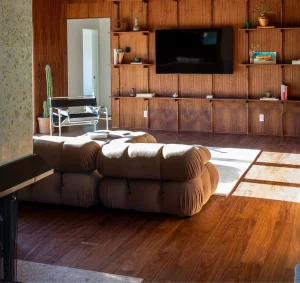
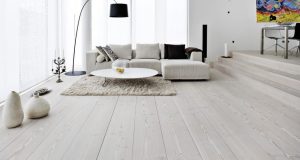
Colour comes last, and the subcategories organise it: natural, light, golden, grey, white, dark and antique oak, and walnut, which is a different species with a finer grain and a colour that lightens rather than darkens with daylight. Every oak tone is available brushed and the walnut boards are smooth only; most tones are available oiled and lacquered; the antique boards are hard wax oiled and deep brushed without exception. Two samples of neighbouring tones, laid on the floor of the actual room in its own light, settle more than any photograph.
What the boards ask of the building is the same whichever you choose: a flat, dry subfloor, a room at its in-service temperature before laying, and the boards acclimatised in it. The trade guidance on acclimatisation and the UK moisture reading for a dry subfloor are quoted below. Over underfloor heating, the limit is the floor surface temperature, and the guidance that ties wood floors to it is quoted as well. The manufacturer's warranty is 15 years on every board except the two 20 mm boards, which carry 20 years; how a manufacturer's guarantee sits alongside statutory rights is the last fact below.
 Shop by category