Samples available UK-wide delivery
Shop by category
Pro Portal
4.6 Trustpilot 2400+ orders delivered UK-wide delivery

Your Basket

0

Your basket is empty

Browse our editorial collections and find your perfect floor.

Browse Collections
Subtotal £0.00
Shipping & discounts calculated at checkout
SSL encrypted — safe and secure
Collection

Marble Effect

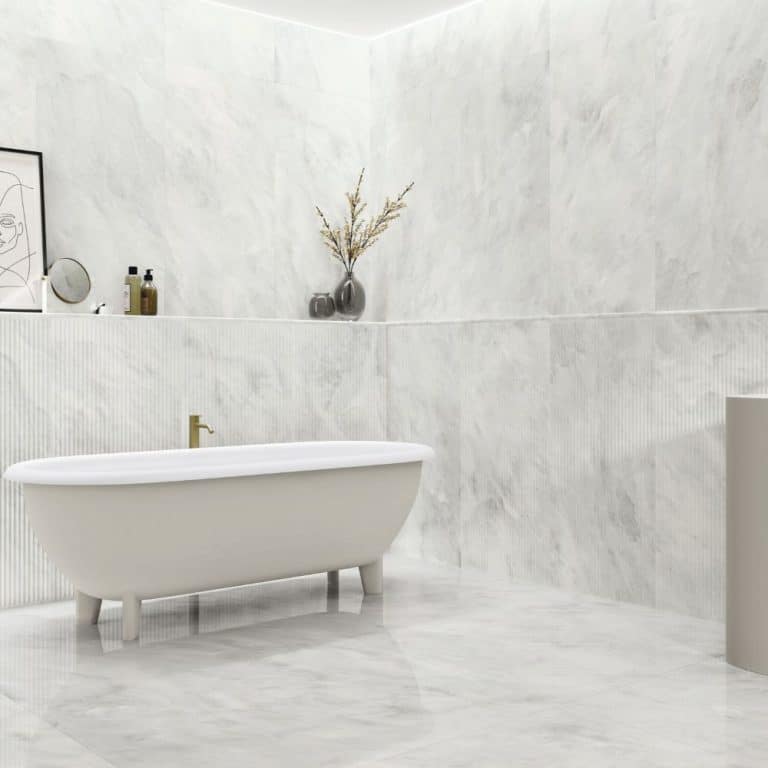
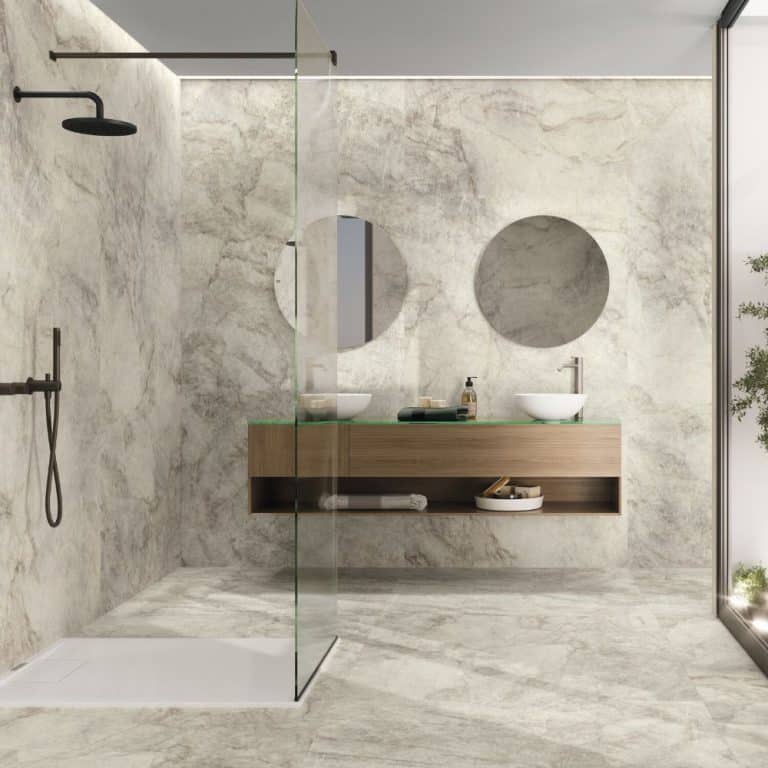
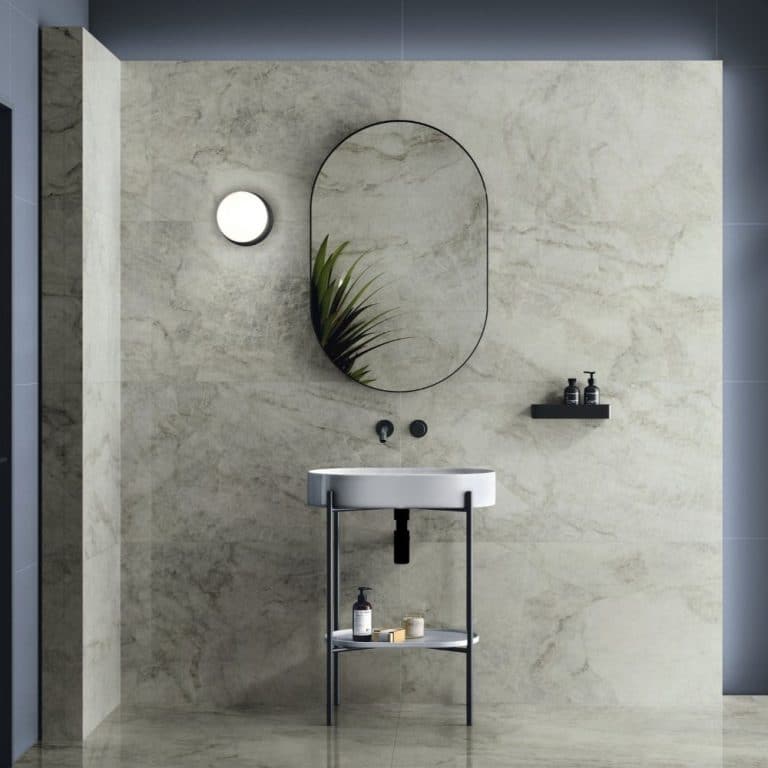
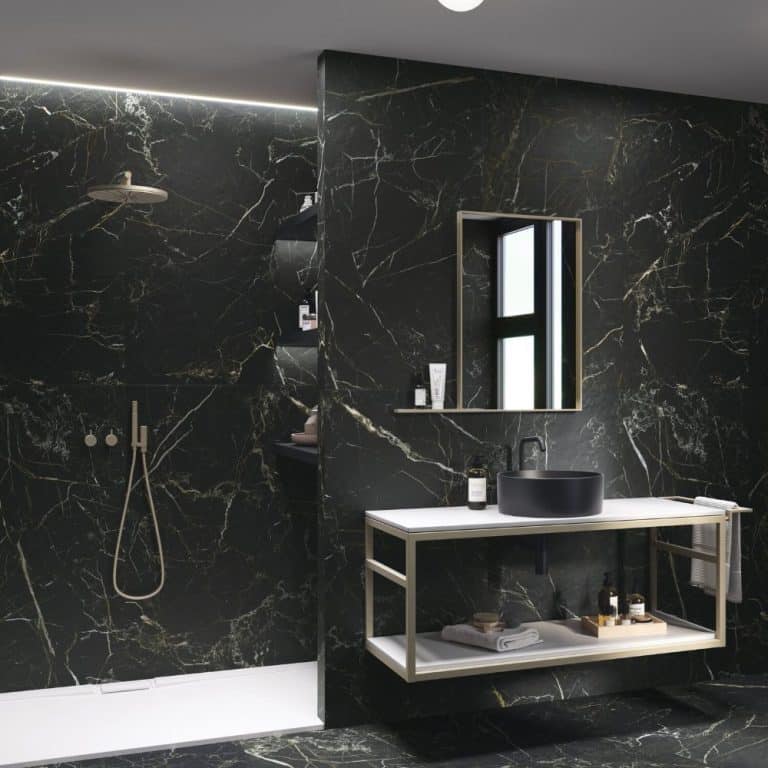
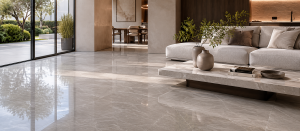
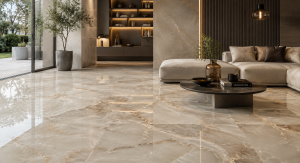
Marble Effect tiles in porcelain: seven at 600 mm by 1200 mm, five polished and two matt.

Marble Effect · The look

Marble Effect tiles in porcelain: seven at 600 mm by 1200 mm, five polished and two matt. Following white, cream, cappuccino and dark marbles, made in Spain, frost resistant and specified for floor and wall.

Polished or matt
Five of the seven are polished, the mirror finish that marble is known for; Luna Blanca and Night Lux also come matt. Polished is the look; matt is the surface for a floor that gets wet, and the slip figures are measured, not assumed.
Four marbles
Luna Blanca and Alexandria White follow white marbles; Alexandria Cream a warm cream; Taj Mahal Cappuccino and Pearl a banded stone that also sits in the onyx subcategory; Night Lux the dark one.
Porcelain, not marble
The look of marble without its habits: it does not etch under household acids as the stone does, and its water absorption ratio is listed under 0.50. Listed as compatible with underfloor heating.
Why porcelain rather than real marble?
Because marble is a soft, porous stone that etches under acids, stains and scratches under grit; porcelain follows the look and takes on almost no water. It is also lighter, thinner at 9 or 10 mm, and consistent from tile to tile, which real stone is not.
Polished or matt for a bathroom floor?
Matt, for the floor; polished, for the walls and for a floor that stays dry. A polished porcelain is slippery when wet, and slip resistance is a measured value: the HSE pendulum scale is quoted below and the figure for each tile is on its data sheet. Luna Blanca and Night Lux come in both finishes for exactly this reason.
Do the tiles work with underfloor heating?
All seven are listed as compatible with underfloor heating, and porcelain conducts heat well. The surface temperature limits the heating standard sets are quoted below.
What does tile fitting cost?
Skilled tiling typically runs £30 to £50 per m² in labour plus preparation. It is not a DIY job; a good tiler is worth every pound on a floor this permanent.
Do you deliver UK-wide and can I get a sample first?
Yes, UK-wide delivery options, and samples from £1.99 so you can check colour and surface texture at home first.

Still unsure? Real people, honest advice.

In depth

Choosing marble-effect porcelain

Marble-effect porcelain gives the look of the stone without its habits. Real marble is porous, soft and etches under anything acidic; porcelain follows the veining and the colour, takes on almost no water and does not scratch under grit the way the stone does. The seven tiles here are all 600 mm by 1200 mm, made in Spain, frost resistant, listed as compatible with underfloor heating, with a water absorption ratio listed under 0.50 and specified for floor and wall, two to a box covering 1.44 square metres.

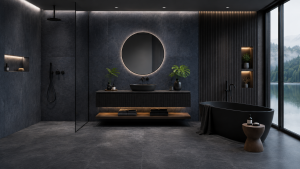
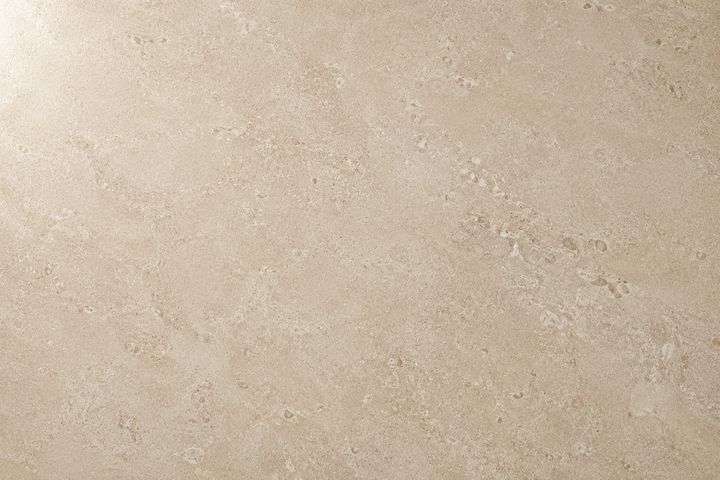
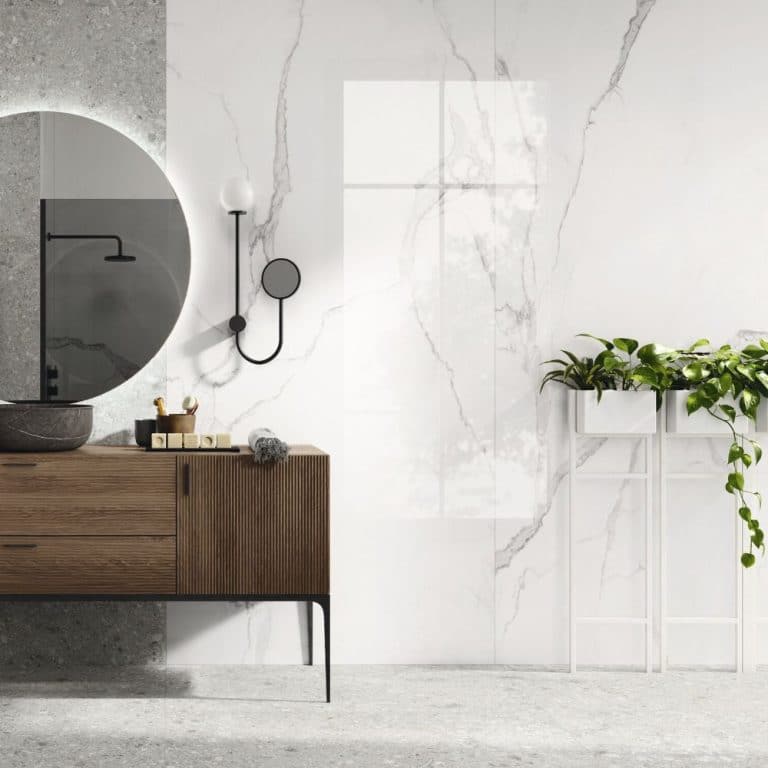
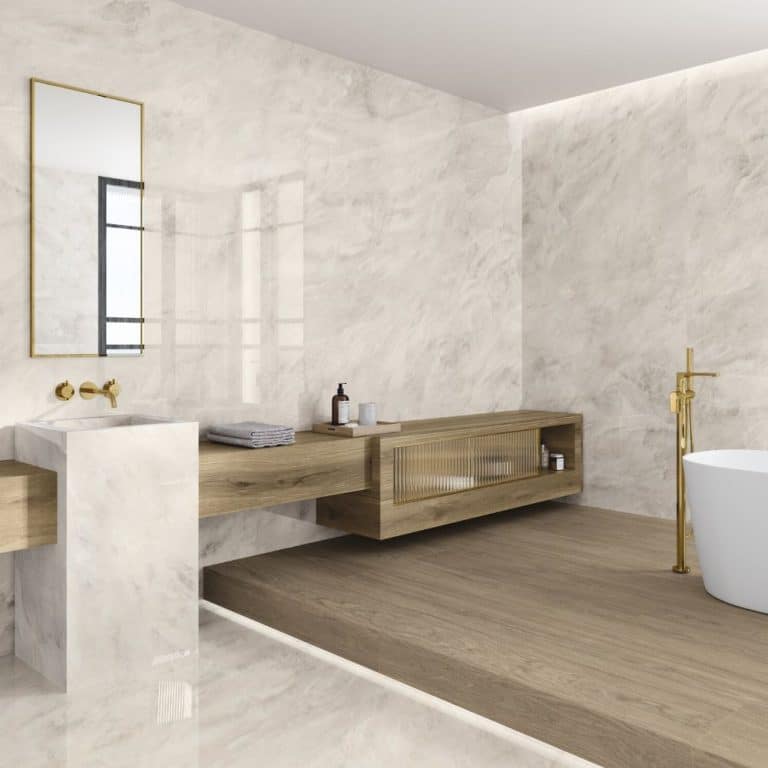
Four marbles are followed. Luna Blanca, in polished and matt versions at 10 mm, and Alexandria White at 9 mm follow white marbles. Alexandria Cream, 9 mm, is the warm one. Taj Mahal Cappuccino and Taj Mahal Pearl, both 10 mm and polished, follow a banded stone and are listed in the onyx subcategory as well. Night Lux, 9 mm and matt, is the dark one. Five of the seven are polished; the two matt tiles are the floor choices for rooms that get wet.

The finish is the practical decision. Polished porcelain is the marble look at its most convincing and it is slippery when wet, which is why Luna Blanca and Night Lux come matt as well. Slip resistance is not a matter of opinion: the HSE grades floors by the pendulum test value, quoted below, and the figure for a specific tile is on its manufacturer's data sheet. For a bathroom floor, ask for it; for a hallway or a kitchen that stays dry, the polished tiles are the point.

Large-format tiles ask for a flat subfloor and a tiler. The screed regularity classes the tiling trade works to are quoted below, along with the surface temperature limits for a tiled floor over heating, which porcelain suits well because it conducts heat readily. For a marble look that floats and clicks, the rigid vinyl range has no marble design; the lappato and stone-effect tiles are the nearest porcelain alternatives at a softer sheen.

The boards named above