Samples available UK-wide delivery
Shop by category
Pro Portal
4.6 Trustpilot 2400+ orders delivered UK-wide delivery

Your Basket

0

Your basket is empty

Browse our editorial collections and find your perfect floor.

Browse Collections
Subtotal £0.00
Shipping & discounts calculated at checkout
SSL encrypted — safe and secure
Collection

Herringbone Wood

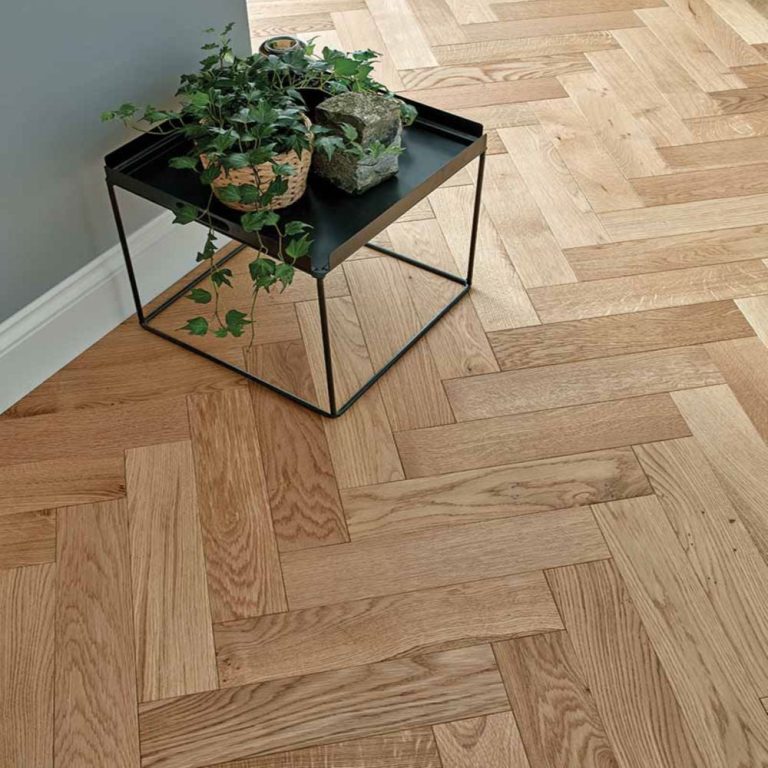
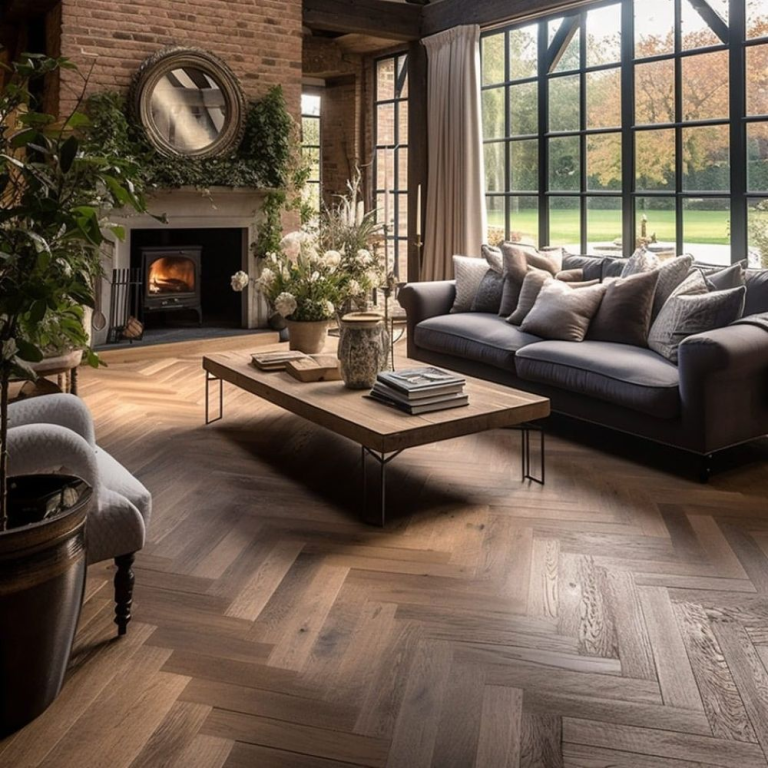
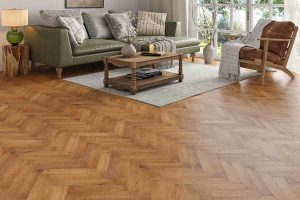
Herringbone wood parquet combines natural timber warmth with a classic zig-zag pattern. It adds depth, movement and timeless charm, perfect for elegant homes and heritage-inspired interiors.

10 products

Herringbone Wood · The look

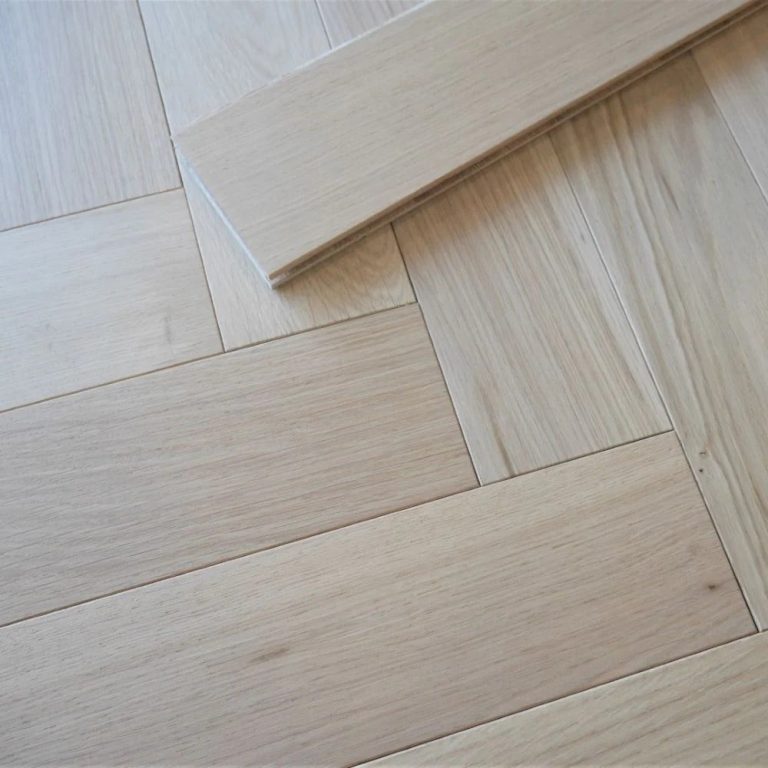
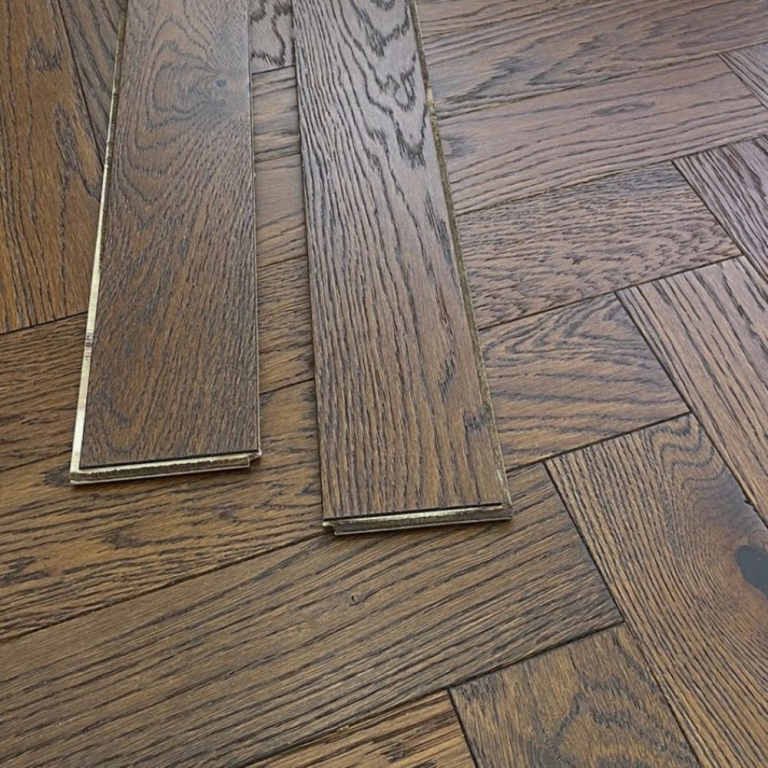
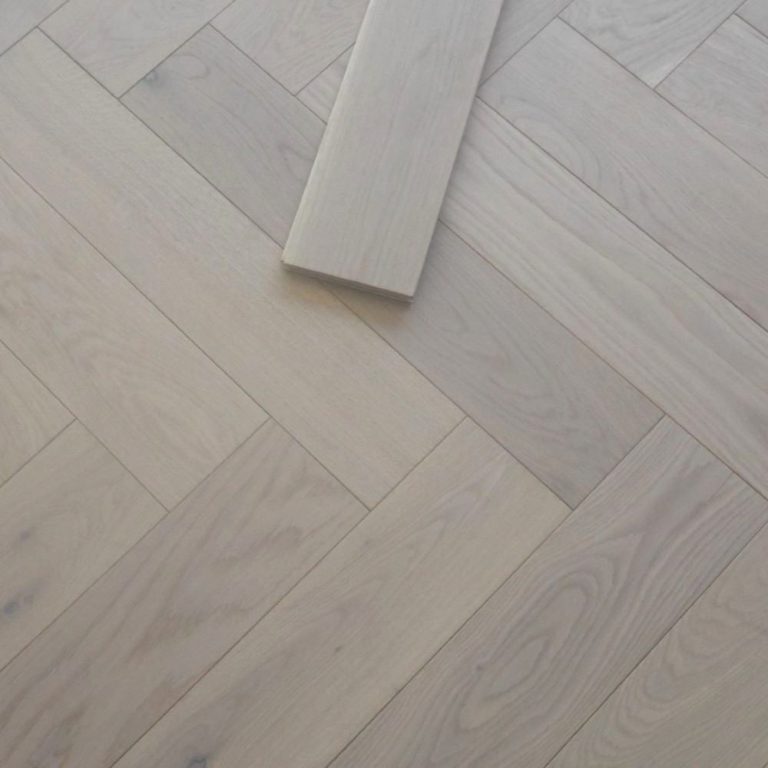
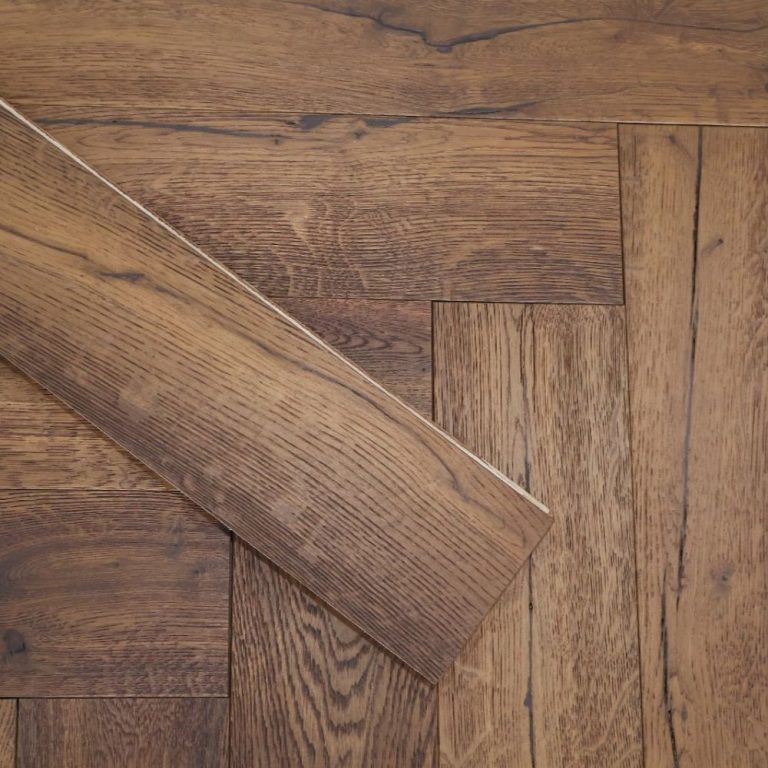
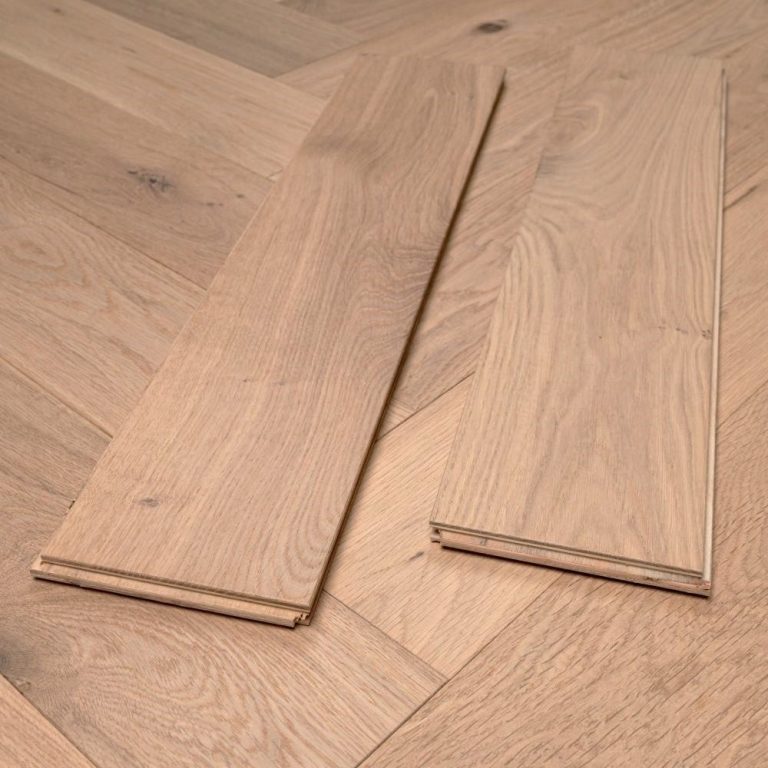
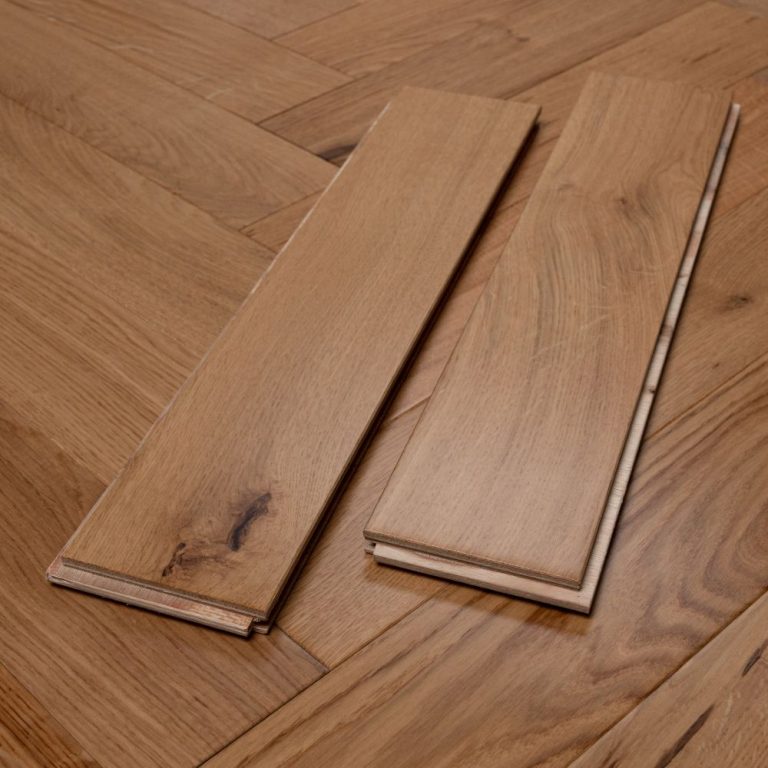
Herringbone Wood parquet in engineered oak: ten Oxford blocks in two sizes, all with a 3 mm wear layer. Six colours, oiled or lacquered, brushed or smooth, and every block listed as compatible with underfloor heating.

Two block sizes
The 90 mm by 450 mm block gives a finer, busier pattern that suits smaller rooms and hallways; the 125 mm by 600 mm block gives a broader, calmer pattern that suits larger rooms. The proportions are near enough the same, so the geometry of the pattern barely changes and only the scale does.
Heated floors, yes
Every Oxford block is listed as compatible with underfloor heating, which is the practical reason to choose engineered herringbone over solid blocks. The temperature limit for wood floors over heating is quoted below.
Colour and finish together
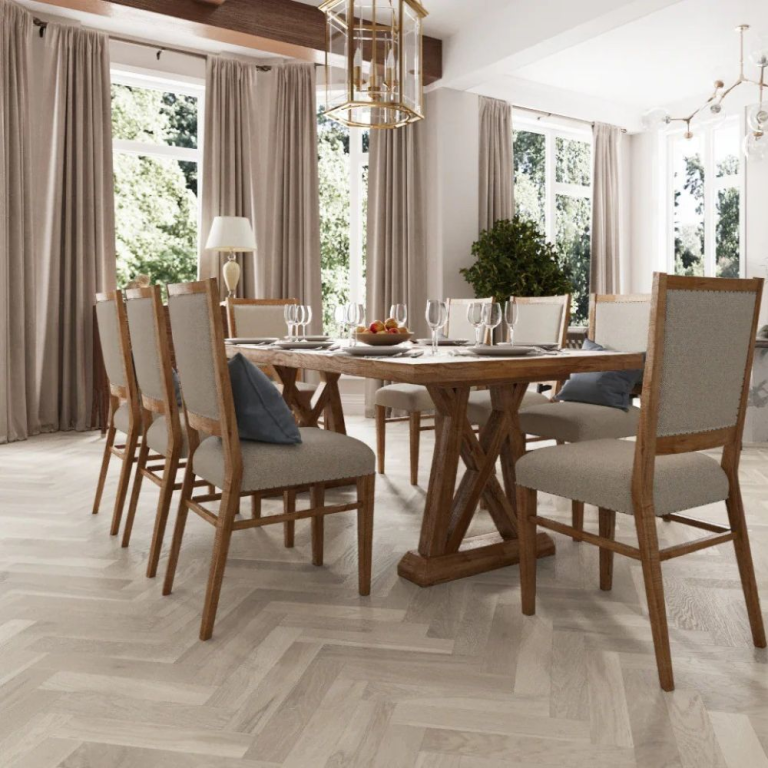
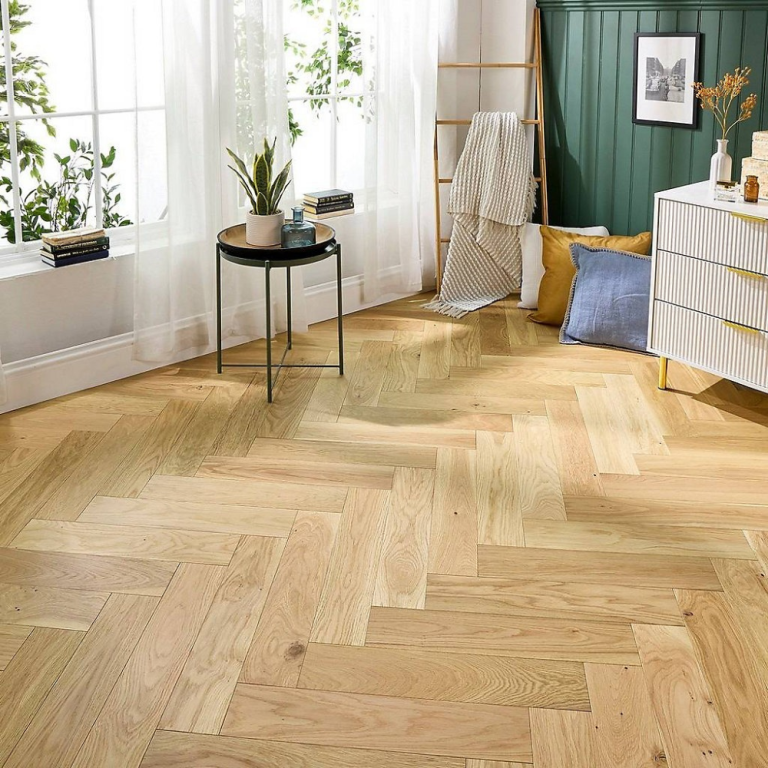
Natural, light, whitewashed, white oiled, dark brown, fumed and antique brown, in UV oil, UV lacquer, matt lacquer, invisible lacquer, white oil and hard wax oil. Order two samples if the choice is between neighbouring tones; herringbone shows colour variation across the pattern more than a plank floor does.
What is the difference between herringbone and chevron?
The cut. Herringbone blocks have square ends and are laid at right angles to each other in a staggered zigzag; chevron blocks have angled ends that meet on a straight line to form a V. The definitions we could verify are quoted below, and the comparison guide covers the choice in detail.
Which Oxford block size should I choose?
The 90 mm by 450 mm block in rooms of ordinary size and in hallways, where the finer pattern reads well; the 125 mm by 600 mm block in large rooms, where a fine pattern would look fussy. In a doubtful case, lay a few sample blocks of each on the floor of the actual room.
How much extra do I order for herringbone?
More than for a plank floor, because every row ends in a cut. There is no published standard for cutting waste; the manufacturer guidance we could verify quotes a higher allowance for patterned floors and it is quoted below. Order from that figure and keep the spare blocks for future repairs.
How do I order the right amount?
Use the calculator on any product page and allow the higher pattern waste factor; our team can sanity-check your measurements before you order.
Can I get a sample first?
Yes, samples from £1.99 delivered to your door, so you can see the block size and finish in your own light.

Still unsure? Real people, honest advice.

In depth

Choosing engineered herringbone

Herringbone is the parquet pattern most people picture: rectangular blocks with square ends, laid at right angles to each other and staggered, so the floor reads as a broken zigzag. The Oxford range does it in engineered oak, which is the version that goes over underfloor heating and stays flat in a modern, centrally heated house. Every block is 14 mm thick with a 3 mm European oak wear layer, tongue and groove, micro-bevelled, Classic grade except the Antique Brown, and carries a 15 year manufacturer's warranty.

Two block sizes cover most rooms. The 90 mm by 450 mm block, in six colours, gives a fine pattern that suits hallways and rooms of ordinary size. The 125 mm by 600 mm block, in four colours, gives a broader pattern for larger rooms. The two sizes are near enough the same proportion, so the geometry barely changes and only the scale does. Colour runs from White Oiled and Whitewashed at the pale end, through Light, Natural and Natural Brushed, to Dark Brown, Fumed and Antique Brown.

The surface splits the same way as the plank ranges. Seven blocks are brushed and one deep brushed, which hide fine marks; the Lacquered and White Oiled blocks are smooth, which is the cleaner, more formal look. Finishes are UV oil on four blocks, lacquer (UV, matt or invisible) on four, white oil on one and hard wax oil on the Antique Brown. Oiled blocks can be re-oiled locally; lacquered ones are refinished as a whole floor.

Two things to settle before ordering. The pattern is set out from the centre line of the room, so the room's shape decides how many cut blocks it needs, and the allowance for that is a manufacturer figure quoted below rather than a standard. And the boards need to acclimatise in the room, at its in-service temperature, before they are laid; for a patterned floor with hundreds of joints that matters more than for planks.