Samples available UK-wide delivery
Shop by category
Pro Portal
4.6 Trustpilot 2400+ orders delivered UK-wide delivery

Your Basket

0

Your basket is empty

Browse our editorial collections and find your perfect floor.

Browse Collections
Subtotal £0.00
Shipping & discounts calculated at checkout
SSL encrypted — safe and secure
Collection 6 min read

Herringbone Flooring

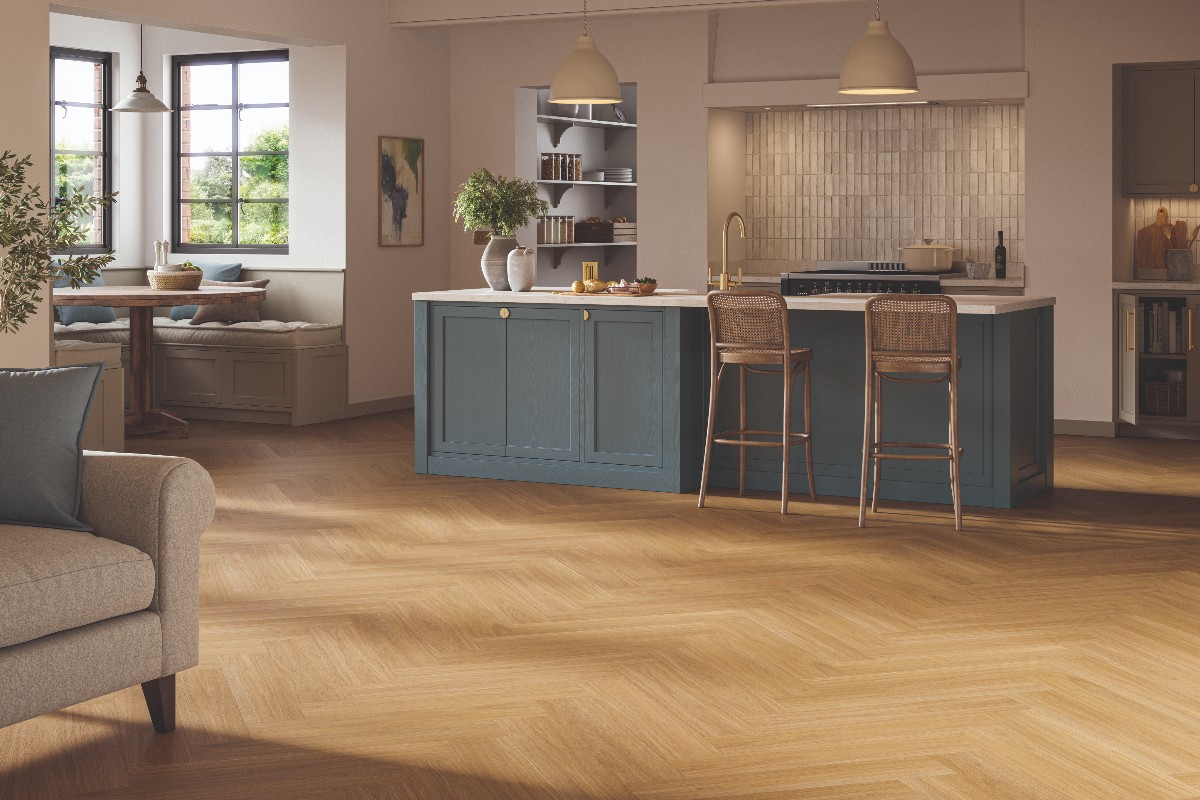
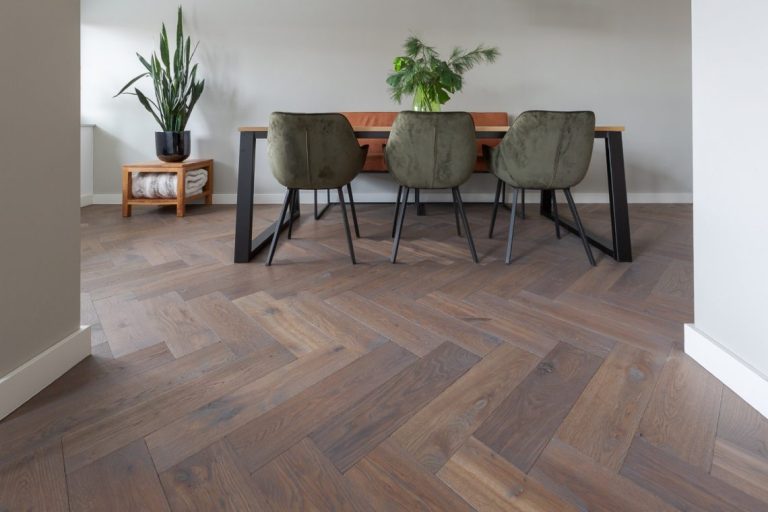
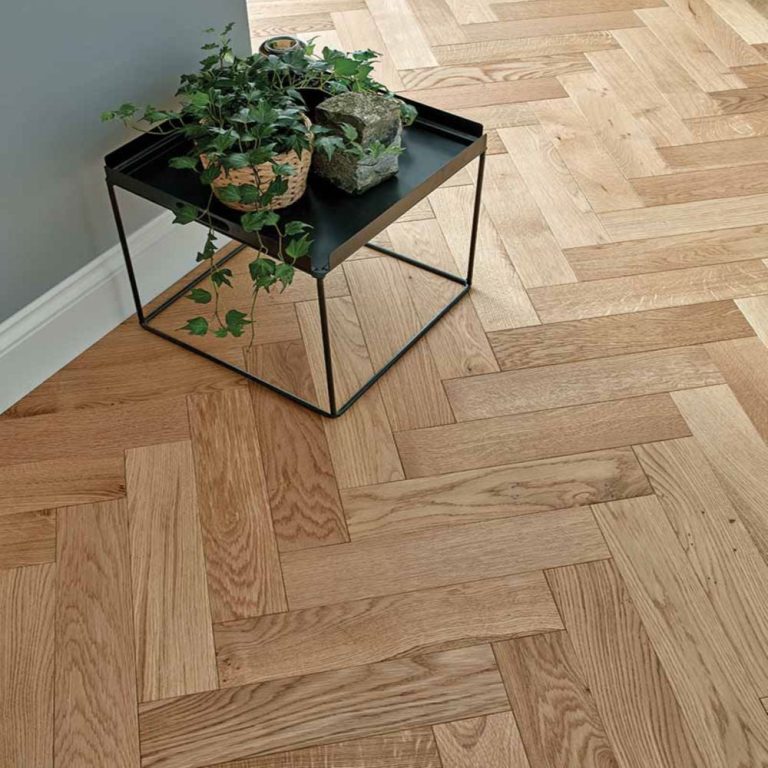
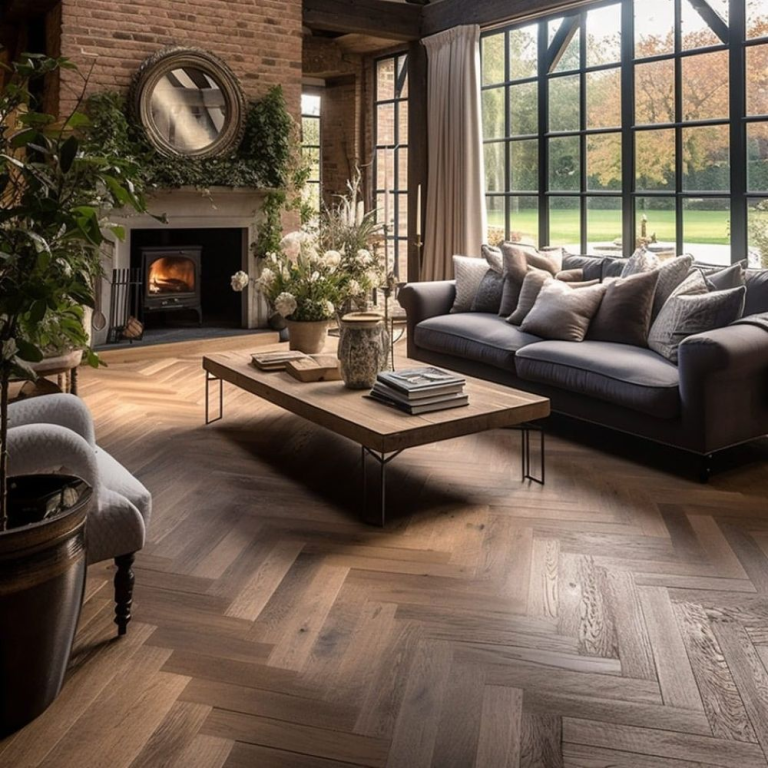
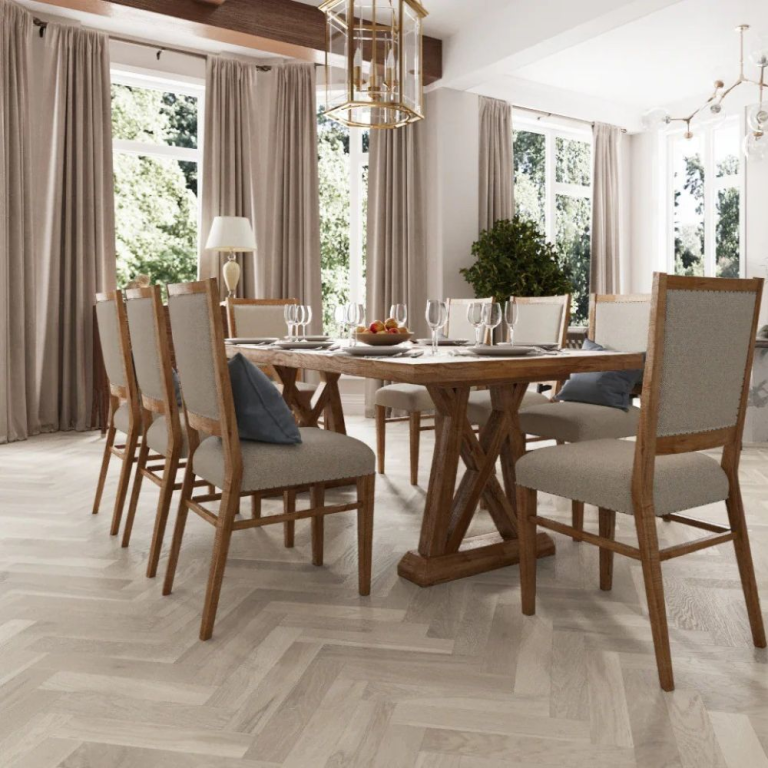
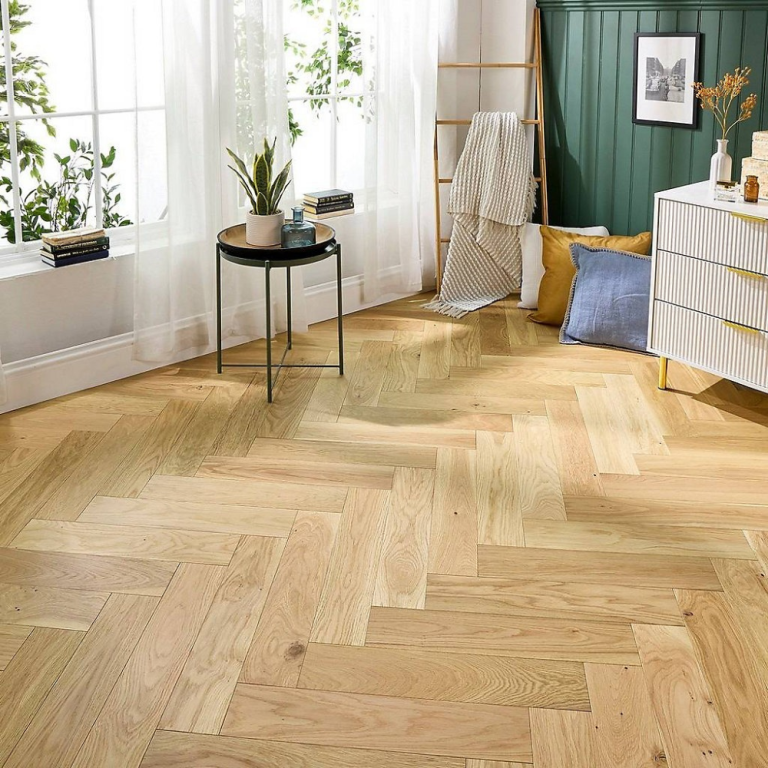
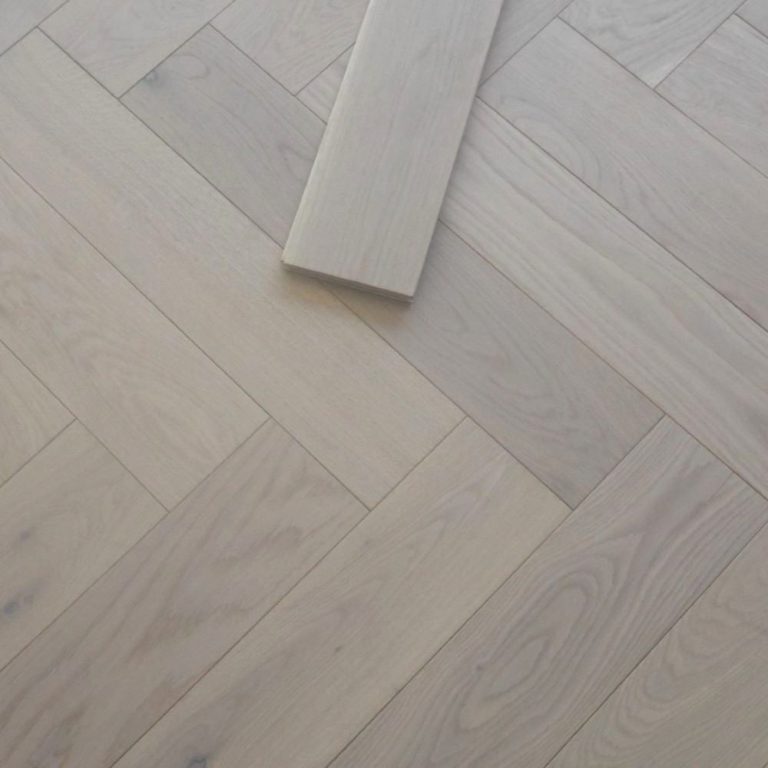
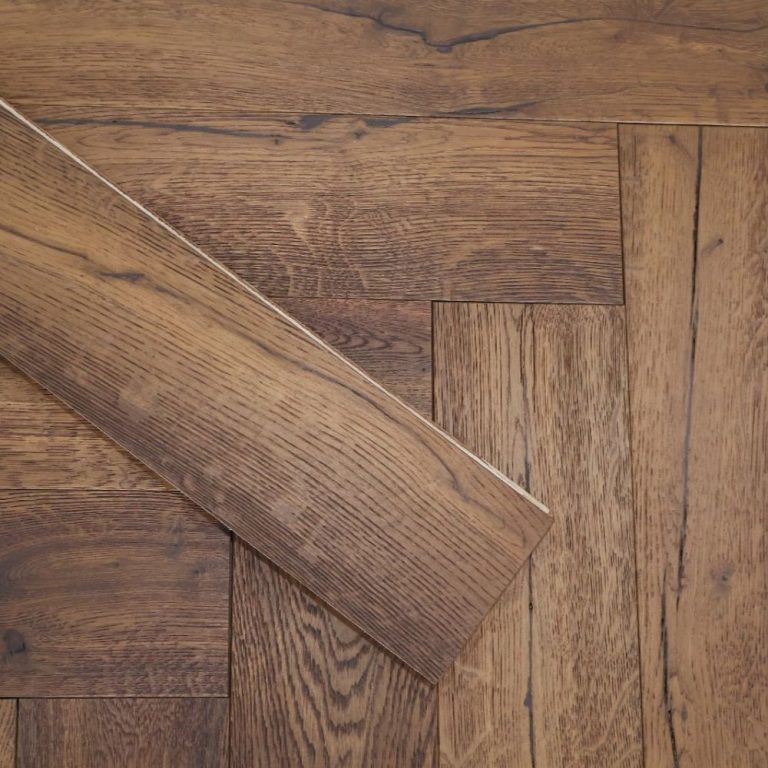
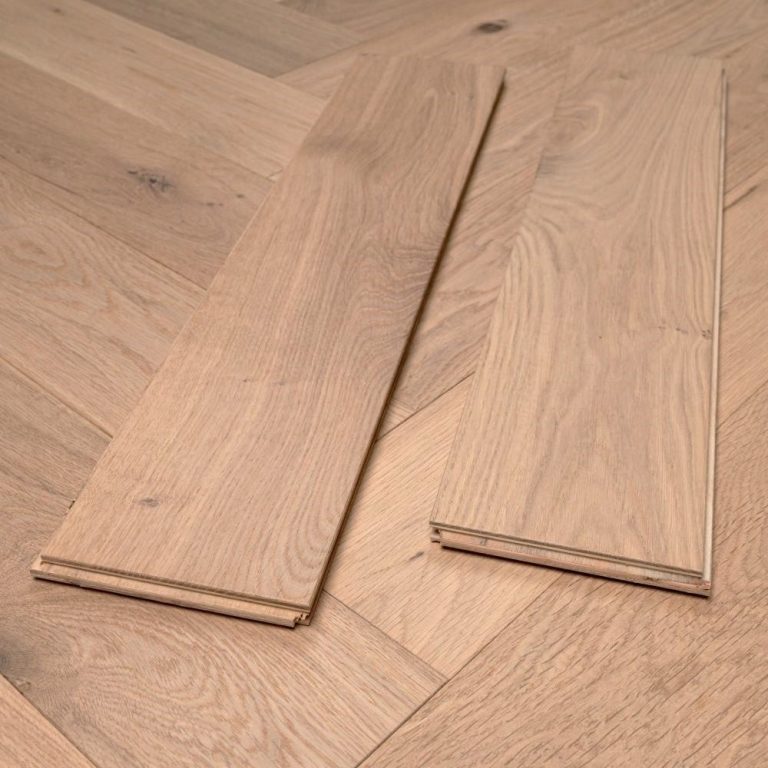
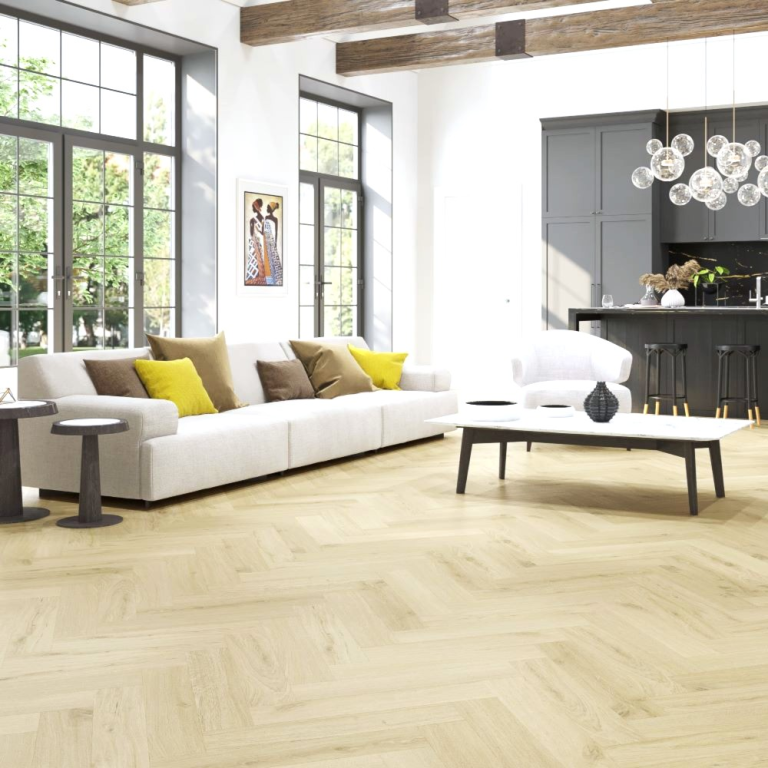
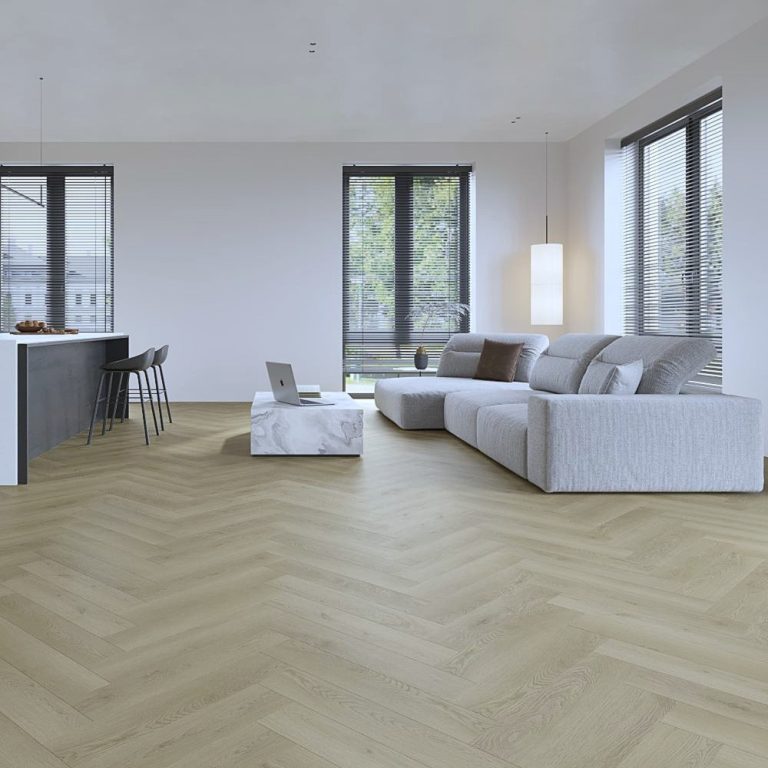
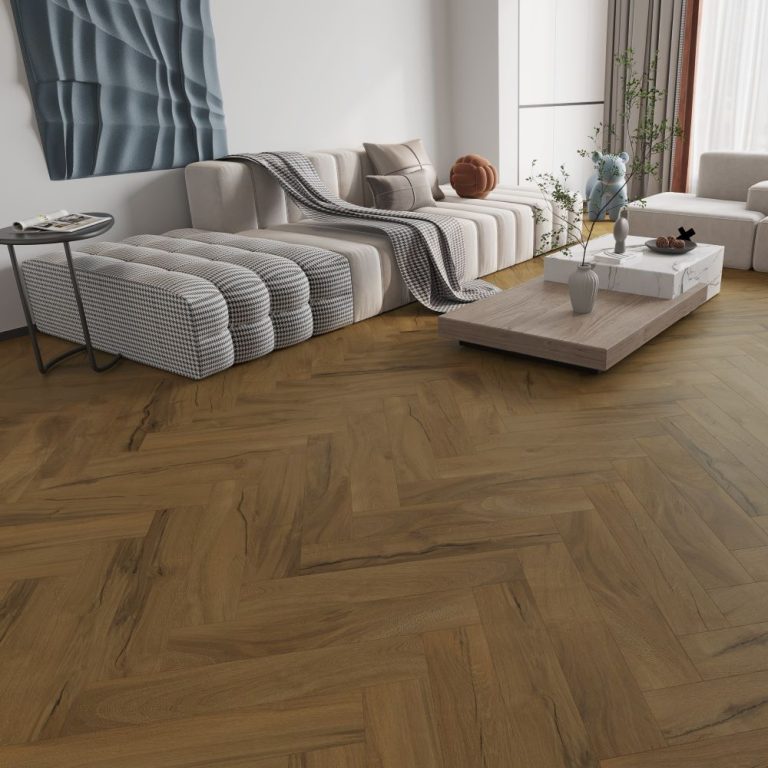
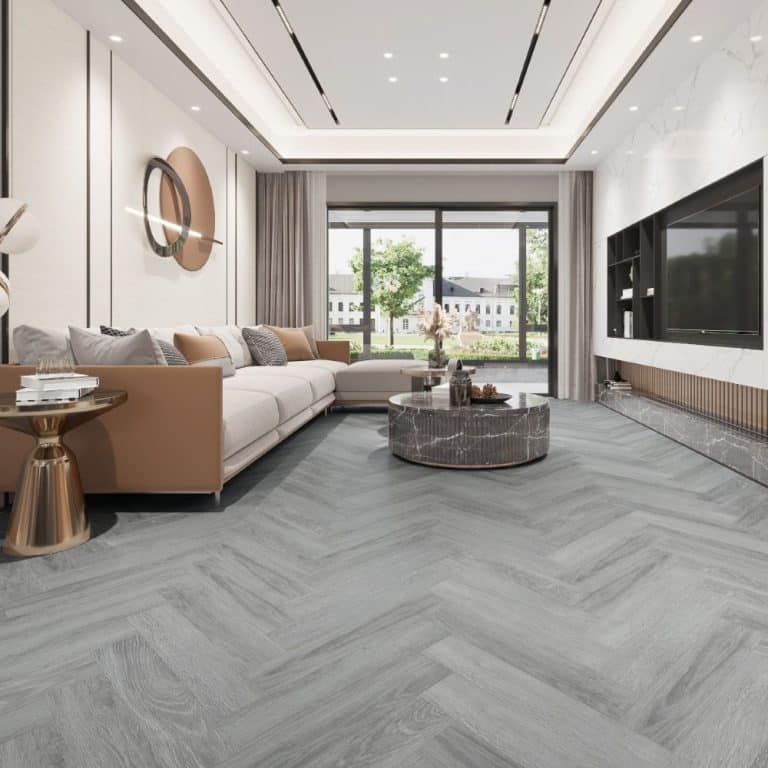
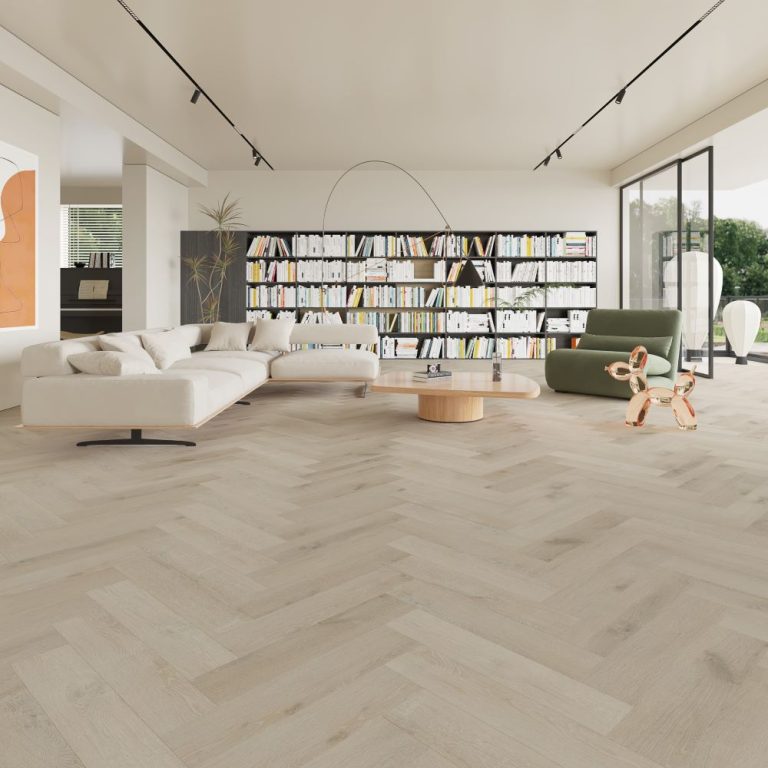
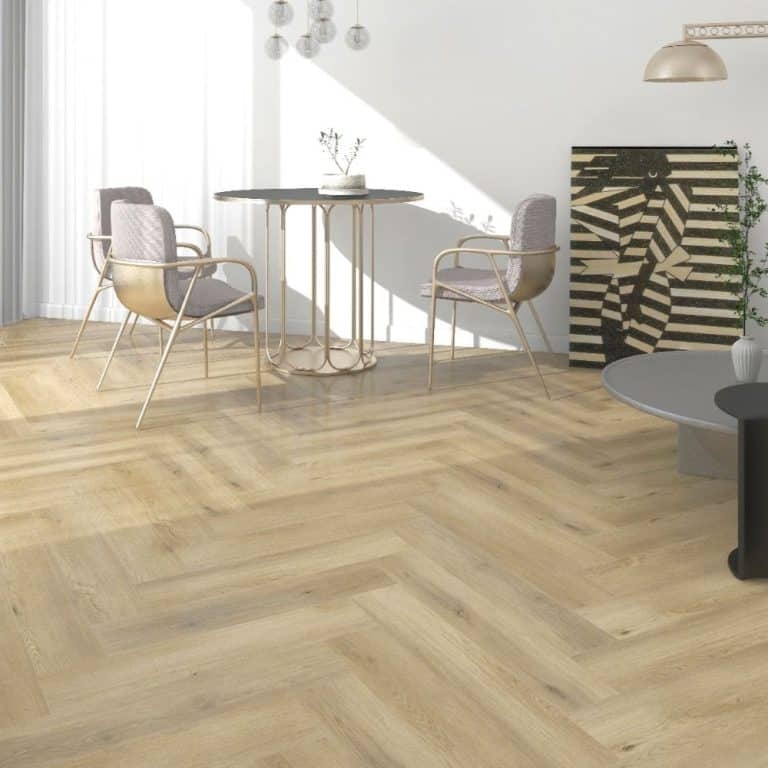
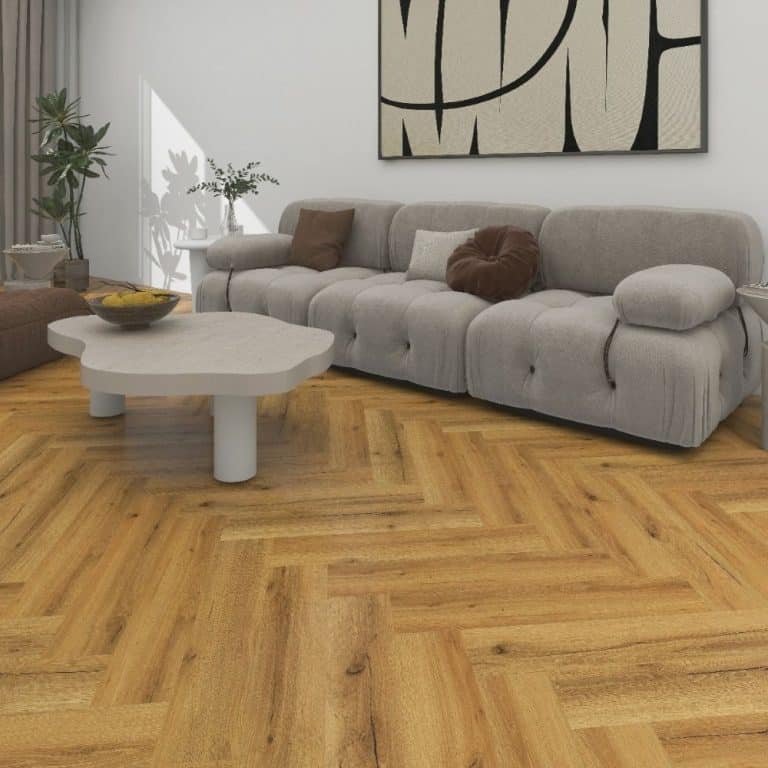
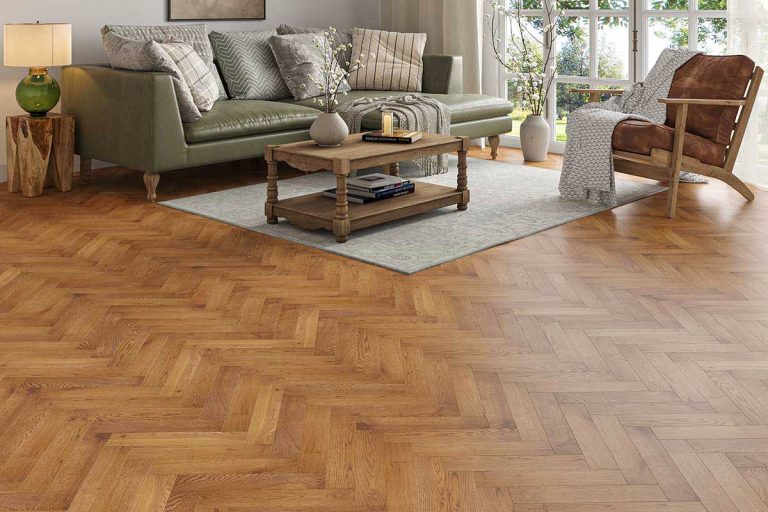
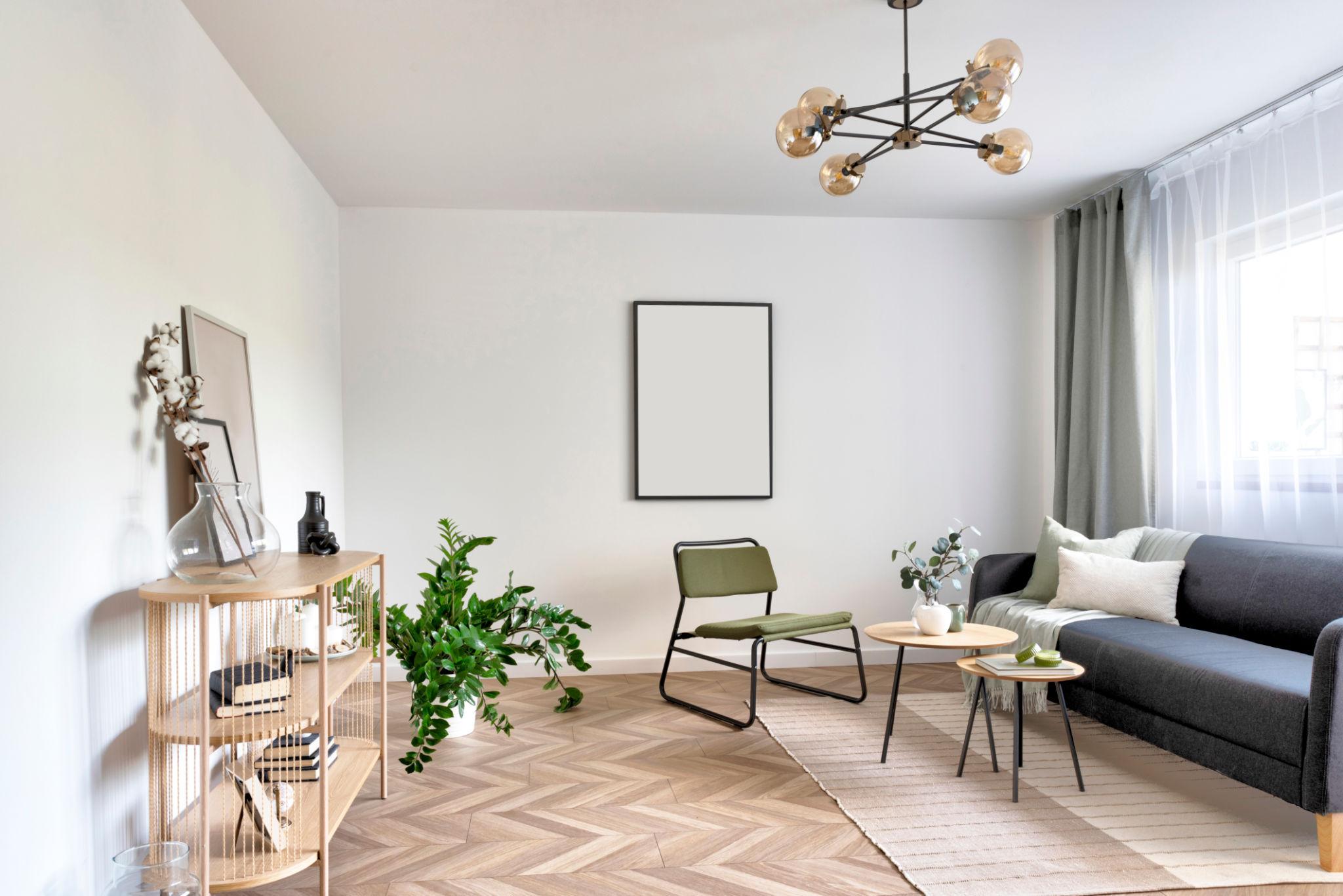
Herringbone is a block laid at right angles to its neighbour, and in our range it comes in two materials: 10 engineered oak block floors, 14 mm thick with a 3 mm oak wear layer, glued down; and 8 rigid vinyl herringbone floors, 6.5 mm thick with a 0.55 mm wear layer, click fitted and listed as waterproof. A laminate herringbone is not in the range on the catalogue of 15 September 2026.

Oak herringbone
10 floors
Rigid vinyl herringbone
8 floors
Waste allowance
15% to 20%
Samples
£1.99 each
1/ 7
01

The pattern, in one paragraph

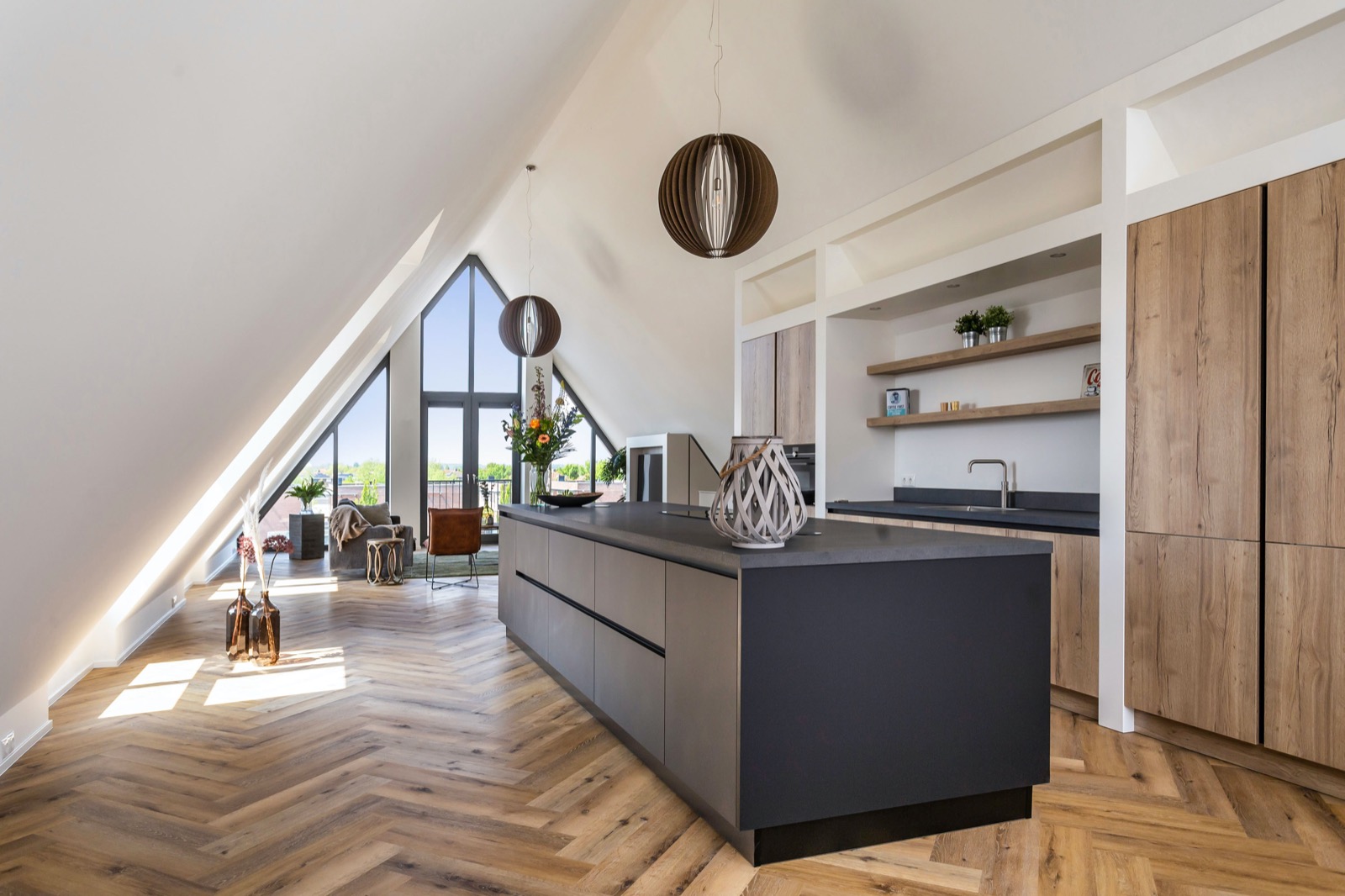
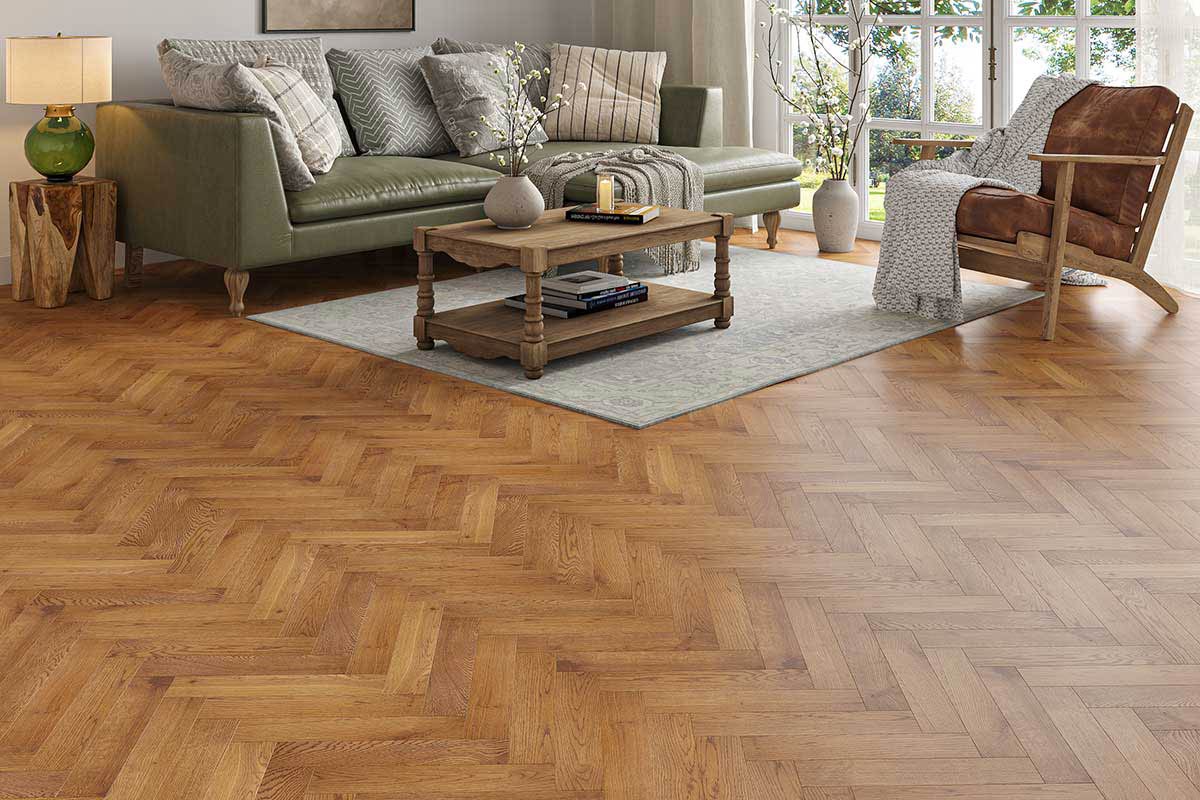
A herringbone floor is made of short blocks of equal size, each laid at a right angle to the next, so that the rows step across the room in a broken zigzag. The blocks are cut square; a chevron is the same idea with the ends cut at an angle so the rows meet in a continuous V. That one difference decides how the floor reads: herringbone is busier and more traditional, chevron more formal and directional, and the pattern is set along the longest view through the room, usually from the door towards the main window.

Because every block meets a wall at an angle, a herringbone floor produces more offcuts than a straight plank floor, and it asks more of the base underneath: an oak herringbone is glued to a flat, dry surface, block by block, from a centre line. That is why the manufacturers we can cite give 15% to 20% for the waste allowance where a plank floor takes 8% to 12%, and why the fitting guide linked below starts with a setting out drawing rather than a pack of boards.

See also
02

Oak herringbone: the 10 Oxford block floors

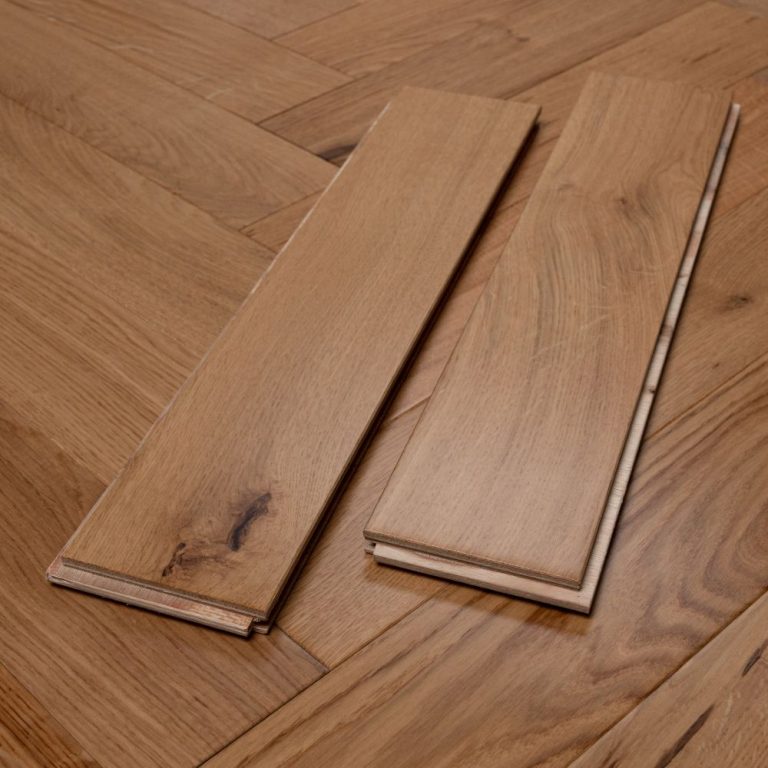
The Oxford herringbone blocks are engineered oak: a 3 mm oak wear layer on a 14 mm cross layered board, in two formats, 90 x 450 mm and 125 x 600 mm, in brushed, lacquered, oiled, fumed and whitewashed faces. Every one of the 10 is listed for underfloor heating and carries a 15 year manufacturer's warranty; the blocks are tongue and groove and are glued down, which is the construction a pattern floor needs over a heated screed. A 3 mm wear layer can be sanded back at least once.

The Oxford blocks
ProductFormatWear layer / thicknessFittingUnderfloor heatingWarranty
Oxford Herringbone Oak Brushed UV Oiled Wood Flooring 14 x 90 x 45014mm x 90mm x 450mm3mmTongue & GrooveCompatible15 Years
Oxford Herringbone Oak Lacquered Wood Flooring 14 x 90 x 45014mm x 90mm x 450mm3mmTongue & GrooveCompatible15 Years
Oxford Herringbone Light Oak Wood Flooring 14 x 90 x 45014mm x 90mm x 450mm3mmTongue & GrooveCompatible15 Years
Oxford Herringbone Dark Brown Oak Wood Flooring 14 x 90 x 45014mm x 90mm x 450mm3mmTongue & GrooveCompatible15 Years
Oxford Herringbone Fumed Oak Wood Flooring 14 x 90 x 45014mm x 90mm x 450mm3mmTongue & GrooveCompatible15 Years
Oxford Herringbone Whitewashed Oak Wood Flooring 14 x 90 x 45014mm x 90mm x 450mm3mmTongue & GrooveCompatible15 Years
Oxford Herringbone Natural Brushed Oak 14 x 125 x 60014mm x 125mm x 600mm3mmTongue & GrooveCompatible15 Years
Oxford Herringbone White Oiled Oak 14 x 125 x 60014mm x 125mm x 600mm3mmTongue & GrooveCompatible15 Years
Oxford Herringbone Antique Brown Oak 14 x 125 x 60014mm x 125mm x 600mm3mmTongue & GrooveCompatible15 Years
Oxford Herringbone Light Brushed Oak 14 x 125 x 60014mm x 125mm x 600mm3mmTongue & GrooveCompatible15 Years
See also
03

Rigid vinyl herringbone: the 8 BML floors

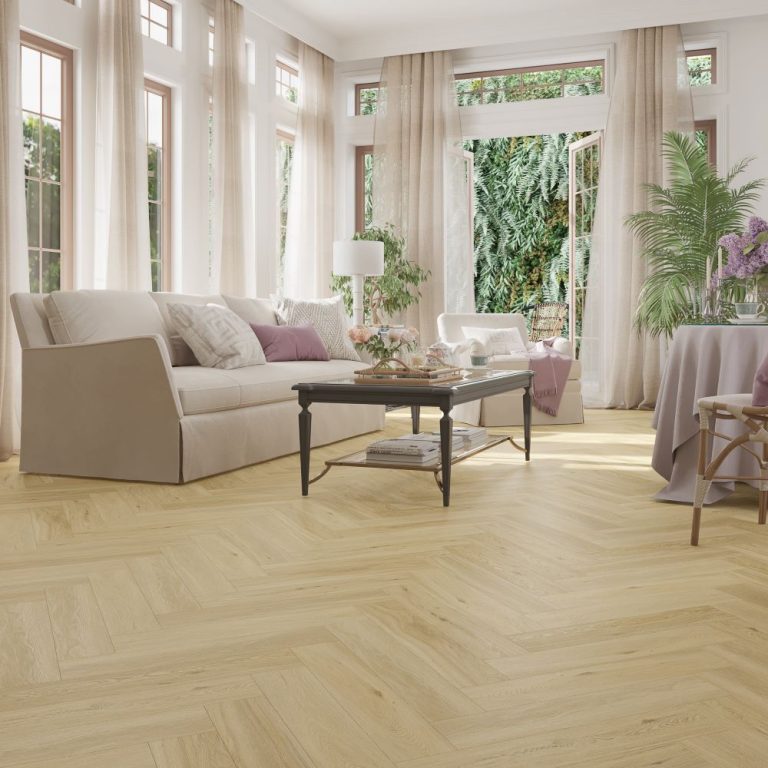
The BML herringbone floors are rigid core vinyl (SPC): 6.5 mm thick, 126 x 630 mm blocks with a 0.55 mm wear layer, click fitted and floated over an underlay. All 8 are listed as waterproof, listed for underfloor heating and carry a 25 year manufacturer's warranty. They are the herringbone for the rooms an oak block does not suit: the kitchen, the hallway, the bathroom, the utility room and a flat where the lease asks for an acoustic layer under a floating floor.

The BML herringbone floors
ProductFormatWear layer / thicknessFittingUnderfloor heatingWarranty
BML Herringbone European Oak SPC Luxury Vinyl Flooring6.5mm x 126mm x 630mm0.55mmClickCompatible25 Years · listed as waterproof
BML Herringbone American White Oak SPC Luxury Vinyl Flooring6.5mm x 126mm x 630mm0.55mmClickCompatible25 Years · listed as waterproof
BML Herringbone Light Oak SPC Luxury Vinyl Flooring6.5mm x 126mm x 630mm0.55mmClickCompatible25 Years · listed as waterproof
BML Herringbone Vintage Fumed Oak SPC Luxury Vinyl Flooring6.5mm x 126mm x 630mm0.55mmClickCompatible25 Years · listed as waterproof
BML Herringbone Grey Oak SPC Luxury Vinyl Flooring6.5mm x 126mm x 630mm0.55mmClickCompatible25 Years · listed as waterproof
BML Herringbone Smoked Limed Oak SPC Luxury Vinyl Flooring6.5mm x 126mm x 630mm0.55mmClickCompatible25 Years · listed as waterproof
BML Herringbone Invisible Oak SPC Floor6.5mm x 126mm x 630mm0.55mmClickCompatible25 Years · listed as waterproof
BML Herringbone Antique Smoked Oak SPC Floor6.5mm x 126mm x 630mm0.55mmClickCompatible25 Years · listed as waterproof
See also
04

Which herringbone for which room

The room decides the material before the colour does.

Living room, dining room
Oak. The rooms that are seen, on a dry base, where a real oak surface earns its keep and can be sanded back later.
Hallway
Either. Oak for a period house with a timber floor; rigid vinyl where the rain comes in with the shoes and the base is a concrete slab.
Kitchen, utility, bathroom
Rigid vinyl, listed as waterproof, with the edges sealed to the fitting instructions and the slab tested for moisture first.
Bedroom
Oak for a floor to keep; rigid vinyl over an acoustic underlay where the room is above another household.
Flat with a lease clause
Rigid vinyl over an underlay with a tested impact sound figure, or oak blocks glued to an acoustic layer the adhesive is approved for.
Over underfloor heating
Both are listed for it. Oak blocks glued to a commissioned, dry screed; vinyl floated on an underlay rated for heating.
05

Ordering and fitting

15% to 20% over the room area
The waste allowance the manufacturers give for a pattern floor, against 8% to 12% for a plank. Order it with the floor, in one batch, because a later top up may not match.
Set out from the centre
A herringbone is laid from a centre line along the longest view, with a border planned so the cut blocks at both walls come out equal. The drawing comes before the order, because it decides the quantity.
Oak is glued, vinyl clicks
The oak blocks go onto a flat, dry base with the adhesive the fitting instructions name; over old floorboards that means a screwed down plywood overlay first. The vinyl clicks together and floats on an underlay.
Test the base
A hygrometer sealed to a slab: 75% relative humidity or below in BS 8203 practice before a resilient or multilayer floor goes down. A new screed dries at roughly a day per millimetre for the first 50 mm.
Let the packs settle
At least 48 hours in the room, flat and unopened, at the room's in service temperature, on the CFA's and the MMFA's guidance.
Heating commissioned first
Over underfloor heating the system runs through its full drying and commissioning cycle, about 21 days on the CFA's guidance, before any floor covers it.
See also
06

What the published standards say

Published standards

Each entry is quoted from its source and linked to it. The full set is in the standards reference.

Herringbone and chevron — what the two patterns are

Herringbone is laid from rectangular blocks whose ends are cut square: set at right angles to each other and staggered, so that the end of one block meets the side of the next and the pattern reads as a broken zigzag. Chevron blocks have their ends cut at an angle - typically 45 or 60 degrees, depending on the manufacturer - so the ends meet on a continuous line and form a V. No published standard we could read defines the two patterns; the definitions here come from manufacturers and agree with each other.

Herringbone: angle between adjacent blocks90 degrees
Chevron: typical end-cut angle (manufacturer-dependent)45 or 60 degrees

“Herringbone flooring features rectangular wood planks arranged in a staggered zigzag pattern. Each plank meets the next at a 90-degree angle. In chevron patterns, the wood planks are cut at an angle, typically 45 or 60 degrees, so they meet in a continuous V-shape.”

Source: Havwoods - Herringbone vs. Chevron: Which Parquet Style Suits Your Space Best? · second source

Cutting waste — how much extra to order

There is no published industry standard for cutting waste; the figures come from manufacturers' own guidance and they vary. Havwoods advises 8-12 % wastage for planks and 15-20 % for patterned floors such as herringbone or chevron. Quick-Step's UK guidance for laminate is 5 % extra in a regular room and 10 % in a room with many angles or curves.

Wastage allowance, plank floors (Havwoods UK)8-12 %
Wastage allowance, herringbone or chevron (Havwoods UK)15-20 %
Extra to order, regular room, laminate (Quick-Step UK)5 %
Extra to order, room with many angles or curves, laminate (Quick-Step UK)10 %

“For planks we typically advise on 8-12% wastage and patterned floors, such as herringbone or chevron, may need 15-20% wastage.”

Source: Havwoods UK - FAQs: How Much Wastage Shall I Encounter For? · second source

BS EN 13489 — multi-layer parquet

BS EN 13489 is the product standard for multi-layer parquet elements, setting out their characteristics, requirements and test methods for internal use as flooring.

“This document specifies the characteristics, requirements and test methods of multi-layer parquet elements for internal use as flooring.”

Source: BS EN 13489:2023 - Wood-flooring and parquet. Multi-layer parquet elements

What SPC rigid core actually is

According to the Multilayer Modular Flooring Association, SPC stands for Solid Polymer Core, whereas WPC stands for Wood Plastic Composite; both are listed as alternative core-layer materials for multilayer modular floor panels, the SPC core being a solid polymer compound and the WPC core a wood-polymer composite.

SPCSolid Polymer Core
WPCWood Plastic Composite
EPCExpanded Polymer Core

“Core layers can be wood composites such as HDF or cork, but also polymer or polymer composite materials such as PFC (Perfluorcarbone), natural fibre-reinforced plastics, WPC (Wood Plastic Composite), EPC (Expanded Polymer Core) and SPC (Solid Polymer Core); but also mineral-based substrates, e.g. MPC ("Mineral Plastic Composites").”

Source: Multilayer Modular Flooring in focus - MMFA (Multilayer Modular Flooring Association)

BS 8203 — relative humidity limit for a subfloor

UK practice following BS 8203 treats a subfloor as dry enough for resilient floor coverings when hygrometer readings do not exceed 75% relative humidity (65% RH for solid timber coverings), measured with a hygrometer sealed to the surface so that it reaches equilibrium with the base.

RH limit, resilient floor coverings75 % RH
RH limit, solid timber floor coverings65 % RH

“The base can be considered dry enough to install most floorcoverings if a series of tests produce readings not exceeding 75% R.H. (65% R.H. for solid timber floorcoverings).”

Source: F. Ball and Co. Ltd - Digital Hygrometer, Technical Data Sheet

Commissioning the heating before the floor goes down

Before any subfloor preparation or floorcovering is laid, the underfloor heating must be run through a full drying and commissioning cycle of heating up and cooling down, typically lasting about 21 days.

typical duration of the heat-up / cool-down commissioning cycle21 days

“In all instances, UFH systems must be run through a full drying / commissioning cycle of heating up and cooling down before any subfloor preparation or installation of decorative floor coverings are installed. This period of commissioning is usually around 21 days.”

Source: CFA Guidance Document — Beyond Installation: Guidance on Underfloor Heating (Contract Flooring Association)
07

Questions about herringbone flooring

Is herringbone flooring more expensive than plank flooring?
The blocks cost more per square metre to produce than a plank of the same oak, the waste allowance is higher (15% to 20% against 8% to 12%) and the fitting takes longer because every block is set to a line. The cost guide linked above sets out the components without quoting prices; each product page carries its current price.
Can I lay herringbone myself?
The rigid vinyl herringbone is a click floor and within reach of a careful DIYer. The oak blocks are glued to a prepared base from a centre line, and most people hand that to a fitter: an error at the third row is invisible and an error at the tenth is not.
Does herringbone work in a small room?
Yes. The pattern is forgiving in a room with several doors and alcoves, and the small block suits a hall or a small reception room. Set the pattern along the longest view so the room reads longer, not busier.
Can herringbone go over underfloor heating?
Yes. All 10 oak block floors and all 8 rigid vinyl herringbone floors are listed for it. The oak is glued to a commissioned, dry screed; the vinyl floats on an underlay rated for heating, with floor plus underlay kept within the 0.15 m²K/W the systems are designed for.
Is there a laminate herringbone?
Not on the catalogue of 15 September 2026. The two materials in the range are engineered oak and rigid vinyl; the rigid vinyl herringbone is the click fitted option at the lower price point, listed as waterproof.
See the pattern in your own room first
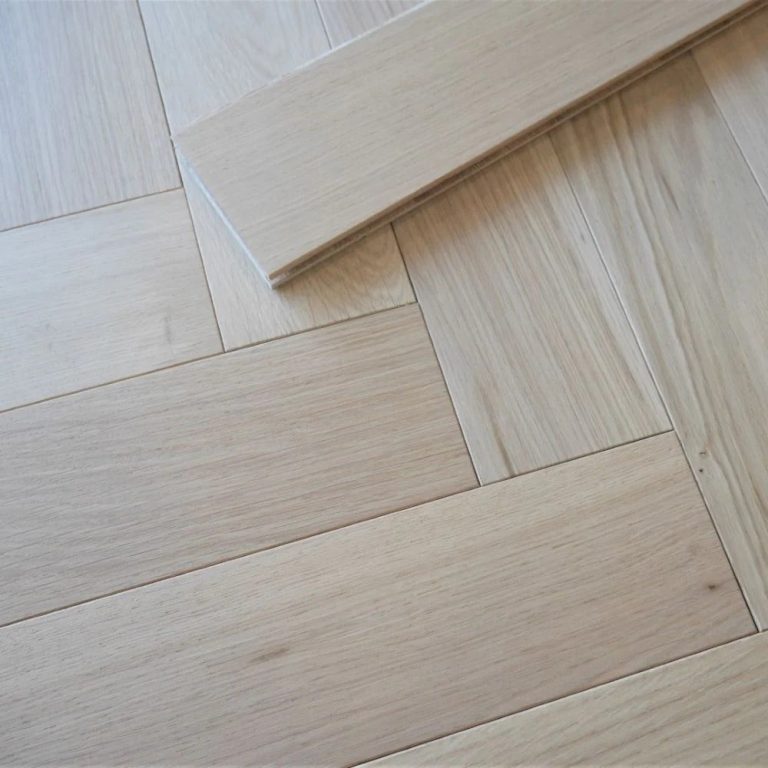
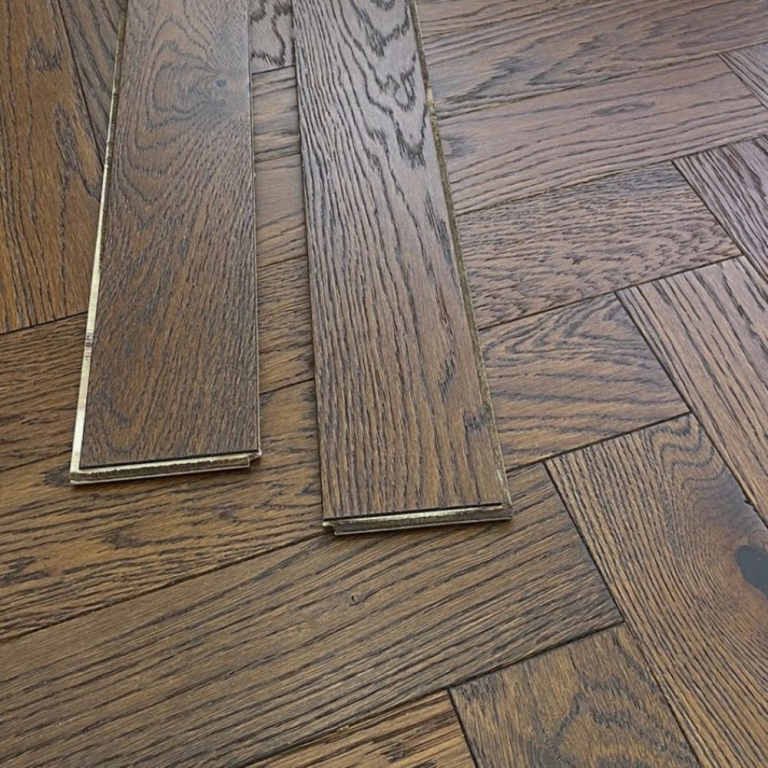
Cut samples are £1.99 each, up to two per product. Two blocks side by side show the colour; the pattern you already know.
Newsletter

New ranges and offers. Hear it first.

Unsubscribe anytime