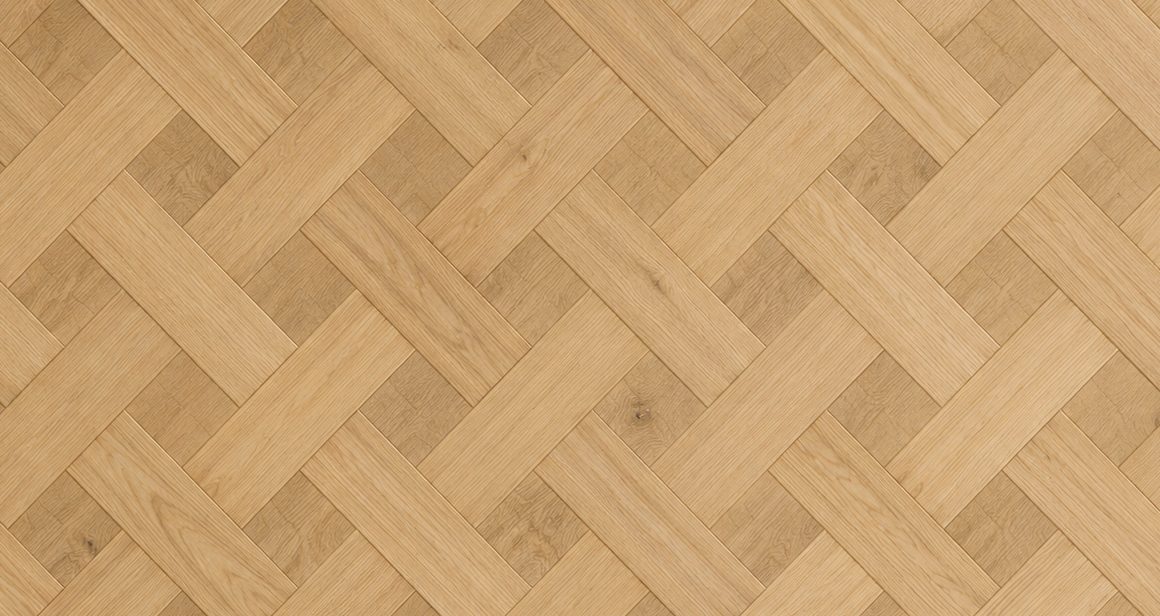
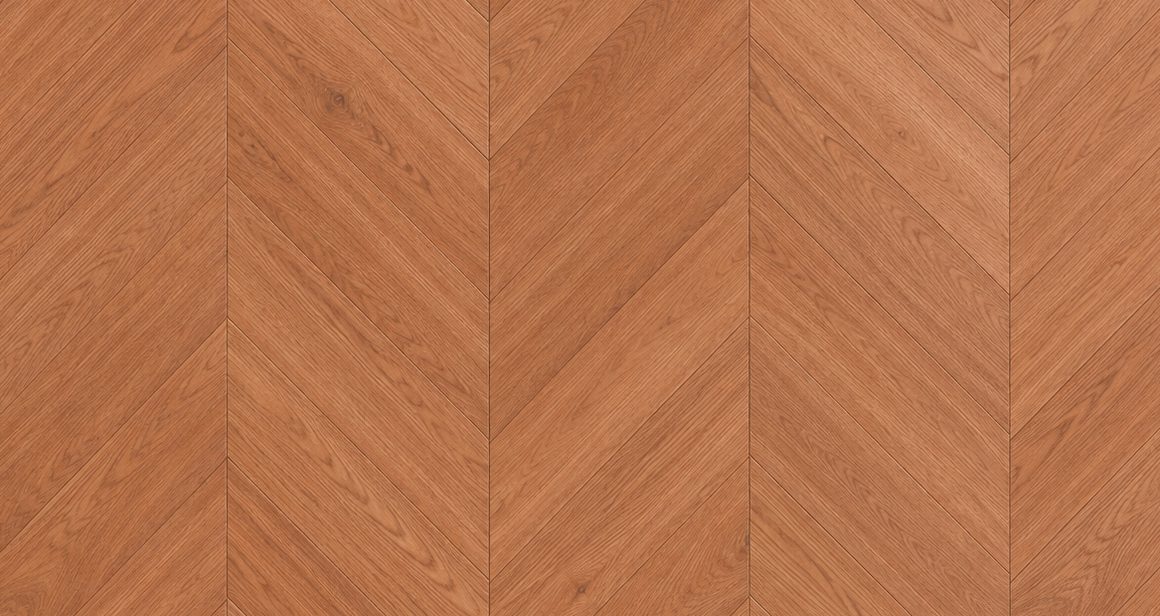
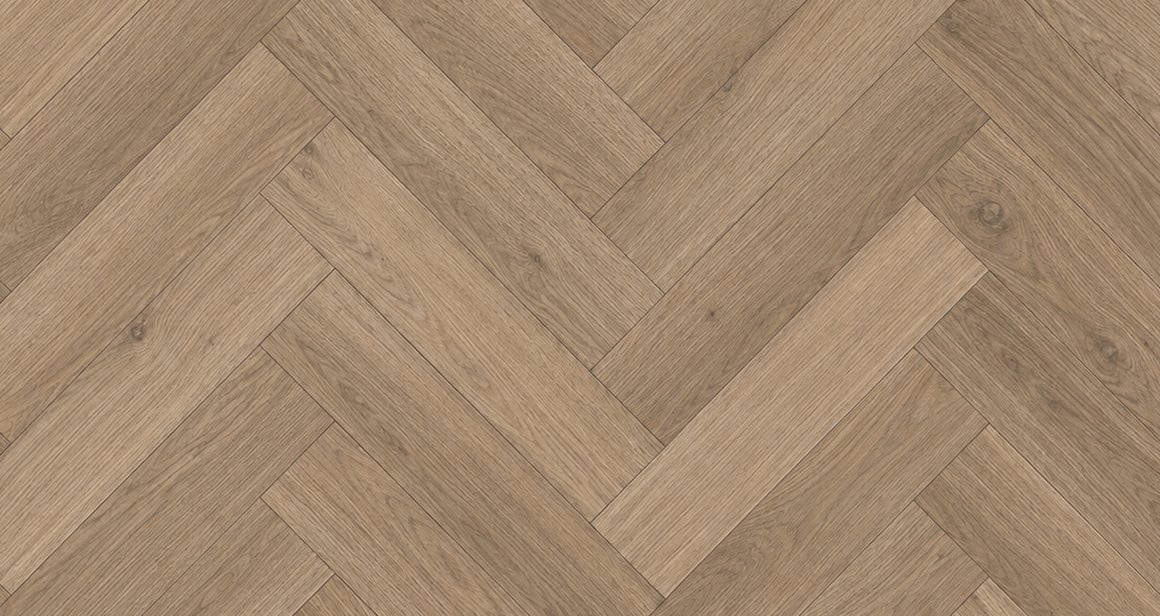
Both patterns turn a floor into the main event of the room, and most people mix up their names. The difference is one cut: herringbone lays rectangular blocks in a stepped zigzag, chevron cuts each block at an angle so the rows meet in clean arrow points. That single cut changes the look, the cost and the fitting.
| Herringbone | Chevron | |
|---|---|---|
| Block shape | Rectangles, square ends | Angle-cut ends (usually 45° or 60°) |
| The look | Woven, classic, textured | Sharp arrows, continuous lines, modern |
| Feel of the room | Heritage, Victorian terraces, period charm | Parisian apartment, contemporary elegance |
| Material price | Premium | Usually higher (angle cuts, more waste) |
| Fitting complexity | High | Higher; pattern reads every error |
| Waste factor | Around 15% | 15% or slightly more |
How each pattern behaves in a room
Herringbone’s broken zigzag scatters light across the block faces, which adds texture and hides small imperfections; it makes narrow rooms feel wider when laid across the space, and it is the authentic pattern of British period homes.
Chevron’s unbroken arrows create strong directional lines that pull the eye down the room, which visually lengthens spaces beautifully: point the arrows toward a window or fireplace and the whole room organises itself around that line. It reads more modern and more formal than herringbone.
Cost and fitting: what the pattern really adds
Expect parquet patterns at roughly £50 to £100 per m² supplied in engineered oak, with chevron typically at the upper end for the same specification because of the angle cutting. Fitting runs well above straight planks, commonly £25 to £45 per m², and chevron punishes sloppy work: every arrow point advertises alignment.
Budget-friendlier routes exist: herringbone LVT and herringbone laminate deliver the pattern with simpler click fitting and lower material cost, and both have become genuinely convincing in recent years.
Choosing between them
Period property, cosy texture, timeless safety: herringbone. Contemporary space, long sightlines, statement elegance: chevron. In small rooms both work when the blocks are scaled down; oversized blocks in a box room overwhelm it. If you are torn, herringbone is the more forgiving choice in fitting, cost and resale familiarity.
Common questions
What is the difference between herringbone and chevron?
Is chevron more expensive than herringbone?
Does herringbone make a room look bigger?
Can I get herringbone in LVT or laminate?
More buying guides
7 min read
Engineered Wood vs Laminate: Which Should You Buy?
Engineered wood or laminate? Compare looks, lifespan, cost, underfloor heating and resale value, with an honest verdict on which floor suits which home.
Read the guide →
8 min read
Flooring Cost per m² UK (2026): What You Will Really Pay
Realistic 2026 UK flooring prices per square metre for laminate, LVT, engineered wood, solid oak, parquet and tiles, plus fitting costs and how to keep the total down.
Read the guide →
7 min read
Best Flooring for Underfloor Heating: What Works and What to Avoid
Which flooring works best over underfloor heating? Engineered wood, LVT, laminate, tiles and solid wood compared for heat output, stability and safe temperatures.
Read the guide →