In depthHow to choose porcelain tiles
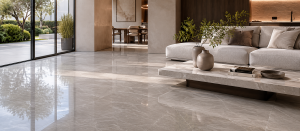
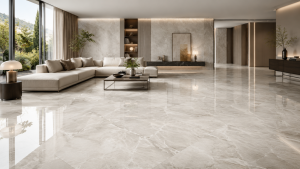
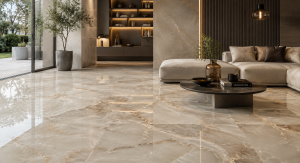
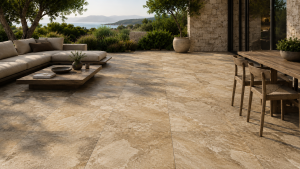
Eleven porcelain tiles, all 600 mm by 1200 mm, 9 or 10 mm thick, made in Spain, frost resistant, with a water absorption ratio listed under 0.50, specified for floor and wall, listed as compatible with underfloor heating, two to a box covering 1.44 square metres. Seven follow marble, four follow stone; five are polished, four lappato and two matt. The format is the same across the range, so the decision is the stone the tile follows and the finish on its surface.
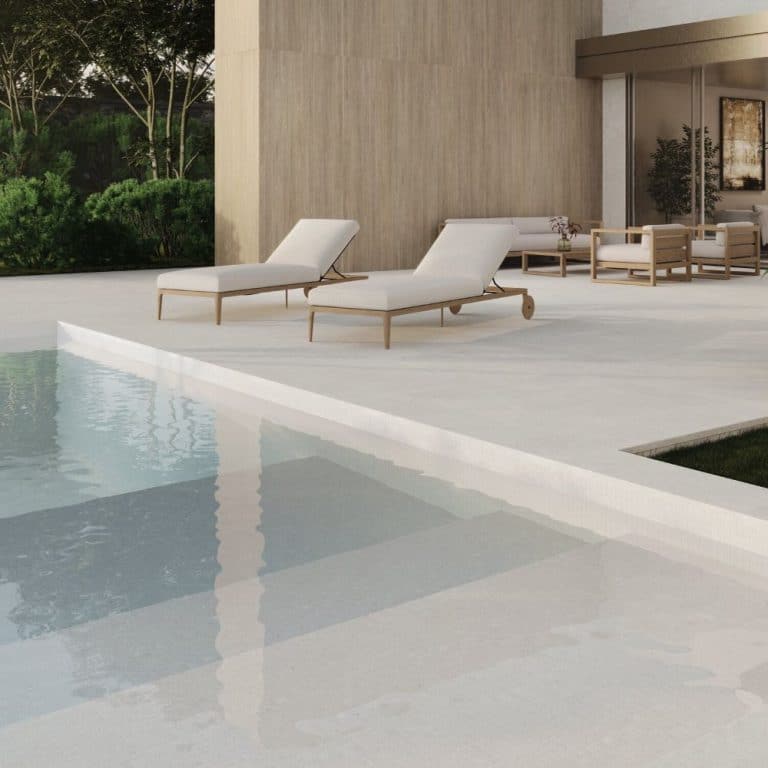
Porcelain is chosen over the stone it imitates for what it does not do. It takes on almost no water, which is what the absorption ratio measures; it does not etch under household acids as marble does; it does not scratch under grit as limestone does; and it is consistent from tile to tile where stone is not. Frost resistance and the low absorption ratio together are the specification a tile needs to run from a kitchen across a threshold to a covered terrace, and both are listed on every tile here.
The finish is the practical decision. Polished porcelain is the marble look at its most convincing and it is slippery when wet, which is why Luna Blanca and Night Lux come matt as well as polished. Lappato is the honed, semi-polished surface of the four stone effects, with more light than a matt and more grip than a polish. Slip resistance is a measured value, not a property of the finish: the HSE grades floors by the pendulum test value, quoted below, and the figure for a specific tile is on its manufacturer's data sheet. For a bathroom floor, ask for it before choosing.
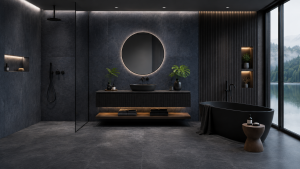
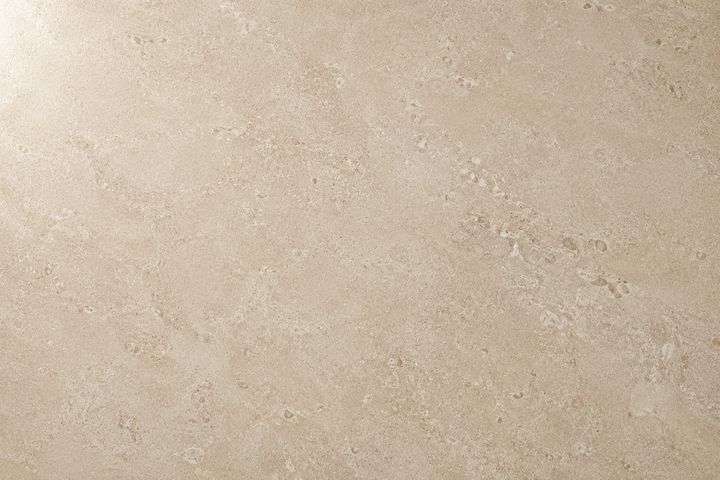
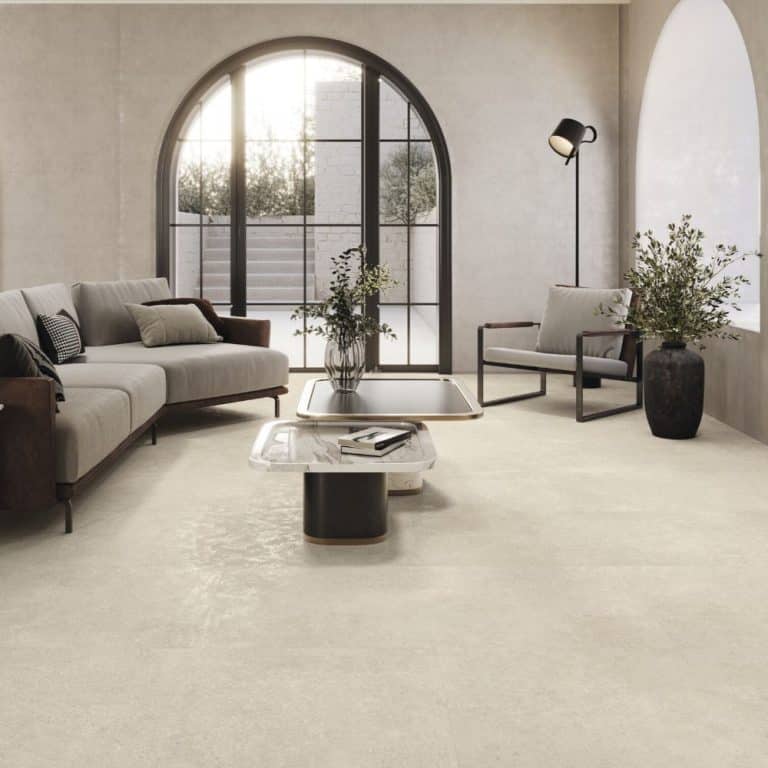
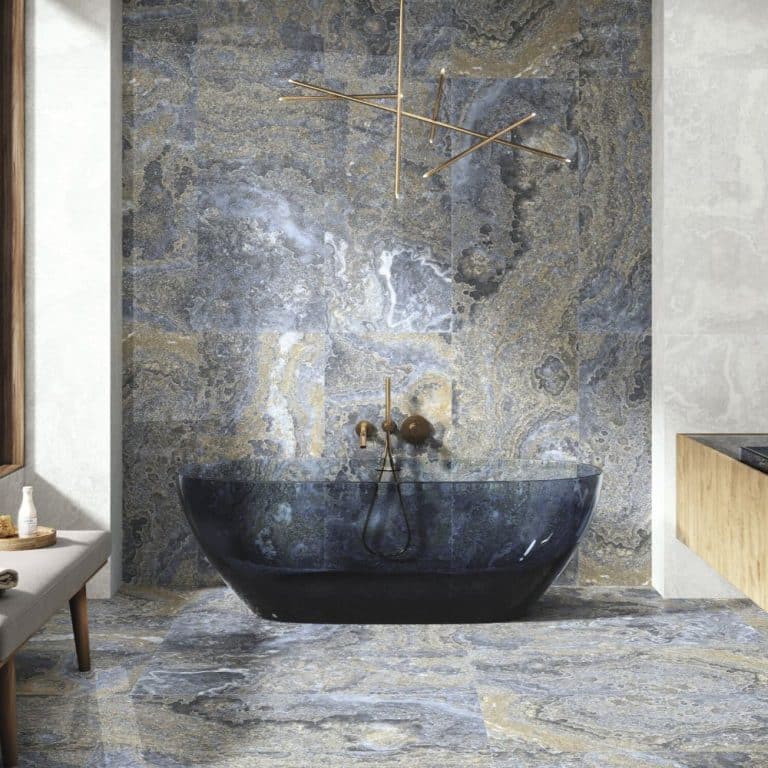
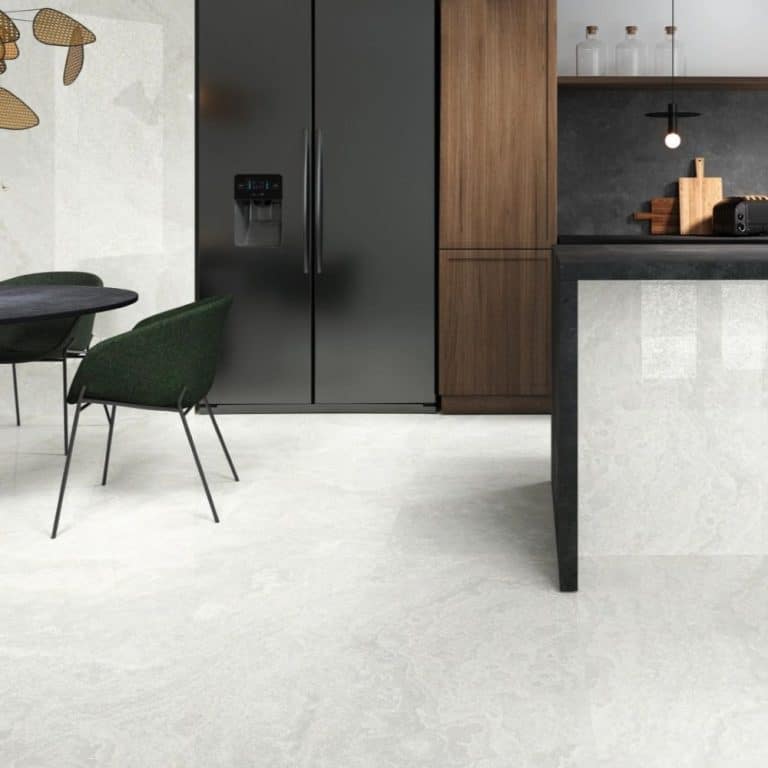
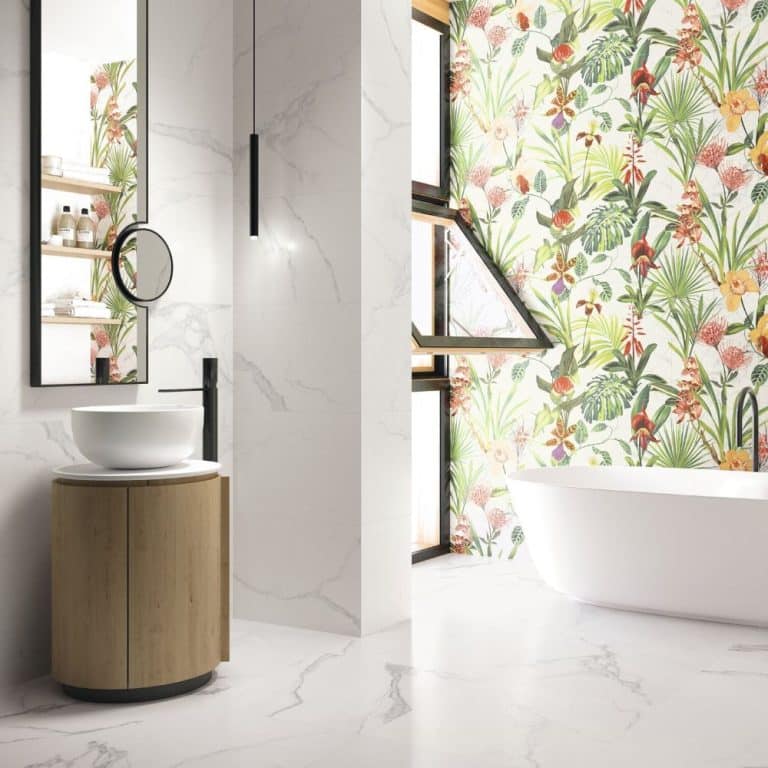
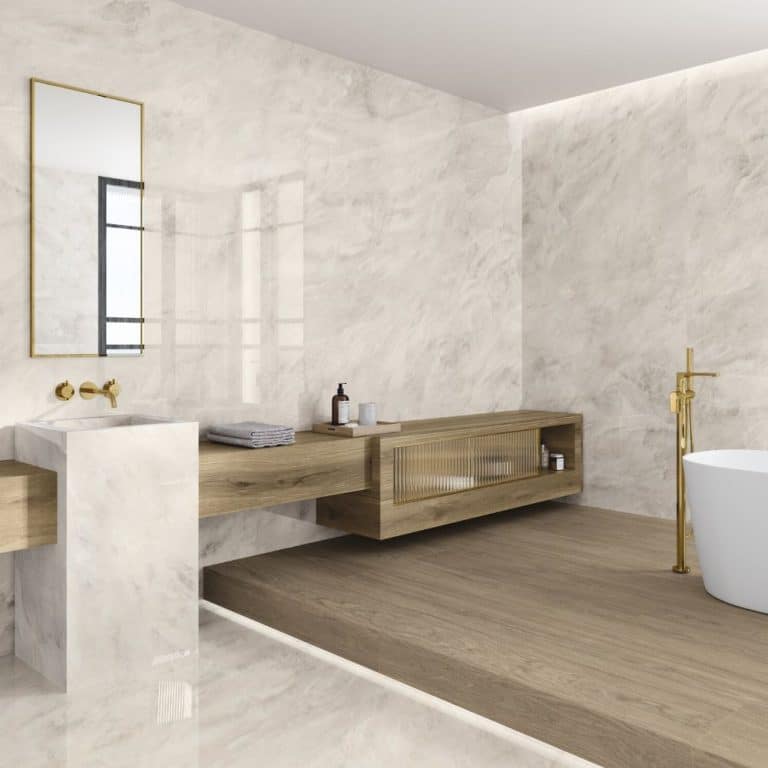
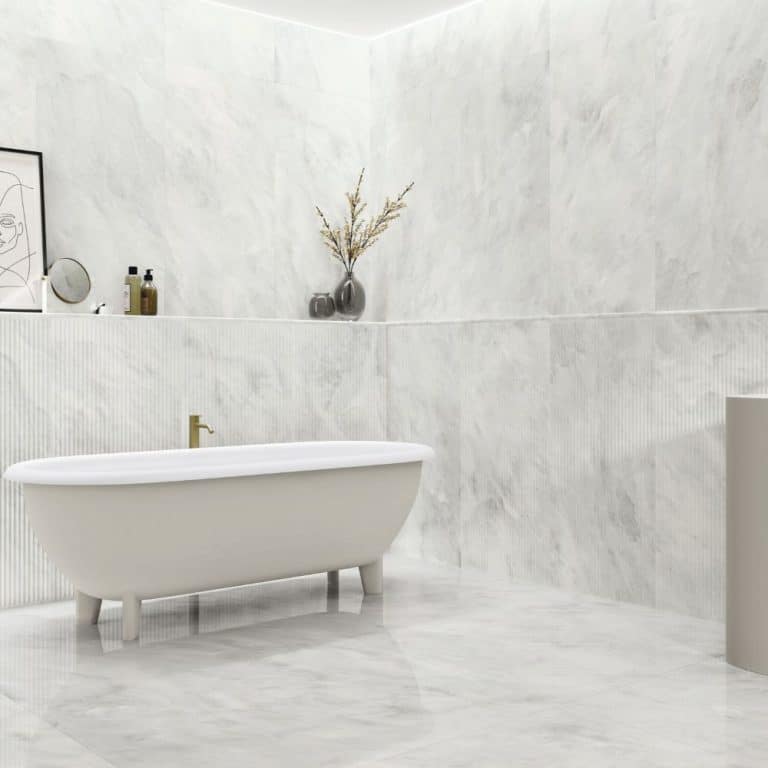
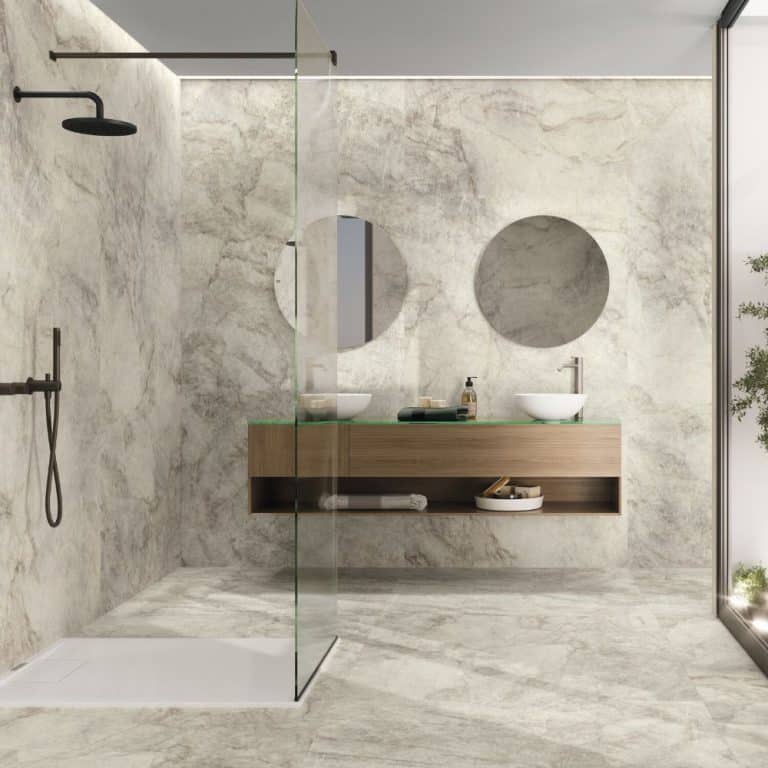
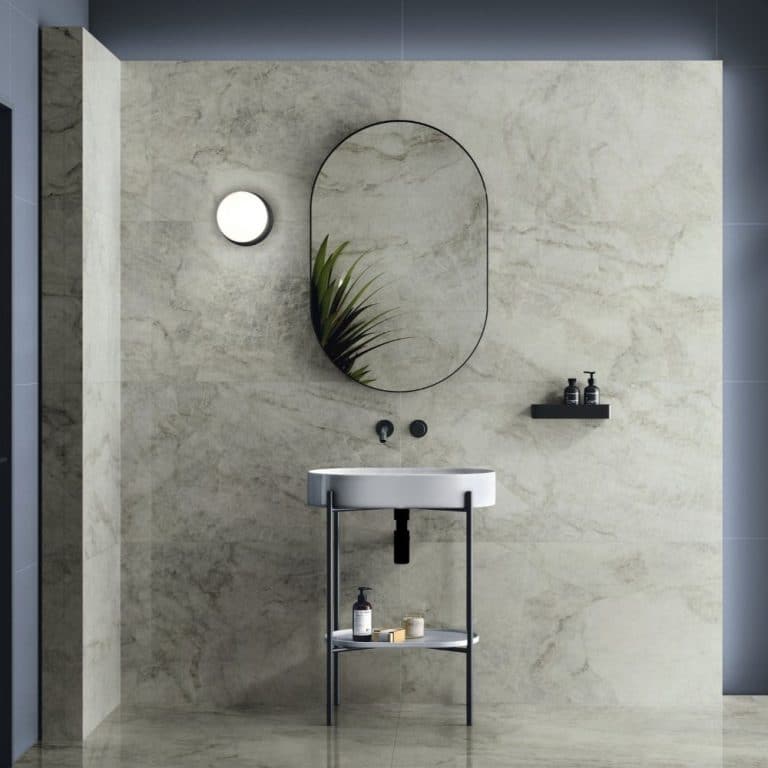
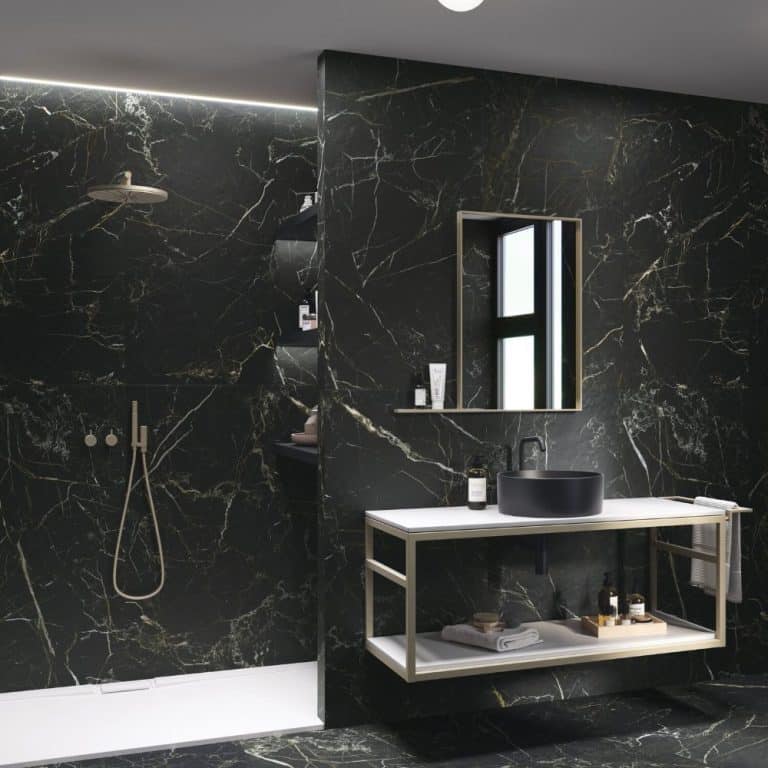
The look is the other half. The marble effects run from the white marbles, Luna Blanca and Alexandria White, through the warm Alexandria Cream and the banded Taj Mahal Cappuccino and Pearl, which also sit under onyx, to the dark Night Lux. The stone effects, Wabi Bianco and Wabi Sabbia, are the quiet sand and white surfaces; Agate White and Agate Blue follow a banded stone. Because every tile is large-format, the floor reads as few joints and a calm surface, and the subfloor has to be flat enough for a tile that size to bear evenly.
That is the one condition. A tiled floor is laid by a tiler on a flat, sound, dry base, in adhesive, grouted and sealed at the edges; the screed regularity classes the trade works to and the moisture and preparation requirements for the base are quoted below. Over underfloor heating, porcelain conducts heat readily, and the surface temperature limits the heating standard sets are quoted as well. For a stone look that clicks together and floats, the concrete and cement rigid vinyl tiles are the alternative without the tiler.
The boards named above
 Shop by category