Samples available UK-wide delivery
Shop by category
Pro Portal
4.6 Trustpilot 2400+ orders delivered UK-wide delivery

Your Basket

0

Your basket is empty

Browse our editorial collections and find your perfect floor.

Browse Collections
Subtotal £0.00
Shipping & discounts calculated at checkout
SSL encrypted — safe and secure

Care guide 5 min read

Cleaning and Caring for SPC and LVT Flooring

Low moisture and no pooling: the published cleaning rule for rigid vinyl, what the wear layer is, what not to use, and what to do after a leak.

Guide type
Care guide
Reading time
5 min
SPC stands for
Solid Polymer Core
Sources quoted
7 published sources

A rigid vinyl floor is bought for being easy to look after, and most of them are. The ones that are not have usually been cleaned with the wrong thing: a steam mop, a bucket left to dry on its own, an abrasive pad on a scuff. This guide is about what the floor actually is, what the published guidance says about cleaning it, and which habits keep the wear layer doing its job.

1/ 8
01

What you are cleaning

SPC stands for solid polymer core, as the Multilayer Modular Flooring Association defines it, against WPC for a wood plastic composite core; both are core materials for multilayer modular floor panels. The standard for those panels, BS EN 16511:2023, covers multilayer mechanically locked floor coverings with a wear-resistant decorative surface layer, in tiles or planks, for floating installation in domestic and commercial use. The phrase to hold on to is "wear-resistant decorative surface layer": the decor is a print, and the clear layer over it is what takes the traffic. Cleaning is about that layer and nothing beneath it.

The BML floors in the range have a wear layer of 0.3 mm on the 5.2 mm click planks and 0.55 mm on the 6.5 mm wide planks, herringbone blocks and stone-effect tiles. All have a textured surface, are graded commercial, are listed as waterproof, come with the underlay backing attached, and carry a 25-year manufacturer's warranty.

See also
02

What the class number does and does not say

A vinyl floor's declaration carries a use class, 23 for heavy domestic, 31 to 34 for commercial. EN ISO 10582, the standard for heterogeneous PVC floor coverings, includes that classification by intensity of use so that a buyer can see where the floor gives satisfactory service. It does not tie the class to a wear layer thickness in millimetres: the class says where a floor is fit to be used, not how thick its wear layer is. So a floor's grade and its wear layer are two facts, and both are on the datasheet.

03

The published rule: low moisture, no pooling

For multilayer modular floor coverings the MMFA requires low-moisture cleaning methods and states that pooling of liquid on the floor must be avoided under all circumstances. That is the whole of the rule, and everything below follows from it.

Dry first
Grit is what abrades a wear layer, and it is removed dry: a soft broom or a vacuum with a hard-floor head, before any water goes near the floor. A mop pushed over grit is sandpaper.
Damp, not wet
A well-wrung mop or a spray mop, with the cleaner the manufacturer names, leaves a film that dries in a minute. A bucket poured out and left to dry is pooling, and pooling is what the guidance forbids. The board is listed as waterproof; the joint between two boards is where standing water goes looking for a way down, and the subfloor beneath does not share the board's rating.
No steam
A steam mop is neither low-moisture nor low-temperature, and it is not a method the guidance describes. Heat and wet together at a click joint is the one combination to keep away from a floating floor.
No abrasives
A scouring pad on a scuff removes the scuff and the texture around it, and the patch is visible for the life of the floor. A scuff on a textured surface lifts with a damp cloth and, where it will not, with the manufacturer's cleaner and patience.
04

Protecting the surface

Felt pads under chair and table legs, a mat inside the front door that catches grit before it reaches the floor, and castors or glides on anything that rolls. A textured surface shows a scuff less readily than a smooth gloss one, but it collects grit in the texture, which is why the dry pass comes first. The scratch protection guide covers the same habits for wood.

See also
05

What is underneath

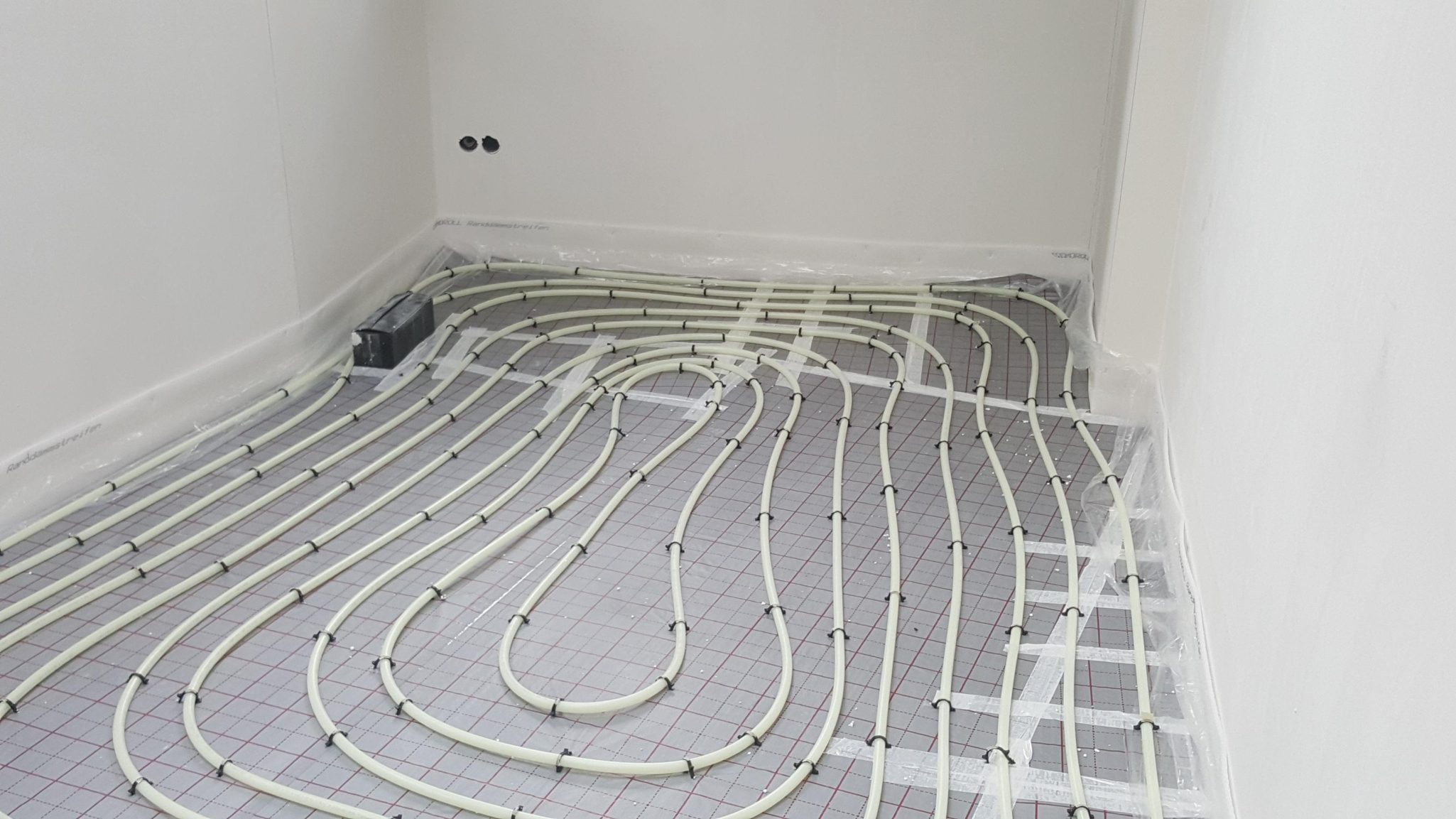
The BML floors arrive with the underlay backing attached, and a second underlay is not part of the specification. The MMFA groups what an underlay does under three headings, levelling small unevenness, protecting the floor from wear beneath and from rising residual moisture, and improving sound, heat insulation and comfort, and the attached backing is the range's answer to all three. Over underfloor heating the floors are listed as compatible; the underlay guide covers the thermal limit that applies to the whole build-up.

See also
06

When something does go wrong

A click floor is a floating floor, and a damaged plank can be lifted and replaced by working back from the nearest wall, which is the reason to keep a spare box from the original order. A leak is a drying job rather than a new floor, provided the water is taken up rather than left, and provided the subfloor beneath is dried before the boards go back. The 25-year warranty has its own conditions on cleaning and installation, and they are the conditions to read first.

See also
07

Common questions

Can I use a steam mop on SPC or LVT?

The published guidance for multilayer modular floors requires low-moisture cleaning and forbids pooling; a steam mop is neither low-moisture nor cool, and it drives heat and wet into the click joints. Use a well-wrung or spray mop instead.

The floor is listed as waterproof. Why does standing water matter?

The board is waterproof; the floor is boards, joints and a subfloor. The MMFA says pooling must be avoided under all circumstances because water that stands finds the joint, and the subfloor beneath does not share the board's rating.

Does the wear layer wear out?

It is the layer that takes the traffic, 0.3 mm on the range's 5.2 mm planks and 0.55 mm on the 6.5 mm formats, and grit is what wears it. Keeping the floor swept and matted does more for it than any cleaner.

Do I need underlay under rigid vinyl?

Not under the BML floors: the underlay backing is attached, and a second layer is not part of the specification. Two soft layers under a click joint let it flex.

Grit, sand and a wet climate are the three things a floor meets at the door, and how much of each depends on where the house stands. Browse by town and region.

See also
08

What the published standards say

Each entry is quoted from its source and linked to it. The full set is in the standards reference.

What SPC rigid core actually is

According to the Multilayer Modular Flooring Association, SPC stands for Solid Polymer Core, whereas WPC stands for Wood Plastic Composite; both are listed as alternative core-layer materials for multilayer modular floor panels, the SPC core being a solid polymer compound and the WPC core a wood-polymer composite.

SPCSolid Polymer Core
WPCWood Plastic Composite
EPCExpanded Polymer Core

“Core layers can be wood composites such as HDF or cork, but also polymer or polymer composite materials such as PFC (Perfluorcarbone), natural fibre-reinforced plastics, WPC (Wood Plastic Composite), EPC (Expanded Polymer Core) and SPC (Solid Polymer Core); but also mineral-based substrates, e.g. MPC ("Mineral Plastic Composites").”

Source: Multilayer Modular Flooring in focus - MMFA (Multilayer Modular Flooring Association)

Cleaning — the manufacturers’ own guidance

For multilayer modular floor coverings the MMFA requires low-moisture cleaning methods and states that pooling of liquid on the floor must be avoided under all circumstances.

“Absolutely avoid ponding in any case!”

Source: Basic cleaning — MMFA (Multilayer Modular Flooring Association)

BS EN 16511 — modular mechanical locked floor coverings

BS EN 16511:2023 specifies characteristics, requirements and test methods for multilayer mechanically locked modular floor panels with a wear-resistant decorative surface layer, supplied as tiles or planks for floating installation in domestic and commercial use.

“This document specifies the characteristics of multilayer mechanical locked floor covering with a wear-resistant and decorative surface layer supplied in panels (either tile or plank form). The floor panels are considered suitable for domestic and commercial levels of use and designed for floating installation.”

Source: BS EN 16511:2023 - Modular mechanical locked floor coverings (MMF). Specification, requirements and test method for multilayer modular panels for floating installation

ISO 10582 — heterogeneous poly(vinyl chloride) floor coverings

EN ISO 10582 specifies the characteristics of non-cushioned heterogeneous (multi-layer) PVC floor coverings in tile, plank or roll form, while EN ISO 10581 covers homogeneous PVC floor coverings in tile or roll form; both include a classification by intensity of use referring to ISO 10874 and requirements for marking.

“ISO 10582:2017 specifies the characteristics of non-cushioned, heterogeneous floor coverings, consisting of poly(vinyl chloride) (PVC), supplied in either tile or plank or roll form.”

Source: ISO 10582:2017 - Resilient floor coverings - Heterogeneous poly(vinyl chloride) floor covering - Specifications

Wear layer thickness classes for vinyl

EN ISO 10582 does not link heterogeneous PVC floor coverings to a wear layer thickness in millimetres per class. Its published scope states that the standard specifies the characteristics of non-cushioned heterogeneous PVC floor coverings and that it includes a classification system (see ISO 10874) based on the intensity of use, plus requirements for marking - so the class number (23, 31, 32, 33, 34) describes where a floor is fit to be used, not how thick its wear layer is.

Basis of the classification system referenced by EN ISO 10582 (ISO 10874)intensity of use

“To encourage the consumer to make an informed choice, this document includes a classification system (see ISO 10874) based on the intensity of use, which shows where these floor coverings give satisfactory service. It also specifies requirements for marking.”

Source: ISO 10582:2017 - Resilient floor coverings - Heterogeneous poly(vinyl chloride) floor covering - Specifications (ISO catalogue page, abstract)

EN ISO 10874 — use classes

EN ISO 10874 sets out a classification of floor coverings by area and intensity of use; the classes are 21, 22 and 23 for domestic use, 31 to 34 for commercial use and 41 to 43 for industrial use.

Class 21Domestic moderate/light
Class 22Domestic general/medium
Class 23Domestic heavy
Class 31Commercial moderate
Class 32Commercial general
Class 33Commercial heavy
Class 41Industrial moderate
Class 42Industrial general
Class 43Industrial heavy

“In EN ISO 10874 a classification system for different use classes is described, with references to the relevant product standards.”

Source: How to use the Floor Covering Standard Symbols (FCSS) — EUFCA, symbols per EN 15398

What an underlay is actually for

The MMFA groups the benefits of an underlay under floating multilayer modular flooring into three headings: ensuring a satisfactory installation by levelling unevenness, permanently protecting the floor against wear and against rising residual building moisture, and improving the floor's properties in terms of impact sound, walking noise, heat insulation and walking comfort.

“The requirements for suitable underlays are aimed at protecting the floor from daily wear and tear such as falling objects and walking, as well as shielding the floor from rising residual building moisture or damp.”

Source: Underlays — MMFA (Multilayer Modular Flooring Association)
A question about a floor you already have?
Tell us the floor and what has happened to it, and we will say what the manufacturer's guidance allows.
Newsletter

New ranges and offers. Hear it first.

Unsubscribe anytime