




Brushed vs Smooth Oak Flooring
Before colour and before finish, there is a decision about the surface of the board itself: smooth, brushed or deep brushed. It is the least discussed choice in the range and the one with the most effect on how the floor looks after a year of use.
What brushing does
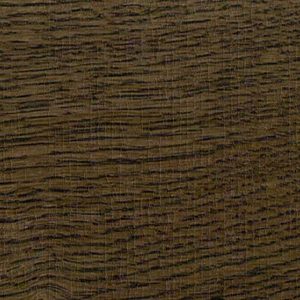
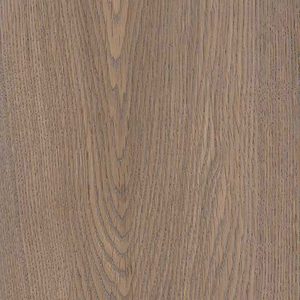
Oak grain is made of harder and softer bands. Brushing runs a wire or abrasive brush along the board and removes some of the softer band, so the harder grain stands slightly proud and the surface takes on a fine, ribbed texture that you can feel with a fingertip. Deep brushing takes more away and leaves a pronounced texture; it is the surface on the antique boards, where the aged look depends on it. A smooth board is sanded flat and left flat.
The finish then sits on that surface. Oil settles into the brushed texture; lacquer follows it. Either finish is available on either surface, so the two decisions are independent, and the oiled or lacquered guide covers the other one.
What it does for the look
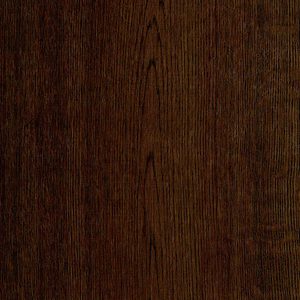
A smooth board is the cleanest, most formal surface. Light reflects evenly off it, the grain reads as a picture, and a dark smooth board in particular has a depth that a brushed board does not. It suits a modern room with flat walls and a lacquered finish, and it is the surface of the walnut boards, whose fine grain is the point.
A brushed board reads warmer and more tactile. Light breaks up on the texture, so the surface looks softer and the grain reads as relief rather than as pattern. It suits period houses, cottages and any room where a flat surface would look too new. Deep brushed goes further and makes the texture the character of the floor.
What it does for wear, which is where most people get it wrong
This is the practical reason to choose brushed for a busy room. Fine scratches from grit, chair legs and claws show on a smooth surface as lines that catch the light. On a brushed surface the same scratches fall into a texture that is already full of lines, and they disappear. Dust behaves the same way: on a smooth dark floor every speck shows, on a brushed dark floor the texture hides it between vacuums. The dark oak boards are all brushed for exactly that reason.
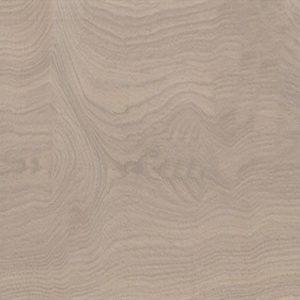
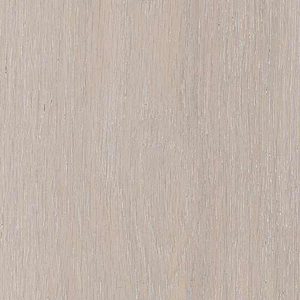
The reverse is also true. A pale smooth board shows dark marks, because there is nothing to hide them in, and a pale brushed board hides small ones. The light oak boards are both brushed.
Cleaning
A brushed surface holds a little more dust in its texture than a smooth one, so it wants vacuuming with a soft brush head rather than sweeping. Beyond that the routine is the same and it is the routine for every wood floor: low-moisture cleaning, no standing water. The trade guidance is quoted below. The wood flooring product standard that both surfaces are made to is quoted alongside it; it covers flat-surface wood flooring and parquet and does not distinguish the two textures.
Room by room
Hallway, kitchen, family room: brushed. The scratches will come; on a brushed board they will not show.
Living room, dining room: either. Smooth for the formal, modern look; brushed for warmth.
Bedroom: either, and smooth is a reasonable choice here because the wear is light. The bedrooms guide covers the rest.
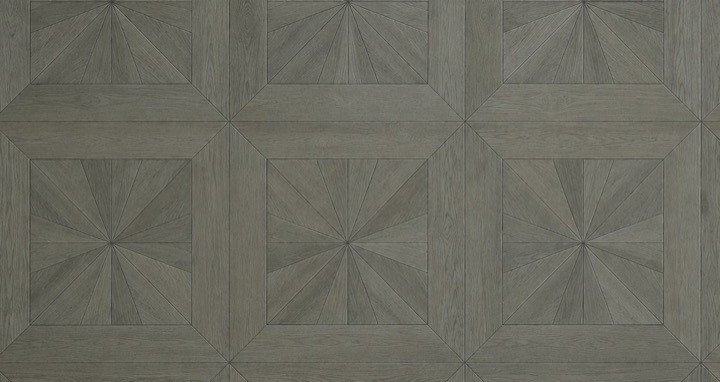
Parquet: most of the herringbone blocks are brushed, and a patterned floor benefits from it, because the pattern is already busy and a smooth surface adds reflection on top.
Common questions
Is a brushed floor rougher to walk on?
You can feel the texture with a fingertip and barely with a bare foot. It is not rough; it is the difference between a flat surface and a very finely ribbed one. Socks do not catch on it and it does not hold grit any more than a smooth board does.
Does brushing weaken the board?
No. Brushing removes a small amount of the softer grain from the surface of the wear layer, a fraction of its depth. The board's construction, its wear layer thickness and its warranty are the same as the smooth version of the same board.
Can a smooth floor be brushed later?
Not on site in any practical way. Brushing is a factory process done before finishing. A smooth floor that has worn can be sanded and refinished as a smooth floor; if the texture is wanted, it is chosen at the start.
Which hides pet claws better?
Brushed, and brushed with an oiled finish best of all, because the marks fall into the texture and the worn areas can be re-oiled. The guide to floors for homes with dogs goes through it.
Texture is the decision that survives redecorating: a colour can be changed with a rug and a scheme, a surface cannot. See it in the room before deciding, and in the room's own light. Browse by town and region.
What the published standards say
Each entry is quoted from its source and linked to it. The full set is in the standards reference.
BS EN 14342 — wood flooring and parquet: characteristics and marking
BS EN 14342 defines the characteristics, requirements and test methods for flat-surface wood flooring and parquet used as internal flooring, and sets the evaluation-of-conformity and marking rules for these products.
“BS EN 14342 defines and specifies the relevant characteristics and requirements of flat surface wood flooring products and parquets as well as the appropriate test methods for determination of their suitability for use as internal flooring, including fully enclosed public transport premises.”
Source: BS EN 14342:2013 - Wood flooring and parquet. Characteristics, evaluation of conformity and markingCleaning — the manufacturers’ own guidance
For multilayer modular floor coverings the MMFA requires low-moisture cleaning methods and states that pooling of liquid on the floor must be avoided under all circumstances.
“Absolutely avoid ponding in any case!”
Source: Basic cleaning — MMFA (Multilayer Modular Flooring Association)