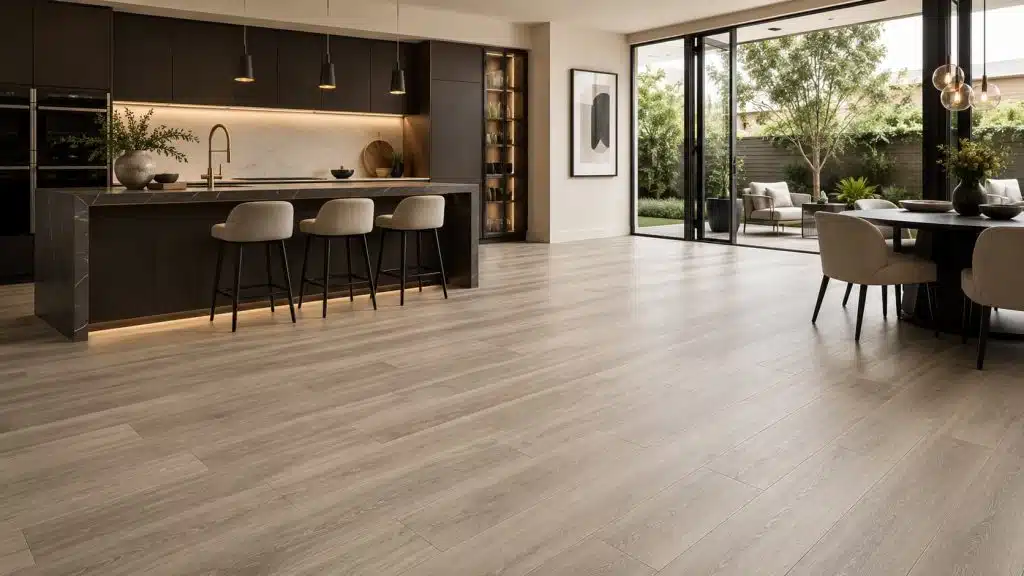
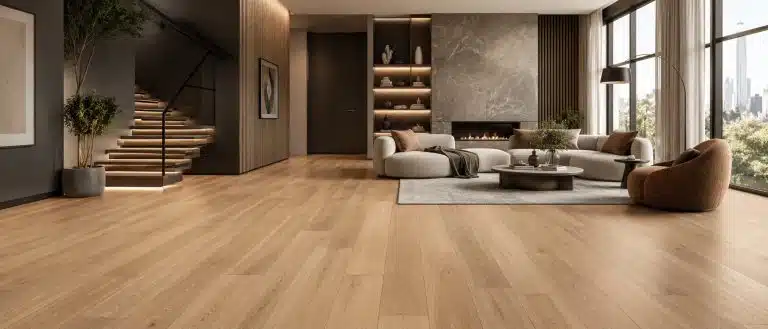
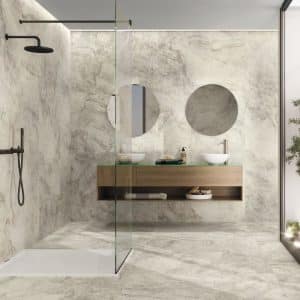
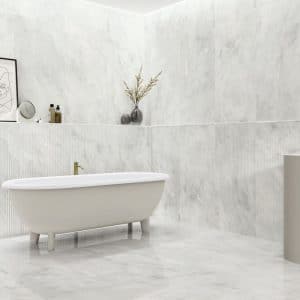
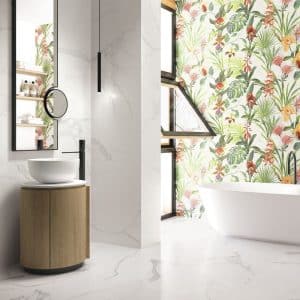
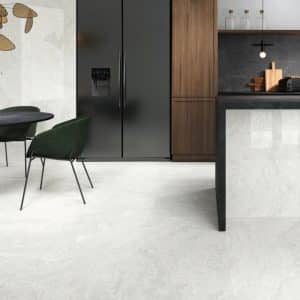
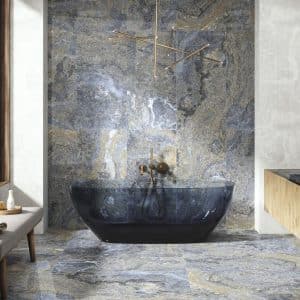
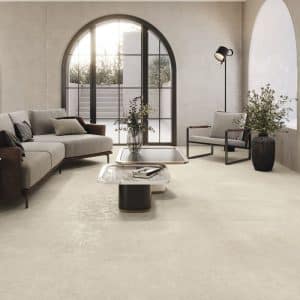
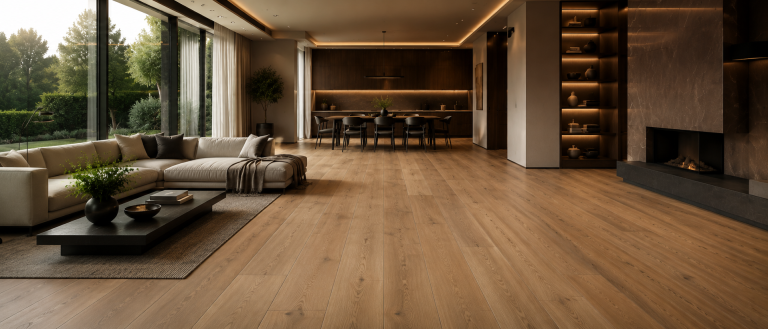
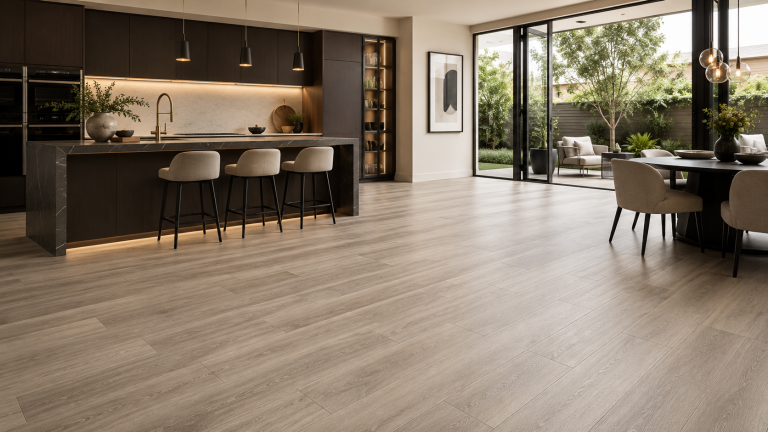
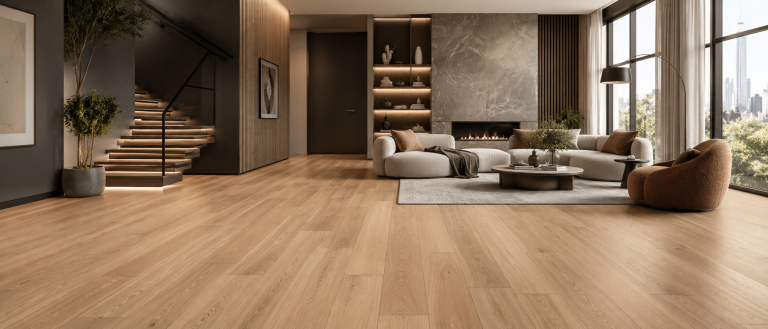
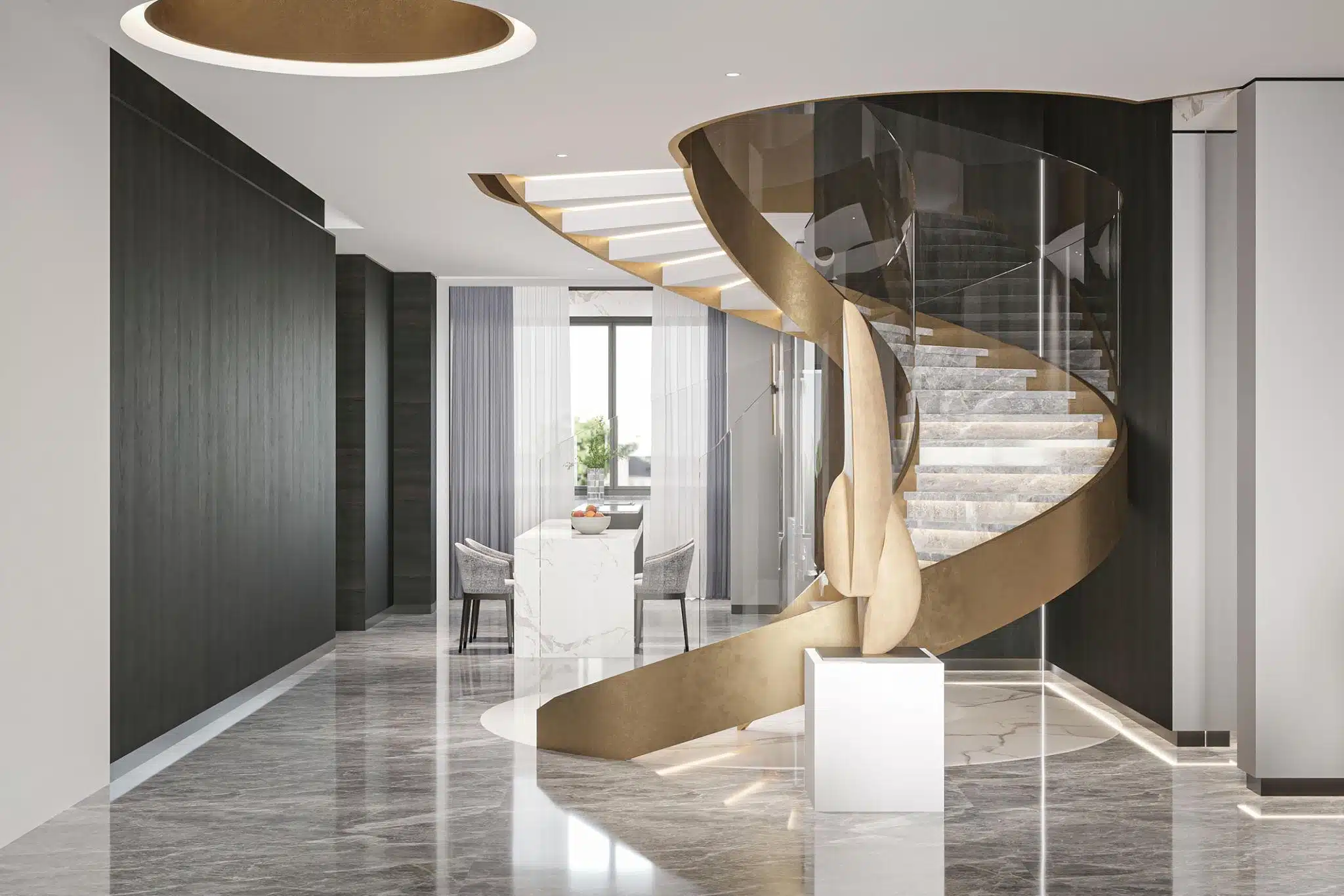
Browse our editorial collections and find your perfect floor.
Browse CollectionsBrowse our editorial collections and find your perfect floor.
Browse CollectionsDurable, cost-effective flooring with volume trade pricing — built for lettings, refurbishments and multi-unit developments, with dependable supply across your portfolio.
For lettings, refurbishments and multi-unit developments, flooring is a numbers game: durability per pound, void time and turnaround. Homes & Floors helps landlords and developers hit all three with waterproof, hard-wearing ranges that stand up to tenant turnover and footfall, consistent stock so multiple units fit one specification, and volume trade pricing that scales with the order.


Real-oak surface on a stable core — the specifier’s workhorse for busy rooms.
Shop Engineered Wood
Waterproof and hard-wearing — kitchens, bathrooms, lettings and commercial.
Shop Luxury Vinyl (LVT)
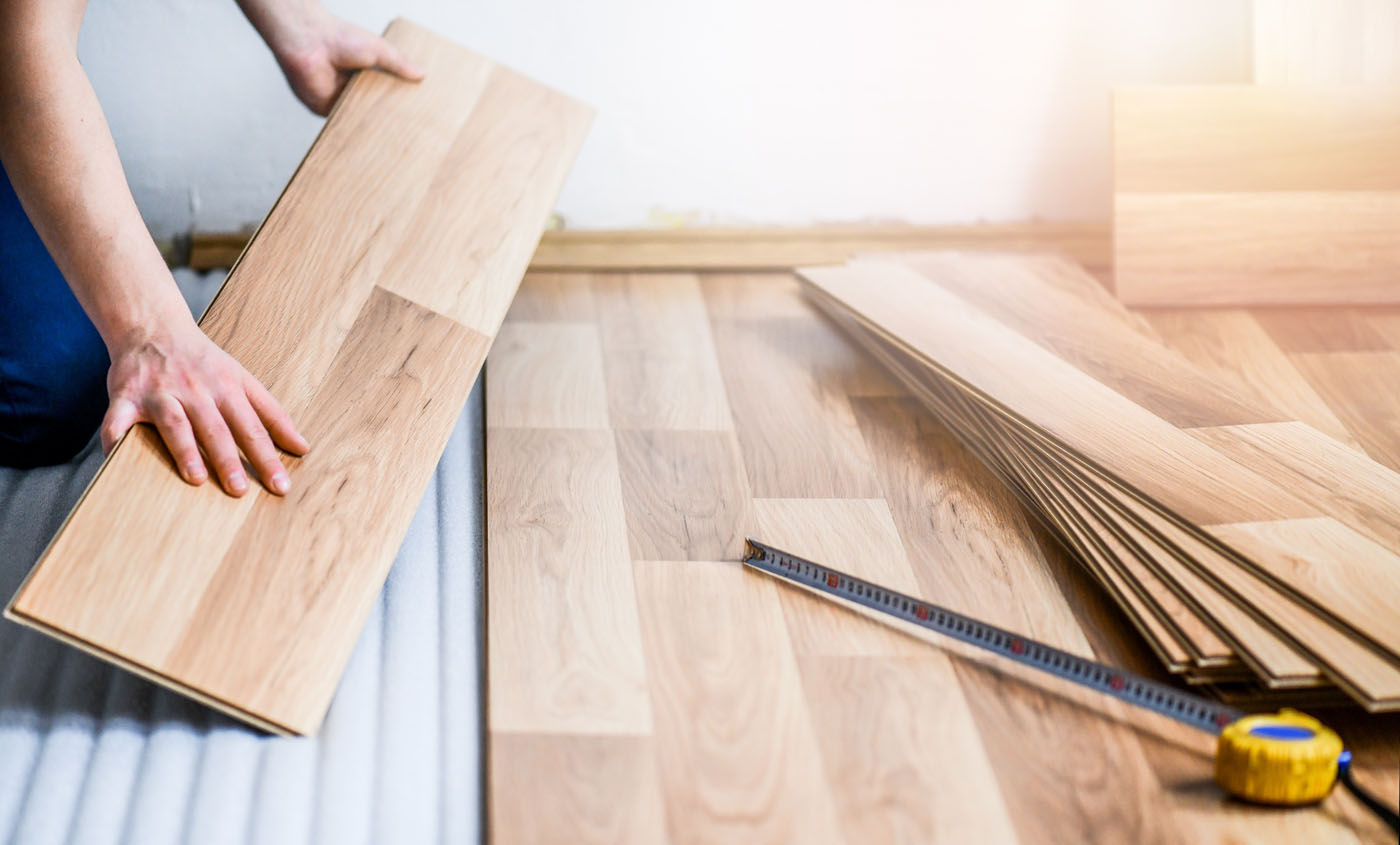
Great-value, durable and fast to fit — ideal for quick turnarounds.
Shop LaminateThe right spec depends on the room and the traffic. This is how the three workhorse ranges compare on the criteria that decide a budget.
| LVT (Luxury Vinyl) | Laminate | Engineered Wood | |
|---|---|---|---|
| Waterproof | Yes — waterproof at the plank | Water-resistant only | No — avoid wet rooms |
| Wear & durability | Excellent for heavy footfall | Very good, AC4–AC5 rated | Good — and re-sandable |
| Cost per m² | Mid | Lowest | Premium |
| Fitting speed | Fast — click or glue-down | Fastest — click system | Moderate — skilled fit |
| Underfloor heating | Compatible | Check range | Compatible |
| Best for | Kitchens, bathrooms, high traffic | Bedrooms, quick turnarounds | Living rooms, premium units |
Unsure? Order samples for £1.99 and judge them in the actual room’s light.
Add to basket now or request samples — trade pricing shows automatically once you’re signed in.
From our own UK warehouse, scheduled around your trades — with local delivery guides for the cities we serve most.
Local delivery guides
Trade pricing on eligible ranges, volume discounts and prices — most accounts approved in 1–2 working days. Browse the range, order samples, or open an account built for professionals.
Volume pricing, transparent
| Trade baseline | all eligible ranges | 10% off |
|---|---|---|
| 25–60 m² | +3% volume | 12.7% total |
| 60–120 m² | +5% volume | 14.5% total |
| 120+ m² | +8% volume | 17.2% total |
Measured across eligible items in one order, shown excluding VAT. Your exact trade price appears on every product page once your account is approved and you are logged in.
Apply for a trade accountApply once. After approval your trade price shows on every eligible product while you are logged in — no codes, no minimum order, and the volume tier follows the square metres in your basket.
What happens next
Questions before you apply? Speak to the trade team — real people, honest advice.
Each entry is quoted from its source and linked to it. The full set is in the standards reference.
EN ISO 10874 sets out a classification of floor coverings by area and intensity of use; the classes are 21, 22 and 23 for domestic use, 31 to 34 for commercial use and 41 to 43 for industrial use.
| Class 21 | Domestic moderate/light |
|---|---|
| Class 22 | Domestic general/medium |
| Class 23 | Domestic heavy |
| Class 31 | Commercial moderate |
| Class 32 | Commercial general |
| Class 33 | Commercial heavy |
| Class 41 | Industrial moderate |
| Class 42 | Industrial general |
| Class 43 | Industrial heavy |
“In EN ISO 10874 a classification system for different use classes is described, with references to the relevant product standards.”
Source: How to use the Floor Covering Standard Symbols (FCSS) — EUFCA, symbols per EN 15398Approved Document E sets minimum airborne sound insulation (DnT,w + Ctr) and maximum impact sound insulation (L'nT,w) values for separating floors and stairs: 45 dB airborne and 62 dB impact for purpose-built dwelling-houses and flats, and 43 dB airborne and 64 dB impact where dwellings are formed by a material change of use. Separating walls must reach 45 dB (purpose built) or 43 dB (material change of use) airborne; no impact value applies to walls.
| Purpose built, separating walls, airborne DnT,w + Ctr (minimum) | 45 dB |
|---|---|
| Purpose built, separating floors and stairs, airborne DnT,w + Ctr (minimum) | 45 dB |
| Purpose built, separating floors and stairs, impact L'nT,w (maximum) | 62 dB |
| Material change of use, separating walls, airborne DnT,w + Ctr (minimum) | 43 dB |
| Material change of use, separating floors and stairs, airborne DnT,w + Ctr (minimum) | 43 dB |
| Material change of use, separating floors and stairs, impact L'nT,w (maximum) | 64 dB |
“Purpose built dwelling-houses and flats Walls 45 - Floors and stairs 45 62 Dwelling-houses and flats formed by material change of use Walls 43 - Floors and stairs 43 64”
Source: Approved Document E - Resistance to the passage of sound, 2003 edition incorporating 2004, 2010, 2013 and 2015 amendments (Table 0.1a)EN 13329 classifies the abrasion resistance of laminate floor coverings in abrasion classes AC1 to AC6. The EPLF's own Environmental Product Declaration for DPL laminate floor covering states the property "Abrasion Class EN 13329" with the value range AC1-AC6.
| Abrasion classes under EN 13329 | AC1-AC6 |
|---|
“Abrasion Class EN 13329 | AC1-AC6 | -”
Source: Environmental Product Declaration - Direct Pressure Laminate Floor Covering (DPL Floor Covering), owner of the declaration: European Producers of Laminate Flooring e.V. (EPLF), decl. no. EPD-EPL-20210138-CBE1-ENEN ISO 10582 does not link heterogeneous PVC floor coverings to a wear layer thickness in millimetres per class. Its published scope states that the standard specifies the characteristics of non-cushioned heterogeneous PVC floor coverings and that it includes a classification system (see ISO 10874) based on the intensity of use, plus requirements for marking - so the class number (23, 31, 32, 33, 34) describes where a floor is fit to be used, not how thick its wear layer is.
| Basis of the classification system referenced by EN ISO 10582 (ISO 10874) | intensity of use |
|---|
“To encourage the consumer to make an informed choice, this document includes a classification system (see ISO 10874) based on the intensity of use, which shows where these floor coverings give satisfactory service. It also specifies requirements for marking.”
Source: ISO 10582:2017 - Resilient floor coverings - Heterogeneous poly(vinyl chloride) floor covering - Specifications (ISO catalogue page, abstract)Pre-completion testing is the term Approved Document E uses for sound insulation testing carried out on site as part of the construction process to demonstrate compliance with Requirement E1. For new-build houses and buildings containing flats the alternative is to use a design detail approved and published by Robust Details Ltd and notify the building control body, in which case the testing regulations do not apply to that part of the building.
“Sound insulation testing to demonstrate compliance with Requirement E1 should be carried out on site as part of the construction process, and in this Approved Document it is referred to as pre-completion testing. The exception is that, in the case of new-build houses and buildings containing flats, Regulations 41 and 20(1) and (5) do not apply to any relevant part of the building where the design embodies a design detail or details from the set approved and published by Robust Details Ltd; a valid notification is given to the building control body; and the actual work complies with the detail or details specified in the notification.”
Source: Approved Document E - Resistance to the passage of sound (2003 edition incorporating 2004, 2010, 2013 and 2015 amendments), paragraphs 1.2 and 0.2Before any subfloor preparation or floorcovering is laid, the underfloor heating must be run through a full drying and commissioning cycle of heating up and cooling down, typically lasting about 21 days.
| typical duration of the heat-up / cool-down commissioning cycle | 21 days |
|---|
“In all instances, UFH systems must be run through a full drying / commissioning cycle of heating up and cooling down before any subfloor preparation or installation of decorative floor coverings are installed. This period of commissioning is usually around 21 days.”
Source: CFA Guidance Document — Beyond Installation: Guidance on Underfloor Heating (Contract Flooring Association)Unsubscribe anytime
Room inspiration, practical advice, selected offers and useful updates for your project.
No spam. Unsubscribe any time.