How to Choose the Right Floor for Your Home
A practical starting-point guide to choosing flooring based on room type, lifestyle, durability and maintenance needs.
Browse our editorial collections and find your perfect floor.
Browse Collections
A practical starting-point guide to choosing flooring based on room type, lifestyle, durability and maintenance needs.
A practical starting-point guide to choosing flooring based on room type, lifestyle, durability and maintenance needs. The goal is simple: understand the decision, compare the right options and move into a practical next step without endless choices.
The right floor should do more than look beautiful. It needs to suit your daily life, work with your interior style and perform well in the room where it will be installed.
This guide breaks the decision into simple steps, from lifestyle and room use to material choice, visual style, technical details and realistic budgeting.
01Your daily routine determines how durable and practical your floor should be.
02Different rooms require different performance levels.
03The best floor combines aesthetics with realistic costs.
Step 1The best floor for your home is the one that fits how you actually live. Before choosing colours or patterns, think about what each room needs to handle every day.
Busy family homes with children, pets and frequent guests usually benefit from flooring that is durable, easy to clean and resistant to scratches or moisture. In quieter rooms, comfort, warmth and acoustics may matter more than maximum durability.
Not every flooring material is suitable for every part of the home. The right choice depends on moisture levels, room use, traffic and how much wear the surface will face over time.
Kitchens, hallways and utility spaces often need hard-wearing and easy-care flooring such as porcelain tiles or modern rigid core floors. Living rooms and bedrooms are often better suited to warm and comfortable materials such as engineered wood or laminate.
Once you know how the room will be used, you can compare the main flooring options more clearly. Each material offers different strengths in terms of durability, appearance, maintenance and comfort.
| Material | Main strengths | Best for |
|---|---|---|
| Porcelain tiles | Extremely durable, waterproof, low maintenance and excellent with underfloor heating | Kitchens, bathrooms, hallways and open-plan living spaces |
| Engineered wood | Natural warmth, authentic texture, premium appearance and better stability than solid wood | Living rooms, bedrooms and feature areas |
| Hybrid / rigid core flooring | Water-resistant, durable, practical and available in realistic wood and stone looks | Busy households, kitchens and multifunctional spaces |
| Laminate flooring | Cost-effective, durable surface and available in many different finishes | Bedrooms, living areas and value-focused projects |
The visual appearance of your floor shapes the entire feel of a room. The right finish can make a space feel warmer, brighter, calmer or more architectural.
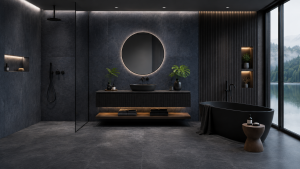
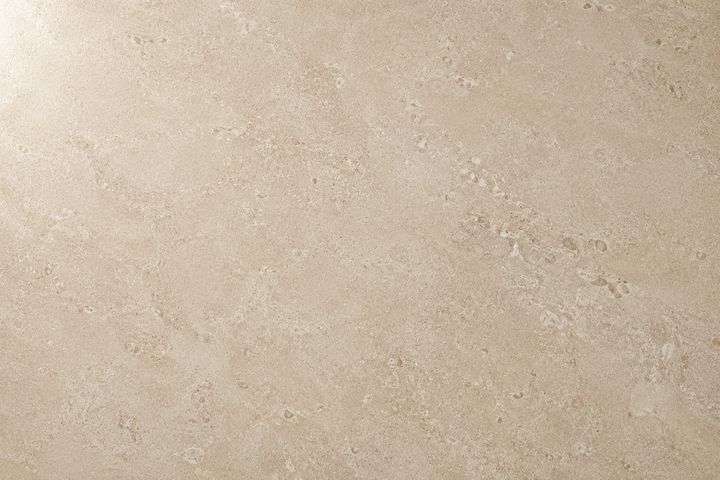
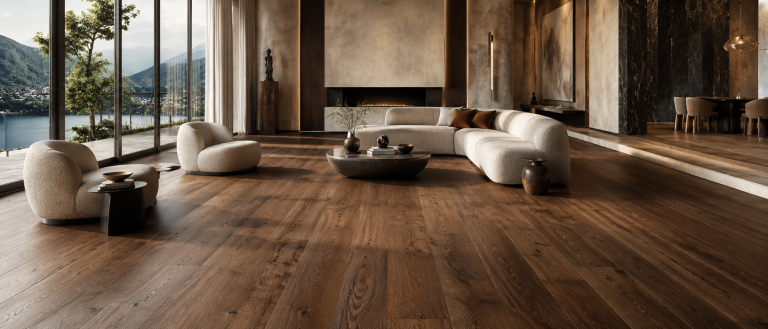
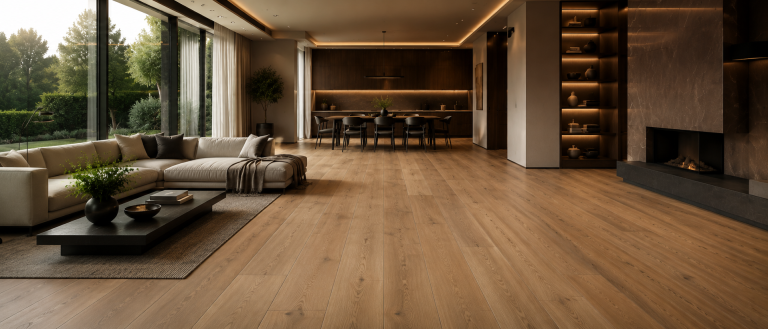
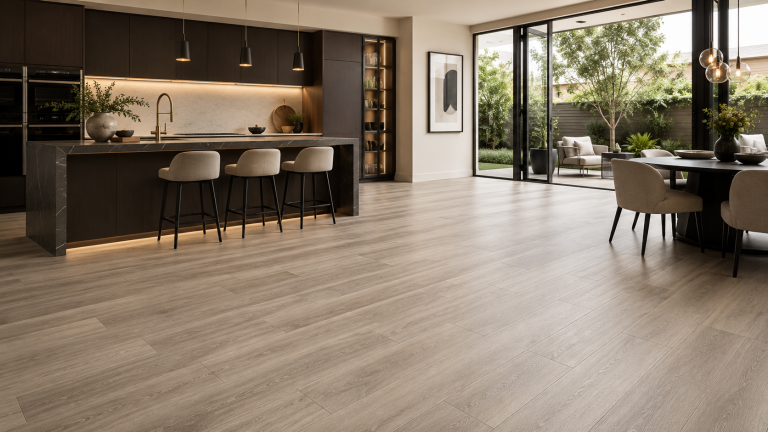
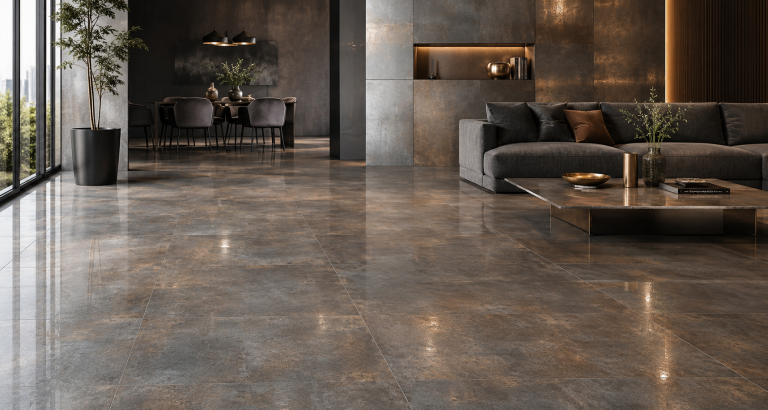
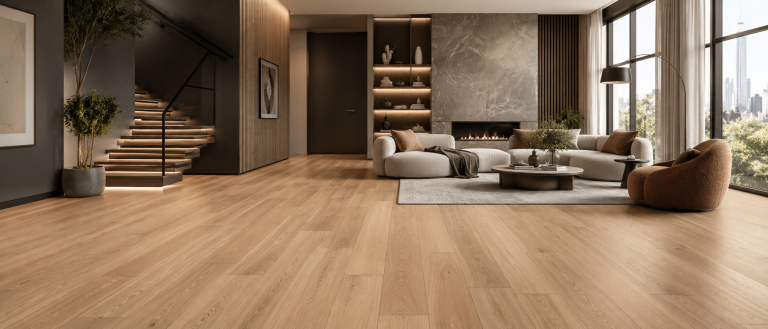
Wood-effect flooring is ideal if you want warmth and softness in living areas and bedrooms. Stone and concrete looks often suit more contemporary homes, especially in kitchens and larger open-plan spaces. Light natural shades tend to feel timeless and easy to style.
Flooring colour influences how spacious, warm and balanced a room feels. It also affects how easily your furniture, walls and overall interior scheme come together.
Soft neutral tones such as warm sand, greige, pale oak and gentle whitewashed finishes remain some of the most versatile options for modern homes. They create a clean, elegant and timeless base.
Before buying, make sure the flooring also works on a technical level. This is essential for long-term performance and a clean installation result.
Step 7
The cost of a floor includes much more than the product price per square metre. A realistic flooring budget should also account for accessories, fitting and preparation work.
Depending on the project, you may need underlay, trims, skirting boards, adhesives or subfloor preparation. Professional installation is often worth considering, especially for premium flooring finishes, patterned layouts or large-format tiles.
Rigid core flooring, hybrid flooring and porcelain tiles are popular choices for busy homes because they are durable, practical and easy to maintain.
Kitchens usually benefit from practical flooring such as porcelain tiles or water-resistant rigid core products that are easy to clean and suited to everyday use.
Yes, engineered wood is a strong choice for living rooms and bedrooms because it combines natural warmth, timeless style and a premium feel.
You should always check the product specification and installation guidelines to confirm compatibility and any temperature limitations.
First the decision filters that matter — then the routes where each choice makes sense.
Order samples in your light, compare matching collections or speak to our team for a tailored direction.
Expert insights
Explore our resource hubs for flooring guides, design articles, real projects and trade support.
In-depth guides to help you choose, install and maintain your perfect floor.
Explore
See real project examples, transformations and customer flooring stories.
Explore
Trade pricing, project guidance and premium UK supply for designers and contractors.
Explore