




Click vs Tongue and Groove Flooring
The edge of a board decides how the floor is fitted, and the range splits cleanly. Every laminate and every rigid vinyl floor clicks together; every solid oak, engineered oak and parquet board is tongue and groove. That is not an accident of the catalogue. It follows from what each material is.
Click
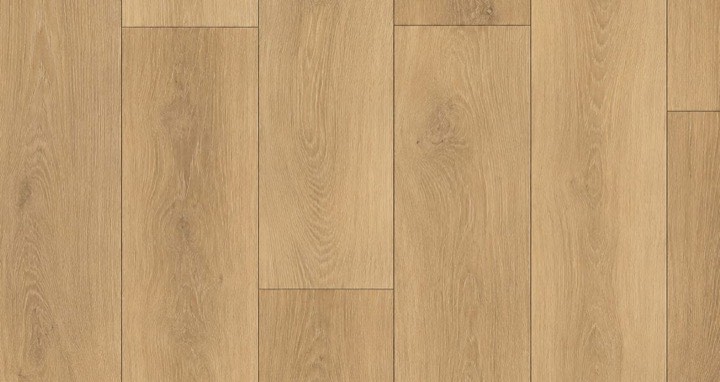
A click profile is a machined edge that locks into its neighbour when the board is angled in and pressed down. The floor is laid floating: it sits on an underlay over the subfloor, held together by its own joints and by nothing else, with an expansion gap around the edge so the whole floor can move as one. No adhesive, no nails, no curing time, and a room can be walked on the day it is laid.
It works because the boards it is used on are stable. A laminate core is dense fibreboard; a rigid vinyl core is a solid polymer. Neither moves much with humidity, so a floating floor of either stays flat. The standard for mechanically locked multilayer panels, quoted below, describes exactly this construction: modular panels with a wear-resistant surface, supplied for floating installation. The laminate range and the rigid vinyl range are both click.
Tongue and groove
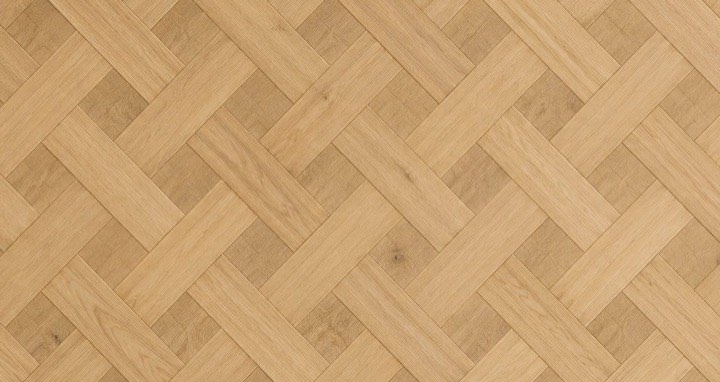
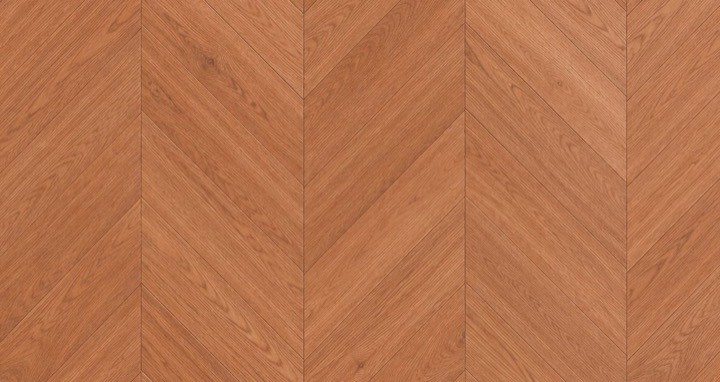
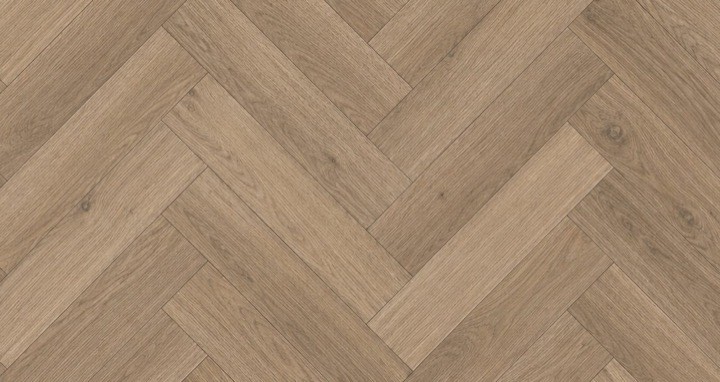
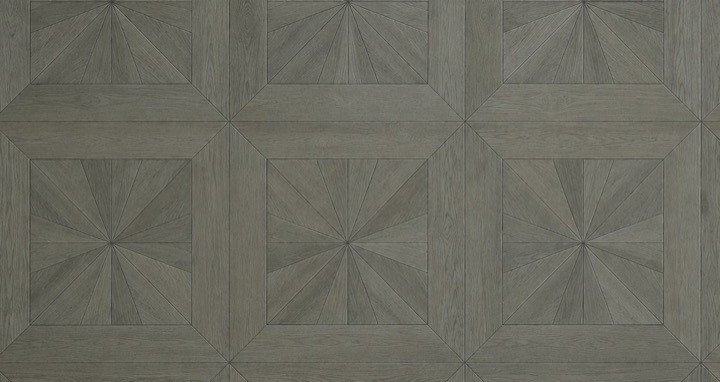
A tongue and groove edge is older and simpler: a tongue along one edge slots into a groove along the next. It does not lock, so the floor has to be held down by something else, glued to the subfloor, secret-nailed to a timber base, or in some cases glued along the joints and floated. Every oak board and parquet block in the range is tongue and groove, micro-bevelled, and fitted one of those ways.
The reason is movement. Oak takes on and gives up moisture with the seasons, engineered oak less than solid but still more than a polymer core, and a wide floor of it needs to be fixed to the subfloor so that movement happens board by board rather than across the whole floor at once. Solid oak parquet blocks are glued without exception; engineered boards are glued or floated depending on the board and the subfloor; the UK code of practice for installing wood flooring, quoted below, is the document a fitter works to.
What each means for the job
Time. A click floor in an average room is a day's work and usable the same evening. A glued tongue and groove floor needs the adhesive to cure before furniture goes back.
Subfloor. Both need a flat, dry subfloor. A click floor over its underlay tolerates small imperfections; a glued floor needs the surface prepared for adhesive. Neither tolerates a damp screed, and the moisture checks are the same for both.
Doors and build-up. A click floor plus its underlay adds height; a glued tongue and groove floor adds only the board. The rigid vinyl floors, with the underlay attached, are the thinnest build-up in the range.
Repairs. A click floor can be unclicked from the edge to reach a damaged board; a glued floor is repaired by cutting out and replacing the board in place. Neither is difficult for a fitter; the click repair is easier for an owner.
Doing it yourself. Click is the format people fit themselves, and the laminate and rigid vinyl floors are sold with that in mind. Tongue and groove oak, and any parquet, is a fitter's job; the set-out and the adhesive are where the skill is.
The rules for a floating floor
Whichever material clicks together, the floating floor it makes has two rules. It needs an expansion gap around every edge and at every doorway, covered by skirting or a threshold, so it can move; the industry figure for the gap is quoted below. And it needs an underlay, which does more than most people expect: it levels small imperfections, protects against residual moisture from below, and decides how the floor sounds. The industry statement of those three jobs is quoted as well, and the underlay guide goes into the choice. The laminate producers' position on floating against full-surface gluing is the last of the facts below, and it is clearer than many fitters assume.
Common questions
Can engineered oak be floated?
Some engineered boards can be floated with the tongue and groove glued along the joint, on a suitable underlay, and some are specified for gluing down; the product's own fitting instructions say which. Over underfloor heating, gluing down is the more common specification because it puts the board in contact with the heat.
Is click flooring less solid underfoot?
A floating floor has a slightly hollower sound than a glued one, and the underlay is what decides how much. A dense underlay under a click floor closes most of the gap; a thin foam one does not. The rigid vinyl floors, with the underlay attached, are specified as a system for that reason.
Can click floors go in a bathroom?
Rigid vinyl click floors can: the core takes on no water. Laminate click floors should not, whatever the edge profile: the core is wood fibre and the laminate standard excludes rooms that get wet regularly. The LVT or laminate guide covers it.
Do I need to glue the click joints?
No. The joint is the fixing. Gluing click joints defeats the design and stops the floor being taken up board by board. The exception is a manufacturer's own instruction to seal joints in a particular wet room, which the fitting guide for the product will say.
Which fitting a room needs follows from the material chosen for it, and the material follows from the room. LVT or laminate and solid or engineered oak are the two comparisons that come first. Subfloors vary as much as houses do. Browse by town and region.
What the published standards say
Each entry is quoted from its source and linked to it. The full set is in the standards reference.
Floating or glued down
Yes. The EPLF, the association of European laminate flooring producers, states in its technical bulletin on installation that laminate floor coverings are by conception intended for floating installation, and that a full-surface adhesive bond is an exception used only under special circumstances, for example at the specific request of the client. Before bonding a laminate floor over its full surface, installers are urged to contact the manufacturer or supplier to establish whether the product is suitable or approved for that type of installation.
| laminate floor coverings – method by design | floating installation |
|---|---|
| full-surface adhesive bond | exception, only under special circumstances and after checking suitability/approval with the manufacturer |
“Under special circumstances, for example at the specific request of the client, it may be necessary to install laminate floor coverings using a full-surface adhesive bond, despite the fact that by conception laminate floor coverings are intended for floating installation.”
Source: EPLF Technical Bulletin – Installation of Laminate Floor Coverings (English edition 06/2022), European Producers of Laminate FlooringThe expansion gap
The EPLF, the European association of laminate flooring producers, recommends an edge gap of 8 mm to 12 mm on all sides of a floating floor, so that the covering can expand and contract without lifting.
| recommended edge gap on all sides | 8 to 12 mm |
|---|
“To accommodate such changes, a edge spacing should be observed on all sides. A free space of 8 mm to 12 mm is recommended.”
Source: EPLF Technical Bulletin — Installation of Laminate Floor Coverings (06/2022), 6.4 Edge gapsBS EN 16511 — modular mechanical locked floor coverings
BS EN 16511:2023 specifies characteristics, requirements and test methods for multilayer mechanically locked modular floor panels with a wear-resistant decorative surface layer, supplied as tiles or planks for floating installation in domestic and commercial use.
“This document specifies the characteristics of multilayer mechanical locked floor covering with a wear-resistant and decorative surface layer supplied in panels (either tile or plank form). The floor panels are considered suitable for domestic and commercial levels of use and designed for floating installation.”
Source: BS EN 16511:2023 - Modular mechanical locked floor coverings (MMF). Specification, requirements and test method for multilayer modular panels for floating installationWhat an underlay is actually for
The MMFA groups the benefits of an underlay under floating multilayer modular flooring into three headings: ensuring a satisfactory installation by levelling unevenness, permanently protecting the floor against wear and against rising residual building moisture, and improving the floor's properties in terms of impact sound, walking noise, heat insulation and walking comfort.
“The requirements for suitable underlays are aimed at protecting the floor from daily wear and tear such as falling objects and walking, as well as shielding the floor from rising residual building moisture or damp.”
Source: Underlays — MMFA (Multilayer Modular Flooring Association)BS 8201 — installing timber and wood-based flooring
BS 8201:2011 is the UK code of practice for installing flooring of wood and wood-based panels; it gives recommendations on the material, environmental and installation factors that determine how the finished wood floor performs.
“BS 8201 gives recommendations and guidance on the material, environment and installation variables that combined have a fundamental effect on the performance and serviceability of finished wood flooring.”
Source: BS 8201:2011 - Code of practice for installation of flooring of wood and wood-based panels